Rising utility bills, uneven temperatures, and stale air can quietly drain performance in a big building. The problem gets worse when small fans and an overloaded Sistema HVAC try to manage a tall space. A properly selected Ventilador HVLS solves that by moving air farther, more evenly, and more efficiently.
You can often save energy with an HVLS fan by raising cooling setpoints, reducing temperature stratification, and lowering unnecessary HVAC runtime—but there is no single universal percentage. The U.S. Departamento de Energia says ventiladores de teto can let you raise the termostato by about 4°F without reducing comfort, and field research on smart ceiling fans reported 39% measured compressor savings in one demonstration.
What does an HVLS fan actually save: direct fan power or HVAC energy?
This is the first question serious buyers ask, and it is the right one. An Ventilador HVLS does use electricity, so it does not create “free” cooling. The savings come mainly from the way it supports the Sistema HVAC. In cooling season, it helps people feel more comfortable at a higher setpoint. In heating season, it pushes ar quente down from the teto and reduces stratification in tall buildings. DOE and ASHRAE both support this basic logic.
From a manufacturer’s point of view, I usually explain it this way: the direct motor cost of one Ventilador HVLS is often small compared with the avoided runtime of ar condicionado or space heating in a big room. That is why the biggest savings rarely come from the fan motor alone. They come from improving the efficiency of the whole indoor climate strategy.
AMCA and DOE also make it easier to compare products today. Large-diameter ceiling fans are tested for airflow and power, and regulated products use CFEI rather than the older cfm/W-only mindset, which helps buyers compare performance more honestly.
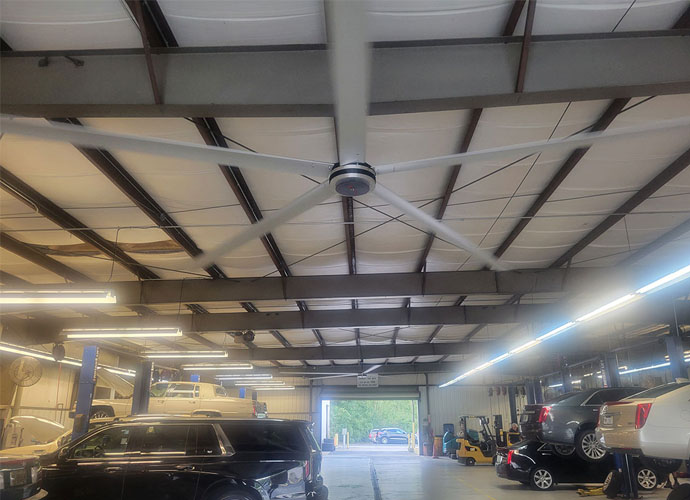
Why do high ceilings and large spaces make energy savings easier to see?
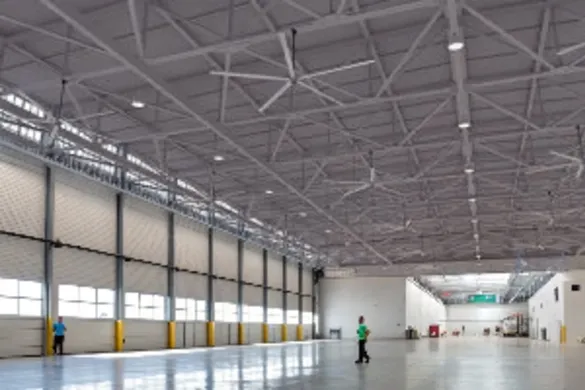
Um Ventilador HVLS is built for the kind of space where standard ventiladores industriais struggle: a armazém, factory, gym, aircraft hangar, or other grande espaço with tall clearance and lots of trapped heat. AMCA defines large-diameter ceiling fans as greater than 7 feet in blade span, and the International Mechanical Code defines high-volume, large-diameter fans as low-speed ceiling fans greater than 7 feet in diameter that circulate large volumes of air.
In tall buildings, hot air naturally rises and collects near the roof. That makes the teto area warmer than the occupied zone. ASHRAE’s hangar destratification work found that HVLS fans reduce the floor-to-ceiling temperature gradient and lower average space temperature by minimizing excess heat at the ceiling, which reduces Climatização use.
This is why savings show up most clearly in instalações industriais com high ceilings. The more stratification you have, the more room there is to improve. In a small office, the effect may be modest. In a distribution center or large production hall, the impact of HVLS fans can be much more visible.
How do ceiling fans help you cool a building with less air conditioning?
The cooling effect of a fan is mostly about air speed across people, not lower air temperature. DOE says ventiladores de teto allow you to raise the termostato setting by about 4°F without reducing comfort. That matters because every degree you avoid overcooling helps cut compressor runtime.
For a big building, that means an Ventilador de teto HVLS can help you legal occupied zones more effectively even if the bulk air temperature changes only a little. ASHRAE’s thermal-comfort framework also recognizes the cooling effect of elevated air speed, which is why fan-assisted comfort is a real design strategy, not just a sales phrase.
A simple way to think about it is this: hvls fans create a broader, softer stream of movimento do ar que ventiladores de chão ou muitos ventiladores tradicionais de alta velocidade. That wide air pattern helps people feel cooler over a larger area, so os fãs podem reduzir the pressure on sistemas de refrigeração e ar condicionado in many espaços comerciais e industriais.
Can an HVLS fan lower heating costs too?
Yes, and this is often overlooked. Many buyers only think about summer comfort, but the winter value can be just as important. In tall rooms, the roof zone traps hot air. ASHRAE’s hangar study found that HVLS fans lower average space temperature near the ceiling by reducing excess heat overhead, which reduces Sistema HVAC use.
This is where one fã único can make a meaningful difference in a tall bay. By running in a way that breaks up stratification without creating a draft on occupants, the fan helps maintain a more uniform temperature from floor to roof. That supports heating and cooling systems instead of forcing them to fight a vertical temperature split all day.
So when people ask how to reduzir o consumo de energia in winter, I often point them here first: if warm air is stuck near the teto, you are paying to heat empty space. A well-placed Ventilador HVLS helps bring that heat back where people and processes actually need it.
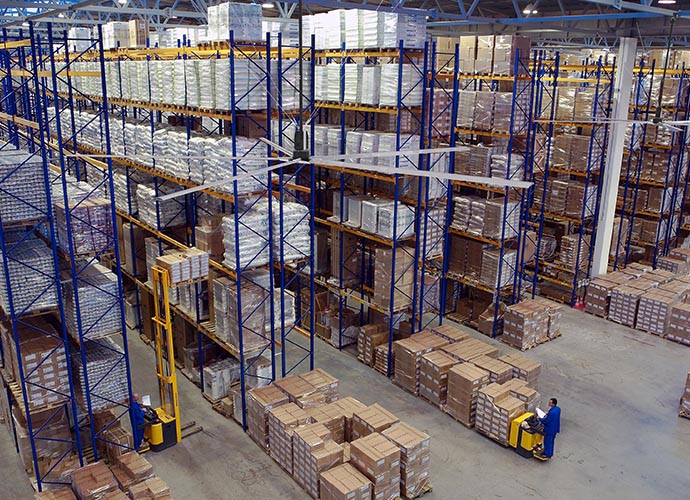
How much energy can you realistically save in a warehouse, factory, or distribution center?
Here is the honest answer: it depends. The savings from using HVLS fans are shaped by building height, insulation, climate, occupancy, internal heat load, and how the Sistema HVAC is controlled. That is why I do not recommend promising one fixed number to every buyer.
Still, there are useful anchors. DOE says fan-assisted comfort can support a 4°F higher cooling setpoint. A UC Berkeley-led field demonstration integrating smart ceiling fans and communicating thermostats reported 39% measured compressor savings. Those results are not a universal guarantee for every armazém or plant, but they show why fans paired with controls can drive real economia de energia.
Quick reality check on likely savings sources
| Source of savings |
Where it shows up |
What to expect |
| Higher cooling setpoint |
Occupied cooling season |
Lower compressor runtime |
| Destratificação |
Tall heated buildings |
Lower heating demand at floor level |
| Better zoning and controls |
Mixed-use facilities |
Lower unnecessary fan and HVAC runtime |
| Improved comfort |
Work areas and pick zones |
Melhorar produtividade and fewer hot complaints |
The most accurate promise is this: the primary benefit of HVLS is not that the fan itself uses no power. It is that it can help the building use menos energia overall when paired with smart control and a properly designed ventilation strategy.
Why are industrial HVLS fans often better than small high-speed fans?
The answer comes down to coverage and efficiency. AMCA describes HVLS units as large-diameter, low-operational-speed fans that circulate high volumes of air. In practice, that means ventiladores de alto volume e baixa velocidade move a much wider volume de ar with less harsh blast than many small fans.
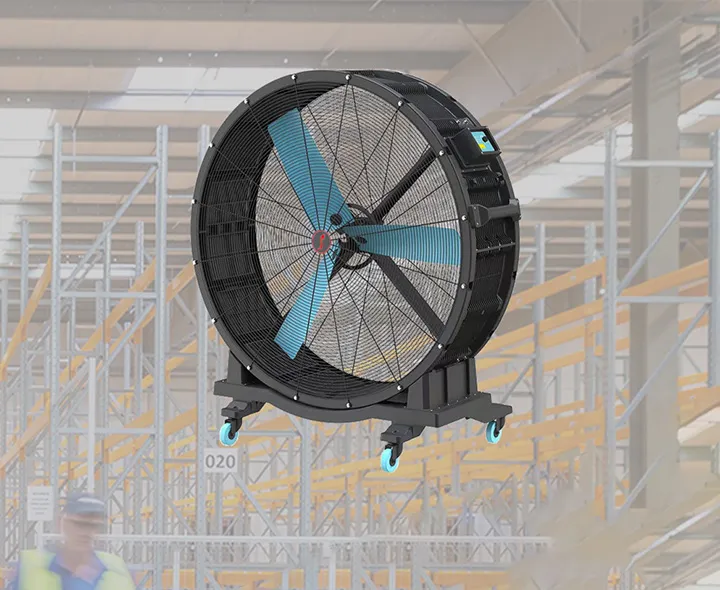
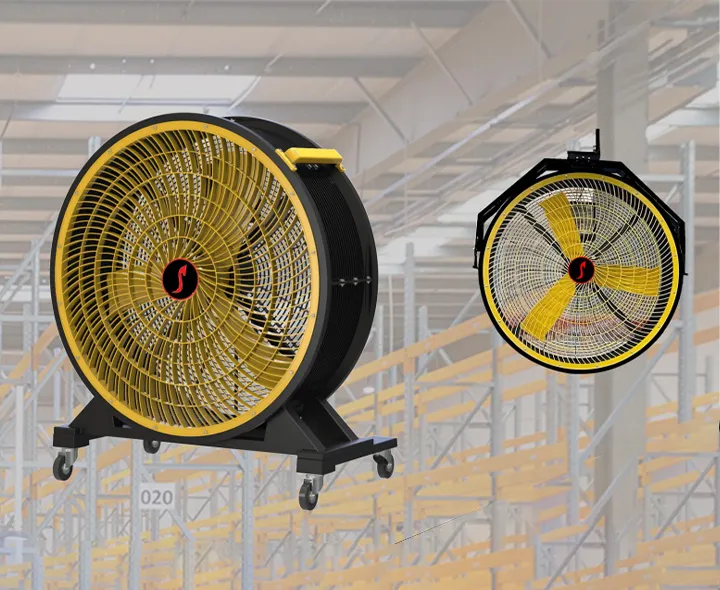
Small ventiladores de alta velocidade still have a place. They can spot-legal a workstation or a narrow aisle. But when the goal is to manage comfort in espaços industriais, they often create local drafts and leave other zones untouched. By contrast, ventiladores de teto industriais with a large diameter can cover more floor with fewer units. That is why ventiladores industriais hvls are so common in hangars, large plants, and open logistics buildings.
Buyers sometimes search brand terms like MacroAir fans, but the right comparison is not brand vs. brand. It is performance vs. need. Good hvls industrial fans are tested, rated, and sized for the room. Poorly chosen fans—large or small—miss the mark either way. What role do thermostat settings, humidity, and controls play in energy usage?
Controls are where many projects either win or waste money. DOE’s consumer guidance is simple but powerful: a fan lets you raise the cooling setpoint. The moment you combine that with a smart termostato, the building gets more flexible.
Humidity matters too. People often say a space feels hot when the real issue is weak air speed and sticky conditions. Fans do not remove moisture the way a dehumidifier or a cooling coil does, but they improve perceived comfort and help air mix more evenly. That can reduce the urge to overuse mechanical cooling.
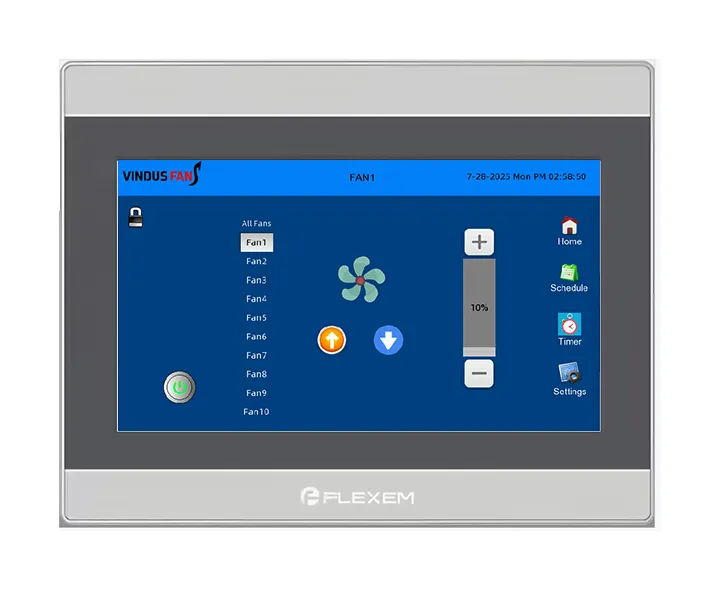
This is why a fan should be treated as part of controle climático, not a standalone gadget. The best projects align fan speed, occupancy, controle de temperatura, and HVAC staging. In other words, os fãs podem ajudar you get more from the same mechanical plant.
Do HVLS fans affect air quality and productivity, or just comfort?
They do more than make people feel cooler. Better mixing can improve perceived qualidade do ar by reducing dead zones and pockets of stale air. ASHRAE’s commercial guidance notes that if a space has good ventilation air but poor mixing, running fans can promote better mixing. AMCA also highlights improved comfort and better-performing indoor environments as part of the broader case for circulating fans.
For a busy plant or centro de distribuição, better comfort can also support produtividade. People work more steadily when heat buildup is less severe and conditions feel more even. That does not mean an Ventilador HVLS replaces fresh-air code requirements. It means the fan helps the room perform better for the people already in it.
This is one of the overlooked benefícios dos ventiladores HVLS. Buyers start by asking about the fatura energética, but they stay interested because better mixing often improves daily work conditions at the same time.
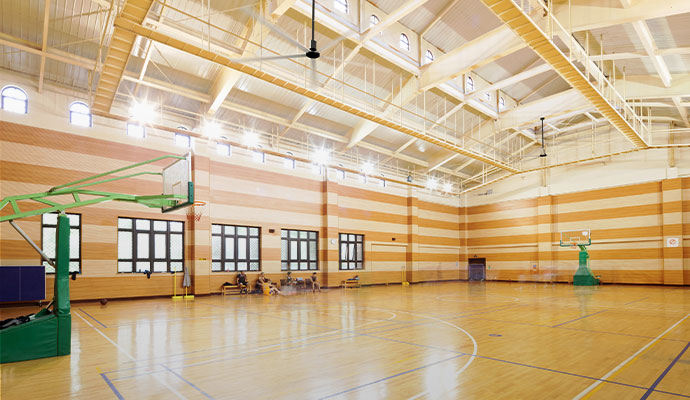
What should you measure before installing HVLS fans?
Before installing HVLS, start with the room, not the catalog. AMCA’s specification guidance recommends checking space dimensions, major obstructions, occupied zones, and expected air-speed performance. It even points to CFD analysis for sizing, placement, and cooling-performance verification in more demanding projects.
Measure these before you install HVLS fans
- Building height and usable teto liberação
- Floor area and process layout
- Rack, light, crane, and duct obstructions
- Current uso de energia and HVAC runtime
- Hot and cold complaint zones
- Existing climatização control sequence
A sound instalação do ventilador hvls plan also checks sprinkler coordination, control strategy, and whether the goal is more summer legal, winter destratification, or both. In real projects, this prep work is what separates “big fan, average result” from “well-sized fan, strong payback.”
When is the payback fastest in commercial or industrial environments?
Payback is usually fastest in tall buildings with clear stratification, long operating hours, and meaningful heating or cooling spend. That is why fans are common in comercial e industrial buildings such as warehouses, factories, gyms, and other ambientes industriais. The more the building struggles with uneven air, the more room there is to cortar custos de energia.
It is also faster when the system is used correctly. A fan left at one fixed speed all year may help, but a properly controlled fan matched to occupancy, weather, and setpoint strategy will usually do better. That is one reason the Berkeley study is so interesting: the large measured savings came from fans plus communicating controls, not from fan hardware alone.
So yes, ventiladores podem ser usados in almost any industrial or commercial setting, but the strongest returns usually show up in tall, open, continuously occupied spaces where the HVAC load is already significant. That is especially true for comercial ou industrial buildings that currently rely on a mix of small fans, overcooling, and manual adjustments to stay comfortable.
A simple rule of thumb for buyers
If your building has tall volume, uneven temperatures, and rising cooling or heating costs, an HVLS fan system deserves serious attention. If your space is small, low, and already evenly conditioned, the savings may be more modest. The goal is not to buy the biggest fan. It is to match the room, controls, and operating pattern.
From our side as a manufacturer, making HVLS fans valuable is really about application fit. Os fãs são construídos to solve a problem. Their value lies in their ability to improve comfort, mix air, and support lower whole-building consumo de energia—not just spin overhead.
Perguntas frequentes
How much energy can an HVLS fan save?
There is no universal percentage for every building. Savings usually come from higher cooling setpoints, less stratification in winter, and better control of the Climatização system. DOE says ceiling fans can support a 4°F higher setpoint, and one smart-fan field study reported 39% measured compressor savings.
Does an HVLS fan lower heating bills?
Often, yes—especially in tall buildings. ASHRAE’s hangar study found that HVLS fans reduced excess heat near the roof and reduced HVAC system use by improving destratification.
Do HVLS fans replace air conditioning?
No. They support comfort and can reduce mechanical cooling demand, but they do not replace ventilation or refrigeration needs. Think of them as a tool that helps your sistema hvac work smarter.
Are HVLS fans more efficient than small floor fans?
For large open areas, usually yes in system terms. Small fans may work for spot cooling, but an Ventilador HVLS covers a broader area with fewer units and better whole-room mixing.
Where do HVLS fans make the most sense?
They are most effective in tall, open, comercial e industrial buildings such as a armazém, gym, factory, or hangar where stratification and uneven temperatures are common.
Should I look for AMCA-certified products?
Yes. AMCA certification helps verify published performance claims, which reduces guesswork when comparing products.
Fontes
Key things to remember
- Um Ventilador HVLS saves the most energy indirectly, by helping the building run less Climatização, not by eliminating fan electricity use.
- Cooling-season savings often come from higher setpoints; DOE says ceiling fans can support about a 4°F thermostat increase without reducing comfort.
- Winter savings often come from destratification, especially in tall spaces where heat collects near the teto.
- The biggest wins usually show up in tall, open, high-runtime buildings such as factories, warehouses, and other instalações industriais.
- Controls matter. A well-managed fan-plus-HVAC strategy usually saves more than a fan running blindly at one speed.
- The best buying path is to compare certified performance, room geometry, and control strategy together—not fan diameter alone.