Bad air can ruin a great building. Heat gets trapped, people feel tired, and cooling bills climb. When traditional fans cannot handle a tall room, a simple upgrade often fails. The smarter fix is to work with an indoor HVLS partner that understands building size, use, and long-term support.
An indoor hvls fans distributor should help you choose the right hvls fan, match fan size to the room, and support installation, controls, and service. For factories, schools, sports centers, gyms, and large commercial buildings, hvls ceiling fans are often the best option because they move a tremendous amount of air at low speed across a large space, improving comfort while helping manage energy costs.
Outline
What does an indoor HVLS fans distributor actually do?
Why is an hvls fan better than a standard ceiling fan in a large building?
How do hvls ceiling fans improve comfort in a warehouse and other large facilities?
What should you compare when choosing an industrial fan distributor?
Why do airflow, air movement, and air distribution matter so much indoors?
How can HVLS systems support energy efficiency, HVAC balance, and lower bills?
Which spaces benefit most from industrial hvls fans?
What technical details matter most, from diameters to control systems?
Why is Vindus Fans a practical partner for industrial and commercial spaces?
What Does an Indoor HVLS Fans Distributor Actually Do?
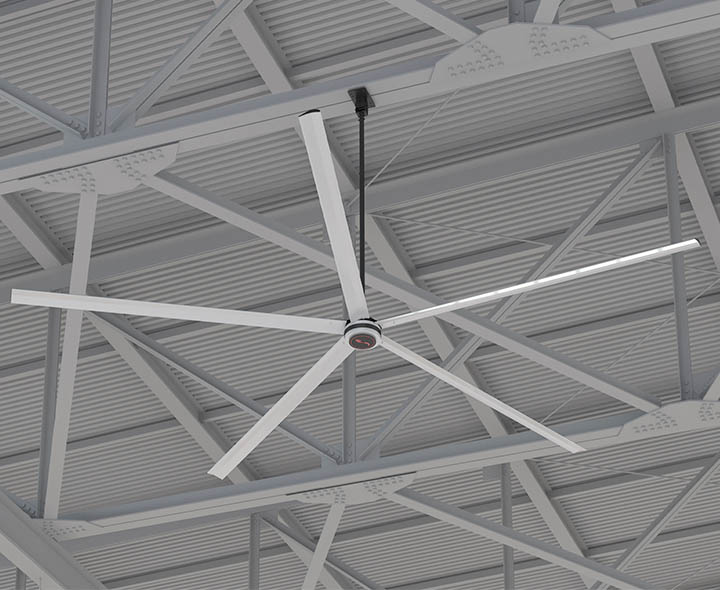
A good distributor does not just move boxes. A strong distributor helps match the right 超低烟无卤风扇 to the building, coordinates sizing, explains controller choices, and supports installation planning. That matters because a fan that works well in a gym may not be the right fit for a tall warehouse or a low commercial hall. Vindus describes this as airflow planning plus stable supply and project support, not simple reselling.
In practice, the best distributor becomes a bridge between the site and the factory. That means checking ceiling height, obstructions, operating hours, humidity, occupancy, and the goal of the project. Is the building trying to improve worker comfort, fix stratification, support indoor air quality, or simply cut operating cost? Those answers shape the fan choice more than brand hype does.
在 维德斯风扇, we look at this work as part engineering, part service, and part communication. Since Vindus positions itself as a Swedish-engineered manufacturer with factory-controlled quality and global supply support, the distributor role is strongest when it turns that factory strength into a clearer buying path for the customer.
What Does an Indoor HVLS Fans Distributor Actually Do?
Why Is an HVLS Fan Better Than a Standard Ceiling Fan in a Large Building?
A standard ceiling fan can work well in a small room, but it usually cannot handle a large space with tall ceilings and changing temperature layers. An hvls fan is built for a different job. It rotates slowly, but it pushes a much larger volume of air across the floor, creating broad air circulation instead of a narrow blast. DOE guidance on fans explains the basic comfort principle clearly: fans cool people by increasing air speed, not by changing room temperature like refrigeration does.
That difference is why hvls 吊扇 are commonly used in gyms, factories, and distribution buildings. Big Ass Fans describes the category as large-diameter overhead fans that send a wide column of air to the floor, while Hunter says its Titan line is engineered for superior air movement and energy efficiency in large facilities. The core idea is the same: broad, quiet airflow beats scattered, high-speed spot cooling in open buildings.
So when a buyer compares a common ceiling fan with a real hvls industrial fan, the better question is not “Which spins faster?” It is “Which can move enough air where people actually work?” In many big rooms, the answer is HVLS. These systems move large volumes of air, create a useful cooling effect, and are ideal for large open interiors where smaller fans fall short.
How Do HVLS Ceiling Fans Improve Comfort in a Warehouse and Other Large Facilities?
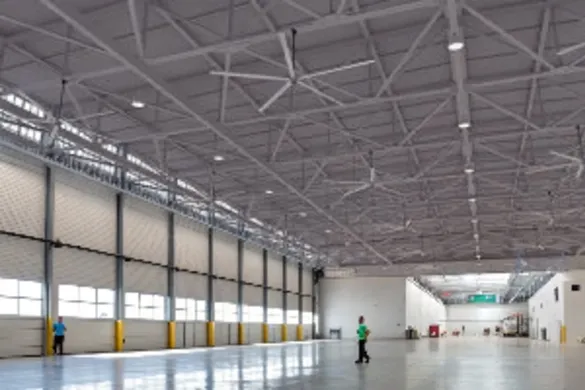
A hot roof and still floor are classic building problems. In a warehouse, warm air gathers high while people and products remain below. Overhead HVLS systems help break up those layers and circulate air more evenly. Greenheck says overhead HVLS fans provide destratification, comfort cooling, and condensation prevention in warehouses, with benefits that include improved safety, productivity, and energy savings.
Vindus makes a similar case from the application side. Its warehouse page says its systems are designed to improve work environment comfort, simplify maintenance, and support easier installation. That matters in real operations, because buyers are not only looking for a fan that works on day one. They want reliability across long shifts, busy seasons, and changing temperatures.
This is where hvls fans improve both comfort and operations. By helping push warm air down in winter and supporting cooling in the summer, they can stabilize conditions through the year. That is especially valuable in large 仓库, sports halls, and other large facilities where overhead air balance affects comfort and workflow every day.
Quick comparison: small fans vs HVLS fans
| 特征 |
Small directional fans |
HVLS 吊扇 |
| 覆盖范围 |
Local |
Building-wide |
| Air pattern |
狭窄的 |
广阔 |
| 最适合 |
Spot cooling |
Large open interiors |
| Typical result |
Uneven comfort |
More even air movement |
This comparison reflects how official brand pages position HVLS products against localized cooling approaches.
What Should You Compare When Choosing an Industrial Fan Distributor?
A serious industrial fan distributor should help you compare more than price. Start with application fit, then review control options, noise, support, warranty, and installation requirements. Vindus product pages, for example, publish direct-drive design, CE/EN/IEC conformity, controller compatibility, network support, and operating details that help buyers compare products in a practical way.
You should also compare how the distributor handles project support. Can they explain the difference between medium-size and large-format fans? Can they recommend models for industrial spaces versus commercial halls? Can they help you read the building instead of forcing one product into every job? Those service details matter because even the best equipment can disappoint if it is poorly matched to the space.
A useful checklist looks like this:
- Building dimensions and mounting conditions
- Controller options and group operation
- Noise level and speed control
- Support for indoor projects and retrofits
- Service path after installation
- Manufacturer backing and delivery stability
That is the kind of review that separates a catalog seller from a real distributor.
Why Do Airflow, Air Movement, and Air Distribution Matter So Much Indoors?
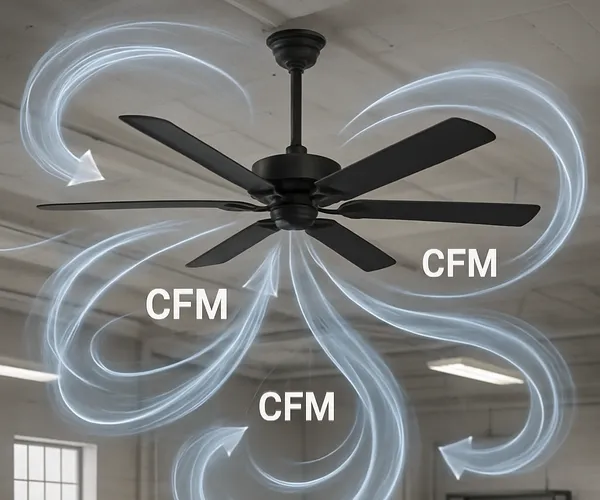
In a big interior, comfort depends on how air moves across people, not just on what the thermostat says. That is why airflow, air movement, and air distribution matter so much. If air only reaches one corner, the building still feels uneven. If it spreads gently across the occupied floor, the same room feels calmer, cleaner, and easier to work in. DOE explains this through the wind-chill effect created by fans, while product pages from Hunter, Greenheck, and Vindus all connect broad air movement with comfort and performance.
This also affects indoor air conditions. Better mixing can help reduce stale zones and humidity buildup, especially in sports facilities, schools, or manufacturing buildings where occupancy and heat loads change over time. Vindus says its M750 line can improve indoor air quality and thermal comfort, while its sports-center pages highlight reduced humidity and better environments for athletes and visitors.
For buyers, the key lesson is simple: good fans do more than just spin. Good fans improve indoor comfort by helping improve air conditions where people actually stand, walk, work, and train. That is why an industrial fan choice should always start with how the space is used.
Why Do Airflow, Air Movement, and Air Distribution Matter So Much Indoors?
How Can HVLS Systems Support Energy Efficiency, HVAC Balance, and Lower Bills?
This is one of the biggest reasons customers move toward HVLS. DOE says using a fan can let you raise the thermostat setting by about 4°F without reducing comfort, because air movement helps people feel cooler. That is a clear example of how fans can support energy efficiency and help reduce energy costs when used properly with hvac systems.
Vindus makes similar claims in its official material. The company says the M650 uses a PMSM motor and consumes 335W at top speed, while the M750 consumes 835W at top speed and is designed to maximize HVAC efficiency, lower energy consumption, and reduce bills. On its commercial building page, Vindus also shares a customer example claiming a 38% winter energy-bill reduction when HVLS fans worked together with heating.
No distributor should promise magic savings without context, but the overall logic is strong. When you use high-volume overhead fans to improve mixing, reduce stratification, and stabilize floor comfort, you often make the whole climate control strategy work better. That is where cost savings start to become real.
Where the savings usually come from
| Source of improvement |
Typical effect |
| Better destratification |
Less wasted heat near the roof |
| Broader floor comfort |
Less need for overcooling |
| More even mixing |
Better HVAC support |
| Fewer scattered small fans |
Cleaner operation and simpler controls |
This table summarizes the way official sources describe the value of HVLS systems in open buildings.
Which Spaces Benefit Most From Industrial HVLS Fans?
The shortest answer is this: spaces with high ceilings, open floors, changing occupancy, or layered temperatures tend to benefit most. That includes factories, sports halls, logistics buildings, schools, and public-use rooms. Vindus repeatedly positions its products for factories, warehouses, sports centers, commercial buildings, and other big interiors, while Hunter and Greenheck do the same for gyms, warehouses, and industrial sites.
That is why industrial hvls fans are so widely discussed in the context of industrial and 商业空间. A large overhead system is often better suited to large industrial spaces and large areas than directional fans, which usually cool one zone at a time. HVLS systems are especially useful in manufacturing facilities and other buildings where comfort, airflow balance, and operating cost all matter together.
Put simply, a well-matched hvls industrial setup is often the better answer when the building is open, tall, and active. A fan is designed for its environment, and the best results come when the distributor treats the space as a system rather than a simple product sale.
What Technical Details Matter Most, From Diameters to Control Systems?
Start with diameter and mounting height. Official product pages show that modern HVLS systems often span wide size ranges. Hunter’s ECO line runs from 8 to 24 feet; Titan reaches 24 feet; Vindus M650 covers 10 to 14 feet, while the M750 extends into larger-format coverage. These ranges matter because low speed fans only work well when they match the room.
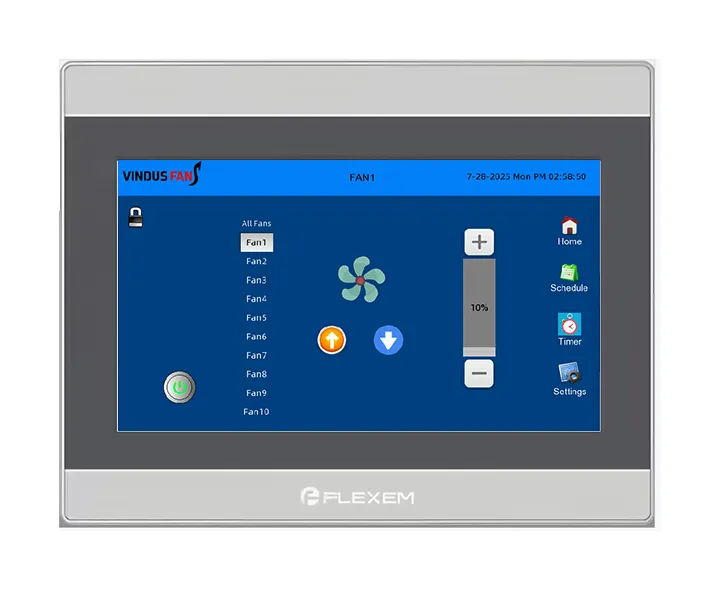
Next, look at controls. Good systems support scheduling, grouped operation, reversibility, and fine speed adjustment. Vindus says its controllers can operate up to 20 fans and emphasizes direct-drive design, quiet operation, adjustable mounting, and smart control through FanBrain. That combination makes a strong case for efficient airflow in big buildings without overcomplicating daily use.
Finally, check support and standards. Vindus says it follows ANSI/ASHRAE 216P and AMCA 230-15 guidelines, while AMCA materials explain why recognized methods matter for large-diameter fan performance. This is where low-speed engineering becomes more than a marketing phrase. It becomes part of product credibility.
Why Is Vindus Fans a Practical Partner for Industrial and Commercial Projects?
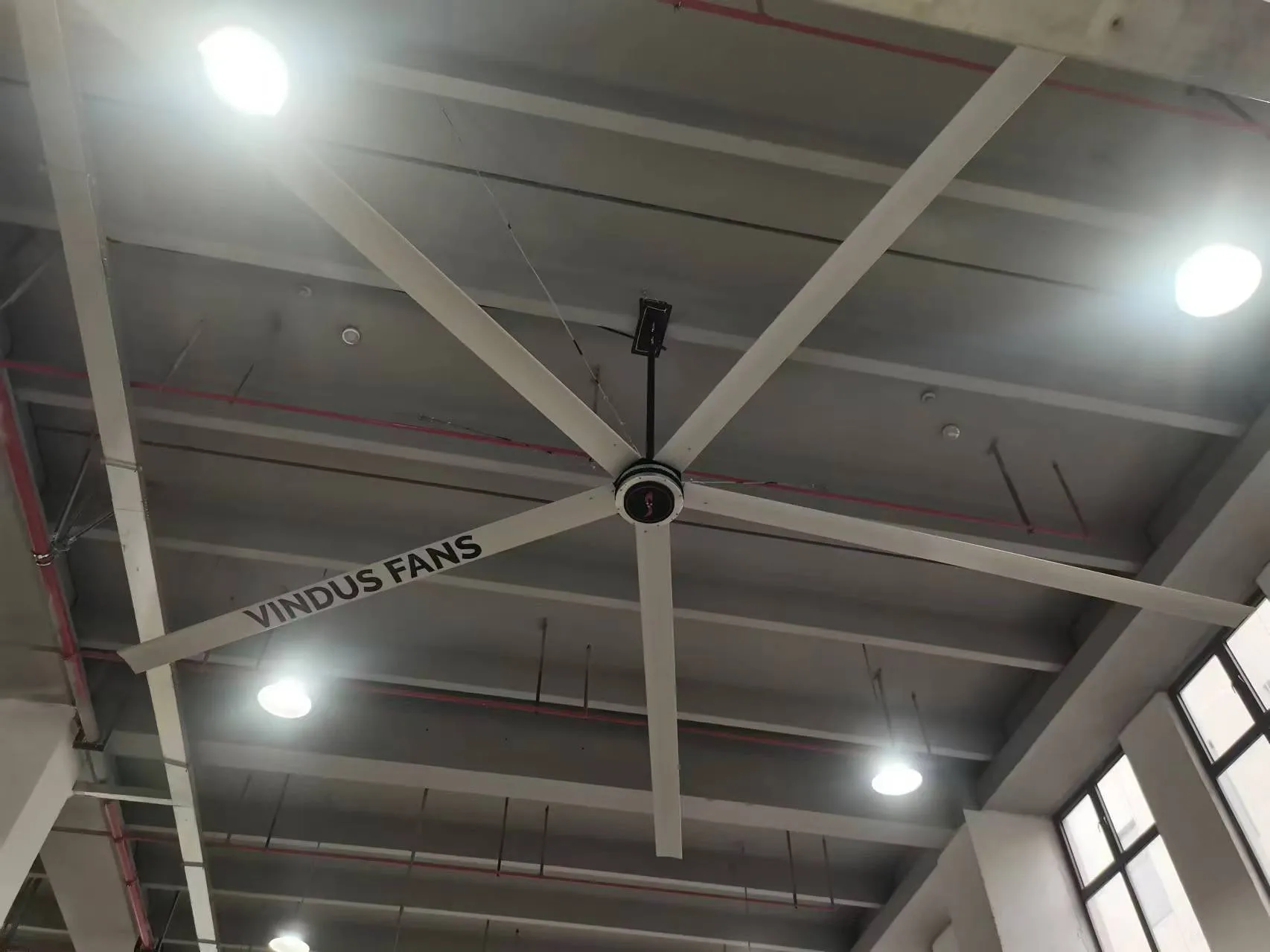
Vindus Fans is positioned as a focused HVLS manufacturer rather than a generic reseller. Its official pages describe Swedish engineering support, Qingdao manufacturing, direct-drive product lines, and applications across warehouses, factories, 体育中心, commercial buildings, and large public spaces. That makes it a practical choice for projects that need a clear product range, factory support, and real-world installation logic.
The company’s product structure is simple in a good way. M650 covers smaller and mid-size projects with easy installation and lower power draw. M750 targets large industrial and broader open spaces with stronger output, improved air quality messaging, and controller support. FanBrain adds a smart control layer for customers who want better coordination across multiple fans.
For buyers, that translates into something useful: a partner that can explain where each model fits. If your project needs a best hvls answer for a gym, school, large commercial hall, or factory, that kind of clarity is more valuable than brand noise. And if your goal is comfort and productivity, not just spinning blades, Vindus has built its message around exactly that outcome.
Why Is Vindus Fans a Practical Partner for Industrial and Commercial Projects?
Mini Case View: What Good Indoor HVLS Selection Looks Like
A school gym, a factory hall, and a logistics building may all need better overhead air movement, but they do not need the same answer. A gym may care more about quiet operation and visitor comfort. A factory may care more about coverage and long operating hours. A logistics building may care most about stratification and simple service. Official product lines from Hunter, MacroAir, Greenheck, and Vindus all show this by offering different size ranges and model families rather than a single universal fan.
That is why the distributor’s role matters. The best distributor helps you read the building first, then narrows the solution. When that happens, hvls fans deliver more than cooling. They support smoother industrial air conditions, cleaner airflow, and better day-to-day experience across the room.
常见问题解答
What does an indoor HVLS fans distributor do?
A distributor helps match the right hvls fan to the building, explains size and controls, supports installation planning, and coordinates service after the sale. Vindus describes this as airflow planning, stable supply, and project support rather than simple product shipping.
Are HVLS systems only used in warehouses?
No. Official pages from Vindus, Hunter, and Greenheck all show uses in warehouses, factories, gyms, sports centers, schools, and commercial buildings. These systems are broadly used for cooling and comfort support in big open interiors.
How is an HVLS fan different from directional fans?
Directional fans usually send air in one narrow path. An hvls fan is built to spread broad, gentle air across the occupied floor. That is why HVLS systems are better suited to open rooms where you need even air coverage instead of spot cooling.
Can HVLS fans help lower energy bills?
They can help support lower bills by improving comfort and letting HVAC systems work more effectively. DOE says fans can allow higher thermostat settings without reducing comfort, and Vindus publishes product-specific low-power data and application case claims tied to lower operating cost.
What sizes are common for indoor HVLS fans?
Common sizes vary by brand and application. Official pages show ranges such as Hunter ECO at 8 to 24 feet, XP at 7 to 14 feet, Titan up to 24 feet, and Vindus M650/M750 covering medium through large-format installations.
Why should I compare more than one brand?
Because each brand emphasizes different strengths. Hunter highlights Titan, ECO, and XP families; MacroAir emphasizes AirVolution; Vindus emphasizes M650, M750, and FanBrain; Greenheck emphasizes broad industrial and commercial fit. Comparing only one brand makes it harder to find the best match for your building.
关键要点
- An indoor hvls fans distributor should guide selection, not just sell a product.
- HVLS ceiling fans work best in big open rooms where smaller fans cannot create even comfort.
- Better airflow, better mixing, and smarter controls often matter more than raw speed.
- Vindus Fans offers a focused product structure with M650, M750, and FanBrain for indoor commercial and industrial projects.
- Good HVLS systems can help support comfort and productivity, improve perceived cooling, and help reduce energy costs when used with HVAC.
- The smartest buying path starts with the building, then matches the fan to the space.