The summer heat turns industrial spaces into danger zones. Workers slow down, fatigue rises, and heat stress quietly builds. Without proper airflow, safety and performance collapse. A hvls fan becomes a simple but powerful fix for this growing workplace challenge.
HVLS fans improve employee safety during hot summer conditions by moving large volumes of air at low speed, reducing heat stress, stabilizing perceived temperature, and improving airflow across warehouses and industrial facilities. This leads to better comfort, higher productivity, and fewer heat-related risks.
1. What is hvls fan and how does it address heat stress in the workplace?
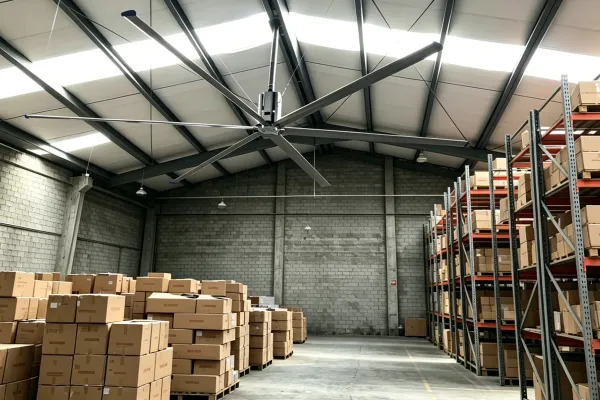
A hvls fan (high-volume, low-speed fan) is designed to move massive amounts of air slowly and evenly across large spaces. Unlike small fast-spinning units, a hvls fan creates a wide, gentle airflow that covers entire zones in a workplace like factories or distribution centers.
In real-world operations, hvls 风扇工作 by breaking up hot air layers and reducing stagnant zones. This helps directly reduce heat stress by stabilizing body temperature. When I visit a warehouse, I often see workers near dock doors struggling in still air—this is where a hvls fan makes an immediate difference.
Key benefits include:
- Continuous airflow circulation
- Reduced air movement stagnation
- Lower perceived temperature without heavy energy use
Simply put, a hvls fan turns uncomfortable industrial air into a breathable environment.
2. Why heat stress in warehouse environments becomes a serious industrial safety hazard?
In a warehouse environment, heat builds up quickly due to machinery, lighting, and poor ventilation. This leads to heat stress in the workplace, a serious industrial safety issue recognized by OSHA as a major hazard.
When summer temperatures rise, workers face:
- Heat exhaustion
- Heat stroke
- Reduced focus and slower reaction times
This is not just discomfort—it is a health and safety risk. OSHA guidelines warn that heat exposure in enclosed industrial facilities can put workers at serious risk if air circulation is not controlled.
Without proper systems, hot environments become unsafe zones where worker safety declines rapidly.
3. How hvls fans work to improve airflow and air movement in large industrial facilities?
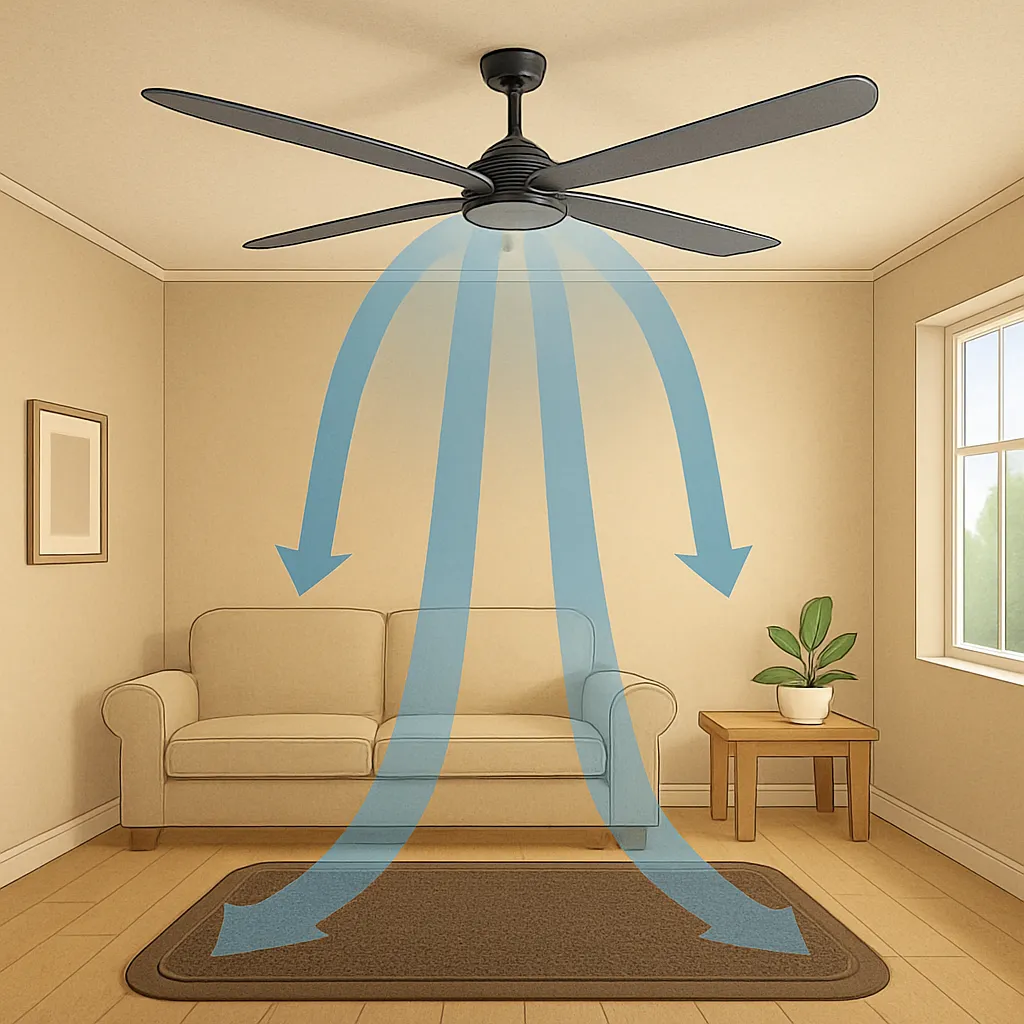
A hvls fan operates on a simple principle: move large volumes of air slowly across wide areas. This low-speed rotation creates a consistent airflow pattern that spreads across the entire industrial environments floor.
Unlike floor fans or small industrial fans, a hvls fan doesn’t just blow air—it pushes a wide blanket of air movement that stabilizes temperature zones.
Mechanically:
- Large blades rotate at low speed
- Air is pushed downward and outward
- Warm air is redistributed evenly
A single hvls fan can replace multiple smaller fans, reducing clutter and improving efficiency. This makes hvls fans also help create a more stable working environment.
4. Can hvls fans reduce heat stress and improve productivity at the workplace?
Yes—this is where hvls fans help most clearly. By improving airflow, a hvls fan reduces body temperature strain and directly lowers heat stress.
When employees feel cooler, they:
- Work longer without fatigue
- Make fewer mistakes
- Stay more focused
Studies in industrial environments show that better cooling conditions can improve productivity by up to 10–15%. That is a major gain for any warehouse or factory.
In my experience working with manufacturing plants, once a hvls fan system is installed, managers often report fewer breaks due to heat exhaustion and improved employee comfort almost immediately.
5. How hvls fans integrate with hvac systems to reduce heating and energy cost?
A hvls fan does not replace hvac systems, but it enhances them. Together, they help reduce heating load and improve overall climate balance.
Here’s how they work together:
HVAC cools or conditions air
hvls fan distributes that air evenly
Systems work more efficiently with less strain
This synergy leads to significant energy cost savings and better energy efficiency across facilities.
In many industrial facilities, adding a hvls fan reduces dependency on high-powered air conditioning systems, especially in large open areas.
6. What role does airflow and air quality play in heat stress in the workplace?
Proper airflow is essential for reducing heat stress in the workplace. Without circulation, air becomes stagnant, humid, and uncomfortable.
A hvls fan helps:
- Improve air quality
- Reduce trapped humidity
- Balance effective temperature
Even though a hvls fan does not lower actual temperature, it improves the perceived temperature, making workers feel cooler through better air movement and mild evaporative cooling effects.
This makes fans can help create safer, more breathable environments during peak summer months.
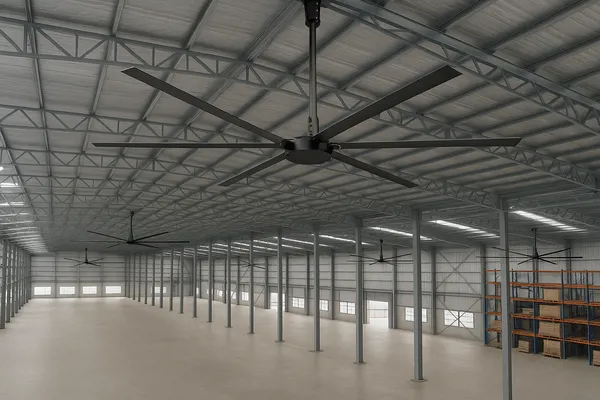
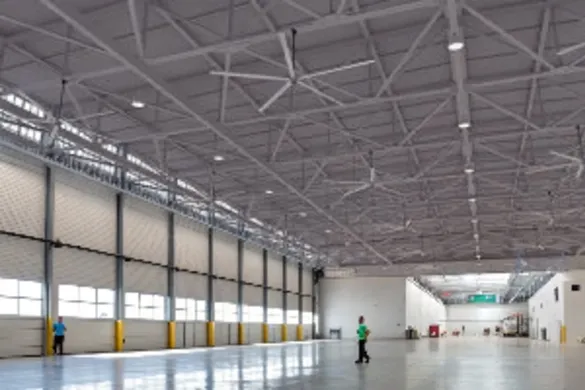
HVLS Fans keeping a large warehouse cool
7. How using hvls fans improves industrial safety and worker comfort during summer months?
Using a hvls fan significantly improves industrial safety by reducing overheating risks. In extreme cases, uncontrolled heat can lead to heat stroke, heat exhaustion, or even heat syncope.
A hvls fan can help stabilize conditions in areas like:
- Production floors
- Loading docks
- Storage zones
By improving air movement, workers experience better health and comfort, which reduces accident risks.
From a safety perspective, OSHA also emphasizes controlling environmental conditions under the general duty clause, making hvls fans also an important compliance tool.
8. Why warehouse environment benefits from hvls fans for energy efficiency and operational efficiency?
A warehouse environment is typically large, open, and difficult to cool. A hvls fan solves this by moving air across wide zones efficiently.
Benefits include:
- 降低能耗
- Improved energy efficiency
- Reduced reliance on air conditioning
A hvls fan can replace multiple smaller systems, reducing maintenance costs and improving operational efficiency.
In many logistics centers, installing a single hvls fan improves temperature balance across multiple aisles, especially near dock doors where heat enters frequently.
9. hvls fans vs conventional high-speed fans: which is better for heat exposure control?
When comparing systems, hvls fans can contribute more effectively than conventional high-speed fans in large spaces.
| 特征 |
超大节能风扇 |
高速风扇 |
| Air coverage |
Wide |
狭窄的 |
| Energy use |
低的 |
高的 |
| 舒适 |
稳定的 |
Harsh airflow |
| 噪音 |
Quiet |
Loud |
A hvls fan moves air gently, creating consistent cooling without discomfort. Meanwhile, smaller fans often create uneven cooling and higher energy cost.
In short, hvls fans reduce heat strain more effectively in large-scale industrial environments.
10. How hvls fans contribute to health and safety compliance (OSHA general duty clause)?
Compliance is critical in any industrial operation. OSHA requires employers to protect workers from recognized hazards, including extreme heat.
A hvls fan supports compliance by:
- Reducing heat stress
- Improving air circulation
- Lowering heat-related risks like heat stroke
Under the general duty clause, employers must provide a safe working environment. 安装 hvls 风扇 also help demonstrate proactive heat safety management.
This makes hvls fans work not just as comfort tools, but as essential industrial safety infrastructure.
常见问题解答
How many hvls fans are needed for a warehouse?
It depends on size and layout, but one hvls fan can often cover up to 10,000–20,000 square meters of open space.
Do hvls fans really reduce heat stress?
Yes, by improving airflow and air movement, a hvls fan reduces perceived temperature and helps control heat stress effectively.
Can hvls fans replace air conditioning systems?
No, but they reduce reliance on hvac systems, lowering energy cost and improving distribution efficiency.
Are hvls fans safe for industrial environments?
Yes. They are widely used in industrial environments and comply with OSHA safety expectations when properly installed.
Do hvls fans work in humid conditions?
Yes, they help improve evaporation and reduce discomfort caused by humidity, enhancing employee comfort.
What industries benefit most from hvls fans?
Factories, warehouse, gyms, schools, and manufacturing plants benefit most due to large open spaces and high heat exposure.
关键要点
- A hvls fan is one of the most effective tools for controlling heat stress in large industrial spaces
- It improves airflow, safety, and worker comfort in warehouses and factories
- Supports OSHA compliance and reduces heat-related risks
- Enhances energy efficiency and lowers long-term energy cost
- Works alongside HVAC systems to improve overall cooling performance
- Essential for improving productivity and safety in modern industrial environments