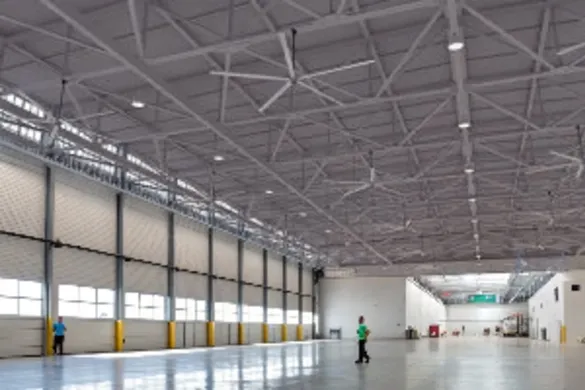
Big fans are a great tool. They move a lot of air. But they are very big and heavy. This can create a problem. If a big fan is not installed the right way, it can be very dangerous. People can get hurt. Buildings can be damaged. The fan could even make a fire worse. This is a big worry for anyone who owns a large building.
You need to know the rules to be safe. This guide explains the HVLS fan safety standards e engineering compliance you must follow. It is a simple guide with no fluff. It will help you understand how to keep everyone safe and your building protected. Following these rules is the only way to get the benefits of a big fan without the risks.
Core Safety Principles: Why HVLS Fan Compliance is Crucial
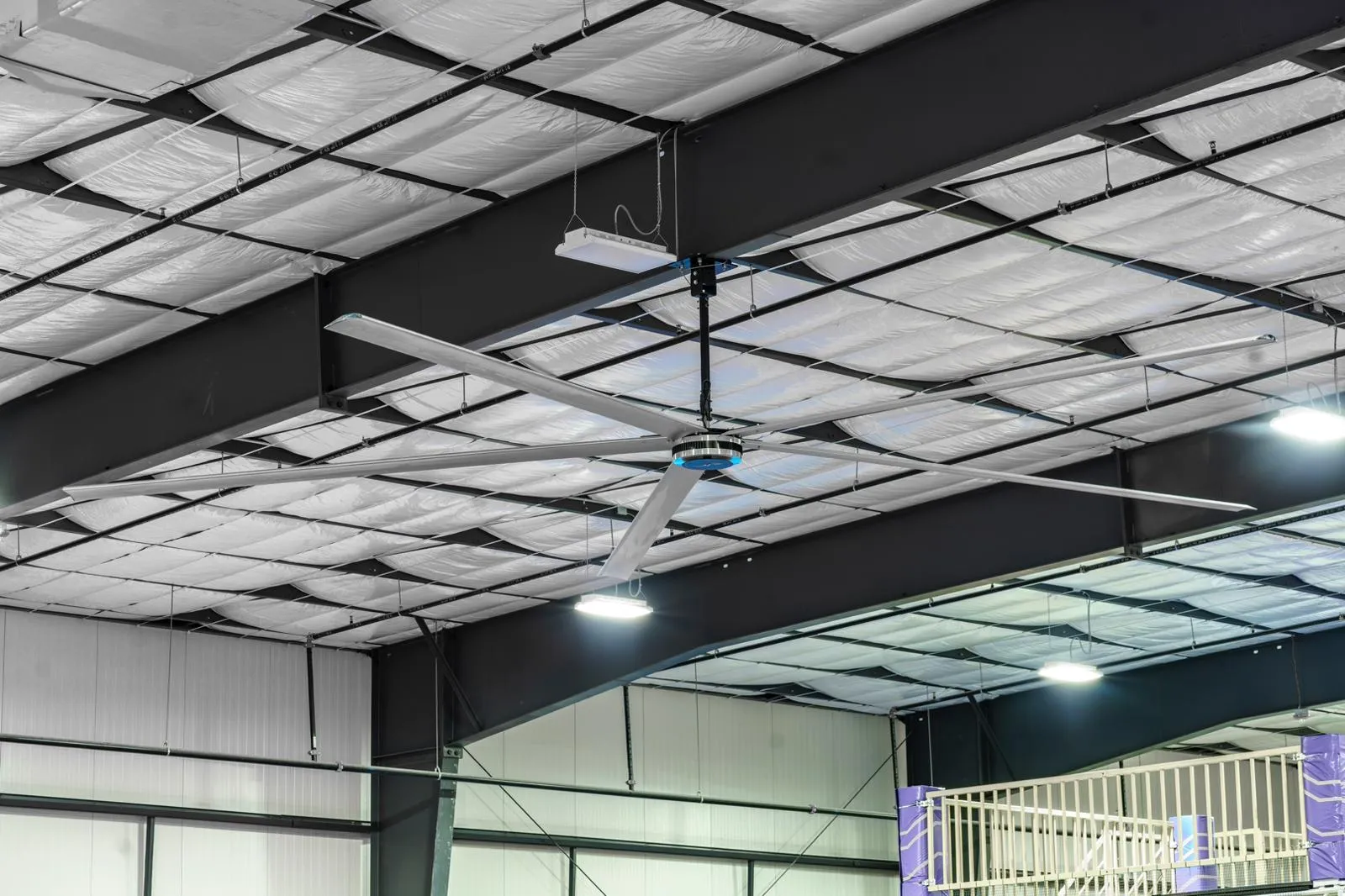
You have a problem. Your big fan, a High-Volume Low-Speed (HVLS) fan, has big risks. It is heavy, so the structural load is a concern. It uses a lot of power, creating electrical hazards. Its powerful airflow can even interfere with your fire safety systems.
These are not small problems. Ignoring these industrial fan safety rules can lead to disaster. Imagine a giant fan falling from the ceiling. Imagine it making a small fire spread faster. The costs of an accident are huge. You could face big fines and legal trouble. A failure to follow building code adherence can shut down your business.
The solution is to follow the rules. Smart people at key groups have made rules to prevent these things from happening. These groups include:
- O National Fire Protection Association (NFPA)
- Underwriters Laboratories (UL)
- O Air Movement and Control Association (AMCA)
- O Occupational Safety and Health Administration (OSHA)
Following the OSHA guidelines for industrial fans e o large diameter fan regulations from these other groups is not a choice. It is a must-do for a safe workplace. A full risk assessment é o primeiro passo.
Why HVLS Fan Compliance is Crucial
Fire Safety & Sprinkler Integration: Decoding NFPA 13 & 72 Mandates
Here is a serious problem. The powerful airflow from your Ventilador HVLS can make a fire much worse. It can blow the flames and smoke into new areas. It can also stop your fire sprinkler systems from working correctly. The air can cool the ceiling and delay your Early Suppression Fast Response (ESFR) sprinklers from turning on.
This is a scary thought. The very fan you use to keep people cool and comfortable could help a fire grow and put lives in danger. Your expensive fire suppression system might not even work when you need it most. This is a major fire safety compliance failure.
The solution is clear and required by law. The NFPA has strict rules in NFPA 13 e NFPA 72. These standards tell you exactly how to install your fan safely with sprinklers.
- The Critical Interlock Requirement
Todos Ventiladores de teto HVLS must have a fire alarm system interlock. This means the fan is connected to the building’s fire alarm control panel (FACP). The system must have waterflow signal detection. If a sprinkler turns on, a signal is sent, and the fan must shut down right away. This automated shutdown system is not optional.
- NFPA 13 Installation & Clearance Rules
NFPA 13 compliance also has rules for where and how you install the fan:
- Fan Size: The fan’s diameter cannot be more than 24 feet.
- Fan Place: The fan must be in the middle of four sprinkler heads.
- Fan Height: There must be at least 3 feet of space between the fan blades and the sprinkler heads.
Electrical Safety Compliance: The Importance of UL 507 Certification
Every big fan has a big motor. That means big electrical power. The problem is that bad wiring or a faulty motor can cause electric shocks or even fires. This is a hidden danger that can strike without warning.
An electrical fire from a fan high up on the ceiling is a nightmare. It can be hard to reach and can spread quickly. This is why strict electrical safety standards are so important. A failure here can destroy your building and put lives at risk.
The best solution is to only use fans with UL 507 certification. UL is a group known as a National Recognized Testing Laboratory (NRTL). The UL 507 stamp means the fan has passed very hard tests for electrical safety.
- What UL 507 Certification Guarantees
This certification means all the electrical parts are safe. This includes the motor, the control panel safety, and the wiring. It guarantees the fan is built to prevent fires and shocks, meeting all electrical wiring codes.
- Key Electrical Components & Requirements
A safe system includes many parts working together:
- Control Panels: Must be in NEMA rated enclosures to protect them from dust and water.
- Drives: O ventilador variable frequency drive (VFD) safety must be tested.
- Grounding: You must have proper electrical grounding requirements met by a professional.
- Maintenance Safety: Workers must use lockout/tagout procedures during any repair work.
- Protection: The system needs overcurrent protection e motor overload protection to prevent burnout.
Structural Integrity & Installation: Engineering for Safety
The problem is simple: Fãs HVLS are very heavy. A fan can weigh hundreds of pounds. If your building’s roof or beams cannot hold that weight, the fan will fall.
The result of a fan falling is a disaster. It can crush equipment, damage your building, and severely injure or kill people below. You cannot just guess if the structure is strong enough. This is why safe installation practices are the most important part of the process.
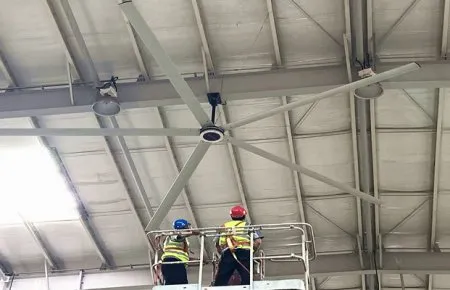
The only solution is to get a structural engineer approval. A qualified engineer must perform a structural integrity assessment. They will do structural load calculations to make sure the building is safe. This requires a professional engineer certification.
At Vindus Fans, we understand this better than anyone. Our company was started in Spain and has grown to include a hub in Qingdao, China, and a presence in the United States. Our Swedish engineering team designs our fans to be robust and easy to install safely. We know that safety starts with great engineering.
- Professional Structural Assessment
An expert must check the roof structure assessment to find the safest place for the fan.
- Secure Mounting and Hardware
You must use the right mounting hardware standards. This includes the right clamps for I-beam mounting or bolts for truss mounting.
- Essential Clearance Requirements
You must have safe clearance requirements. The fan blades must be far from walls, lights, and pipes. They also must be high enough off the floor to meet OSHA rules.
- Seismic Bracing
In areas with earthquakes, you must follow seismic bracing requirements. This keeps the fan from falling during a quake.
Structural Integrity & Installation: Engineering for Safety
Mechanical Safety Features: Redundancy by Design
What if a single part on the fan breaks? A broken bolt or a loose pin could become a huge problem. This is a major worry. A small failure on a huge, spinning machine can quickly turn into a big accident.
You can’t afford to have a fan where one broken part leads to a total disaster. You need a fan that is designed to be safe, even if something goes wrong.
The solution is a fan designed with many backup safety systems. This is called redundancy. Good manufacturers build multiple layers of safety into their fans. It’s one of the most important manufacturing strengths to look for. For example, our team of experts designs the best HVLS fans with multiple safety features built-in, so there is no single point of failure.
- Onboard Safety Systems
Look for these key safety features:
- Safety Cable Systems: A steel cable that acts like a seatbelt for the fan. If the main mount fails, the cable catches it.
- Guy Wire Installation: These wires stop the fan motor from shaking or swaying too much.
- Blade Retention Systems: These systems lock the blades to the fan hub, so they cannot fly off. This can include a safety ring inclusion or special bolts.
- Hub Safety Mechanisms: The central part of the fan must be strong, often using reverse-threaded bolts e tapered bushings.
- Blade Guard Design: Protects the blades from being hit by other objects.
Performance Verification: Why AMCA Certification Matters
You have another problem. A company says their fan moves a lot of air and saves energy. But how do you know if it’s true? They could be wrong, or even lying.
You might spend thousands of dollars on a fan that does not do the job. It might be too loud, use too much energy, or not create the airflow you need. You feel cheated and your problem is not solved. This is why a performance certification is so important.
The best solution is to look for the AMCA seal. AMCA performs third-party testing in a special laboratory testing environment. This means you get a true, honest report of the fan’s performance.
- AMCA 230 – The Standard for Airflow
This is the main standard for testing fans. AMCA 230 provides certified ratings for:
- Airflow Measurement (CFM): How much air the fan moves, measured in Cubic Feet per Minute.
- Thrust: The force of the moving air.
- Energy Efficiency Testing: How much air it moves for each watt of electricity.
- AMCA 208 – The Fan Energy Index (FEI)
This standard helps you meet energy codes like ASHRAE Standard 55. It gives a simple score for the fan’s energy efficiency. This is key for destratification safety e economia de energia.
Data, Statistics, and Case Studies on Safety
Words are one thing, but numbers and real stories show the true importance of safety.
Analysis of Key HVLS Fan Safety Standards
This chart shows the biggest rules and what they prevent.
| Standard/Regulation |
Governing Body |
Key Compliance Requirements |
Risk of Non-Compliance |
| NFPA 13 & 72 |
National Fire Protection Association |
– Must shut down with fire alarm.<br>- Max 24 ft diameter with sprinklers.<br>- Min 3 ft clearance to sprinklers. |
Delayed fire fighting, faster fire spread. |
| UL 507 |
Underwriters Laboratories |
– Tests of all electrical parts.<br>- Prevents shocks and fires.<br>- Ensures strong mechanical parts. |
Electric shock, fire, parts falling. |
| OSHA Guidelines |
Occupational Safety and Health Admin. |
– Proper guards on machines.<br>- Lockout/Tagout for repairs.<br>- Safe installation. |
Worker injury, falls, heat stress. |
The Tangible Benefits of Compliance
This table shows the good things that happen when you follow the rules.
| Benefit Category |
Data/Statistic |
| Enhanced Workplace Safety |
One HVLS fan can replace 20 floor fans, removing trip hazards. |
| Melhoria da produtividade dos trabalhadores |
Can make a room feel up to 8°F cooler. Productivity drops when it is too hot. |
| Energy & Cost Savings |
Can cost as little as $1 per day to run. |
| Operational Efficiency |
One fan can cover up to 22,000 square feet. |
Real-life stories show what happens when things go wrong. In one case, a large fan “exploded” because of a mechanical failure, hurting people nearby. In another, two workers were hurt when a large fan fell on them. These are not just stories; they are warnings.
Ongoing Compliance: A Safety & Maintenance Checklist
The problem is that safety is not a one-time job. After the fan is installed, you must keep it safe. Parts can wear out. Bolts can come loose.
If you forget about the fan, it can become a danger over time. A small problem that is not fixed can grow into a big one. This can lead to an accident that you could have prevented.
The solution is a plan for preventative maintenance and regular checks. You need a safety inspection checklist and a schedule.
- H3: Regular Safety Inspections
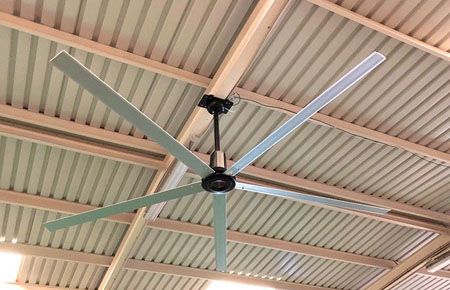
Once a month, do an on-site inspection. Look at the fan. Check for loose parts. Listen for strange noises. Look at the blades to see if they are damaged.
- H3: Employee Training
Teach your team about safe operating procedures. They should know to report any problems they see or hear.
- H3: Adhere to Manufacturer’s Maintenance Schedule
Your fan comes with a manual. It tells you when to do maintenance. Follow it. Keep compliance documentation for all the checks and repairs you do. This is your proof that you are keeping up with safety.
A Safety & Maintenance Checklist
Frequently Asked Questions (FAQ)
- What is the most important safety standard for HVLS fans?
If you have sprinklers, NFPA 13 e NFPA 72 are the most critical for life safety. For electrical safety, UL 507 is the one you must have.
- Do HVLS fans have to shut down in a fire?
Yes. The law says they must be connected to the fire alarm and shut down automatically when sprinklers are activated.
- Can I install an HVLS fan myself?
No. You must use a professional installer. This ensures the structural integrity and electrical wiring are correct.
- How do I know if a fan’s performance claims are real?
Look for the AMCA Certified Ratings seal. This proves that an independent group has tested and verified the fan’s performance for things like airflow velocity and efficiency. Many top-tier ventiladores de teto industriais para a indústria transformadora will proudly display this certification.
Choosing a fan from a trusted HVLS fans manufacturer is the first and most important step in ensuring long-term safety and compliance. These manufacturers, who often supply ventiladores HVLS de armazém, understand that safety is not just a feature—it is the foundation of their product. From commercial building fan codes to the specific needs of an agricultural fan safety standards, a good partner builds to all specifications. This commitment ensures everything from the airfoil safety e blade pitch angle para o sound level testing is done right, giving you peace of mind.