Big rooms fail in predictable ways: hot spots, sticky air, uneven temps, and rising HVAC bills. People slow down, equipment runs harder, and comfort complaints never end. I’ve seen this pattern in factories and gyms. The fix is not “more cooling”—it’s smarter air movement.
Commercial HVLS fan benefits are simple to state: an HVLS fan moves a huge blanket of air that helps people feel cooler, reduces temperature gaps, and supports lower HVAC demand—especially in tall, wide spaces. When done right, you get comfort you can measure, not just feel.
Article outline
- What are the most valuable commercial HVLS fan benefits for large facilities?
- Benefit 1 — Lower cooling cost: how an HVLS fan reduces HVAC load through better airflow
- Benefit 2 — Better comfort at floor level: why high volume low speed air movement matters
- Benefit 3 — Winter savings: destratification and bringing warm air down in tall buildings
- Benefit 4 — Fewer hot spots in a warehouse: improving air circulation across aisles and work zones
- Benefit 5 — Improved process consistency: stabilizing air temperature and climate control in large spaces
- Benefit 6 — Cleaner-feeling space: when HVLS can improve perceived air quality (and when it can’t)
- Benefit 7 — Higher productivity and fewer heat-stress disruptions in industrial and commercial operations
- Benefit 8 — Scalability: why one HVLS fan system can replace many smaller fans in a large space
- How to make sure you actually get the benefits: practical design choices (fan size, placement, controls)
What are the most valuable commercial HVLS fan benefits for large facilities?
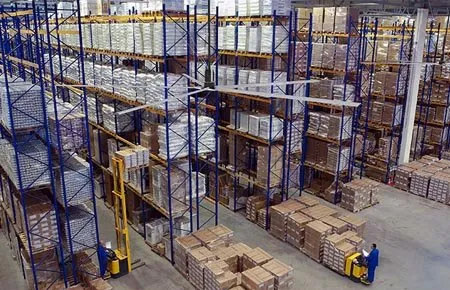
When I talk to facility managers, they don’t want poetry. They want outcomes. In factories, commercial buildings, sports centers, gyms, schools, and logistics sites, the best commercial HVLS fan outcomes usually land in eight buckets: comfort, HVAC relief, winter stratification control, fewer hot spots, steadier operations, better perceived air quality, higher productivity, and simpler site-wide airflow management.
Here’s the professional way to view it: fans offer a “comfort multiplier.” They don’t magically lower the thermostat reading—but they can make people feel cooler by increasing moving air, and they can reduce the temperature gap between the floor and the ceiling by mixing the air column.
Benefit-to-metric map (what we measure in real projects)
| Benefício |
What you measure |
Typical proof point |
| Cooling relief |
Setpoint tolerance, run hours |
Higher setpoint with same comfort |
| Destratificação |
Floor-to-ceiling delta |
Big delta becomes small delta |
| Fewer hot spots |
Zone complaints, spot temps |
Variance drops across zones |
| Perceived air quality |
“stuffy” complaints, CO₂ distribution |
Less stagnant air sensation |
| Productivity support |
slowdowns, breaks, errors |
fewer heat-related disruptions |
What are the most valuable commercial HVLS fan benefits for large facilities?
Benefit 1 — Lower cooling cost: how an HVLS fan reduces HVAC load through better airflow
A cost-saving story needs a mechanism. Here it is: higher air speed increases heat transfer from skin (convection + evaporation), creating a cooling sensation. That means you can often keep comfort even when the air temperature is slightly higher. The CBE guidebook explains that fans create this “cooling effect” fast—much faster than waiting for the HVAC to shift the whole space.
The U.S. Department of Energy makes the point in plain language for ceiling fans: you can raise the thermostat about 4°F without losing comfort (when the fan is used properly). That’s not an HVLS-only claim, but the comfort physics scales into large facilities when you design coverage correctly.
A simple ROI model (example—use your own rates and hours)
| Input |
Example value |
Notas |
| Cooling season hours |
2,000 h |
occupied hours matter |
| Setpoint change |
+2°F |
conservative vs DOE’s 4°F guidance |
| HVAC reduction |
5–12% |
varies by building + controls |
| Fan power |
depends on model |
keep speed low; aim for comfort, not blast |
If you’re shopping fans for sale, this is the question that separates “cheap airflow” from real cost savings: Can your supplier show a comfort plan that lets you change setpoints with fewer complaints? That’s where the savings actually comes from.
Benefit 2 — Better comfort at floor level: why high volume low speed air movement matters
In big buildings, comfort is won at the occupied zone—where people stand, lift, run, teach, and work. An HVLS fan is built to move large volumes of air gently, so the breeze feels natural. This is not like high-speed fans that create a harsh jet. It’s closer to a steady, wide “push” of air.
Here’s the simple explanation I use with non-engineers: the fan turns slow, but it moves a lot of air. That’s high volume at low speed. When done right, fans improve comfort without papers flying or dust lifting. The AMCA “large-diameter ceiling fans” guide highlights why average air speed and uniformity matter—and even flags “paper flutter” as a sign you pushed too far.
One more practical benefit: uniform comfort reduces “thermostat fights.” In a mixed-use commercial building, people near the vents complain about cold, while people farther away complain it’s hot. With better air movement, those complaints often drop because the space feels more even.
Benefit 3 — Winter savings: destratification and bringing warm air down in tall buildings
Winter is where the business case can become very obvious in tall buildings. Heat rises. In a tall industrial hall, you can have a warm ceiling and a cold floor. That means you pay to heat the roof—then you keep paying because the thermostat is still unhappy.
A real field study in an airplane hangar measured this clearly. When the fan was off, the average floor-to-ceiling temperature gradient was 6.0°F. When the fan ran, it dropped to 0.7°F. That’s not marketing—those are logged measurements.
It also reported a 29% decrease in normalized gas use when the fan was operational. The same paper notes the fan ran at 25% speed and drew about 100 W, and the speed was chosen so it didn’t produce a noticeable breeze at occupant level.
Mini chart (real numbers from the hangar study)
- Fan OFF: Floor→Ceiling ΔT ██████ 6.0°F
- Fan ON: Floor→Ceiling ΔT █ 0.7°F
- Heating gas use: ↓ 29% (normalized)
That’s the “year-round benefits” argument in one picture.
Benefit 4 — Fewer hot spots in a warehouse: improving air circulation across aisles and work zones
A warehouse is not one open room. It’s aisles, racks, docks, pick zones, pack lines, and often mezzanines. Hot spots show up where air stalls—behind racking, near loading doors, or under mezz decks. The goal is not “max wind.” The goal is stable airflow that reaches the work height.
In practice, I treat it like a coverage problem: you want air to move air throughout the zones that matter. If your fan placement ignores racking and obstructions, fans help in one area and do almost nothing in the next aisle.
Here are three warehouse patterns where HVLS usually pays back fastest:
- Dock zones: doors open/close all day; comfort swings hard.
- Pick/pack areas: people stand still; discomfort hits sooner.
- High-bay storage: stratification and stale pockets increase.
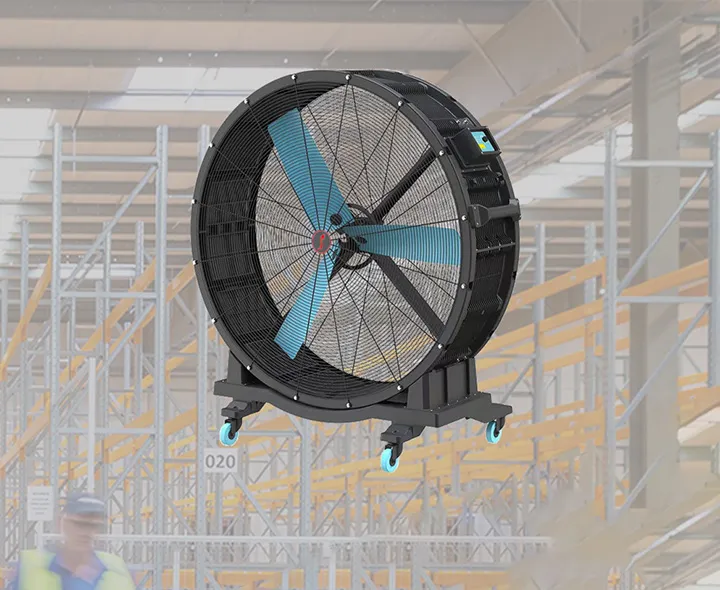
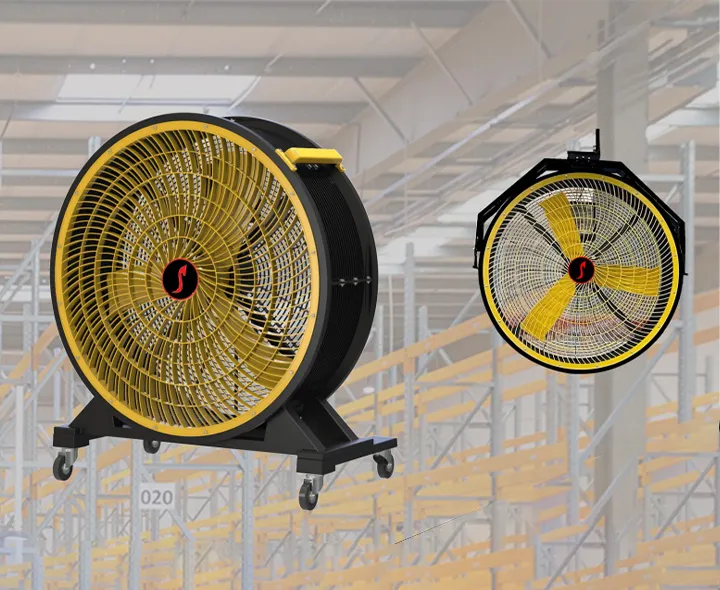
This is why many buyers ask for ventiladores de armazém specifically—because they need consistent air circulation, not a spot cooler.
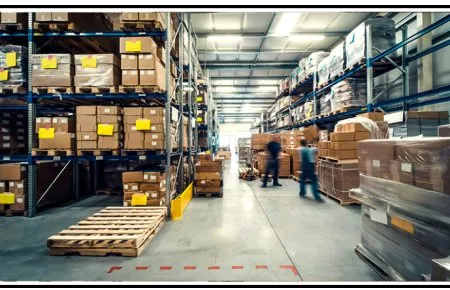
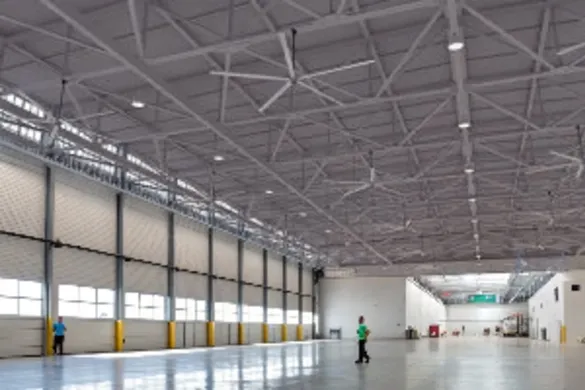
Ventilador HVLS operando em um armazém
Benefit 5 — Improved process consistency: stabilizing air temperature and climate control in large spaces
Not every benefit is about “feels cool.” In industrial operations, stability matters. Some processes hate swings in air temperature—and people do too. When air pools at the roof and the floor stays cold, you get uneven conditions that ripple into operations (comfort complaints, condensation risks, and HVAC over-cycling).
This is where hvls technology becomes a “mixing tool.” It can reduce stratification and help your HVAC deliver more consistent conditions. That’s especially valuable in a large industrial hall where the supply air never fully mixes on its own.
I like to explain it like this: fans create a mixing engine that your HVAC can “ride on.” Instead of forcing your system to overcool or overheat to reach distant zones, you can aim for steadier whole-building conditions. That can reduce waste and improve “climate control in large” spaces.
Benefit 6 — Cleaner-feeling space: when HVLS can improve perceived air quality (and when it can’t)
Let’s be strict here: an HVLS fan is not a filter. It doesn’t remove particles. But it can change how a space feels by breaking up stagnant air pockets and distributing conditioned air more evenly. That’s why people often report better perceived air quality when fans are used correctly.
The CBE guidebook explains how increased air speed provides quick comfort and helps people adapt to changing conditions. That comfort effect often reads as “fresher air,” even if the actual pollutant removal still depends on ventilation and filtration.
When HVLS helps perceived air quality
- Big open rooms where air “layers”
- Areas where supply air never reaches corners
- Places where odor complaints cluster in dead zones
When HVLS does not solve air quality
- If you need more outdoor air (ventilation limit)
- If you need filtration for dust/smoke (filtering limit)
- If sources are strong (welding fume, chemicals)—you still need capture and exhaust
The honest pitch wins trust: use HVLS for mixing and comfort; use the HVAC and ventilation design to actually remove contaminants.
Benefit 7 — Higher productivity and fewer heat-stress disruptions in industrial and commercial operations
Heat stress is not just discomfort. It can slow work, increase errors, and increase risk. OSHA notes that increasing air flow using fans can help cool employees—but only when air temperature is below skin temperature (roughly under 95°F dry bulb), because moving air doesn’t “cool the air,” it cools the person.
That limitation matters in real sites. In a hot factory, you don’t want fake promises. You want a layered approach: ventilation, shade/rest planning, and air movement that reaches the worker. That’s where an HVLS fan often fits: it’s a wide-area comfort tool that supports safer work.
In my experience, the productivity benefit shows up in boring metrics:
- fewer “slow hours” in the afternoon
- fewer comfort complaints that interrupt supervisors
- fewer ad-hoc floor fans dragged around
That’s not glamorous, but it’s real productivity value.
Benefit 8 — Scalability: why one HVLS fan system can replace many smaller fans in a large space
In commercial sites, complexity has a cost. Lots of small fans mean more wiring, more points of failure, more cleaning, and more “who changed the settings?” calls. A well-designed hvls fan system can reduce that operational mess by using fewer units to cover more area.
This is not saying “one fan solves everything.” It’s saying the scaling is different. In many projects, one large fan can do the mixing job that would otherwise need multiple smaller fans placed around the floor.
This is also why industrial fans and big ceiling-mounted solutions are preferred in busy sites: floor space stays clear, hazards drop, and maintenance becomes scheduled instead of reactive. And yes—fans are available in different sizes and motor types, so you can standardize across buildings.
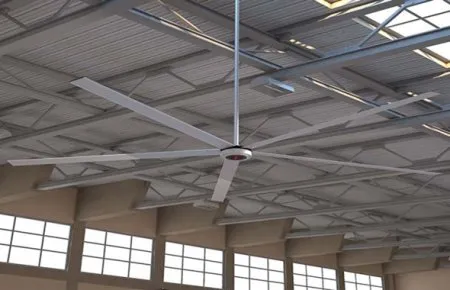
why one HVLS fan system can replace many smaller fans in a large space
How to make sure you actually get the benefits: practical design choices (fan size, placement, controls)
This section is still about benefits—because the benefits don’t “automatically happen.” Here’s the short, practical checklist I use when teams invest in hvls:
1) Set targets before you choose hardware
- Cooling: target comfort and avoid “paper flutter” air speeds (AMCA notes max average air speed concerns)
- Winter: target reduced stratification (measure the floor-to-ceiling delta)
2) Fan size and mounting must match the building
A wrong fan size is the fastest way to disappoint a buyer. Too small, and you get spot cooling. Too big, and you risk draft or interference. In the hangar study, the fan created a column of air downward, but speed was chosen to avoid a noticeable breeze at occupant level.
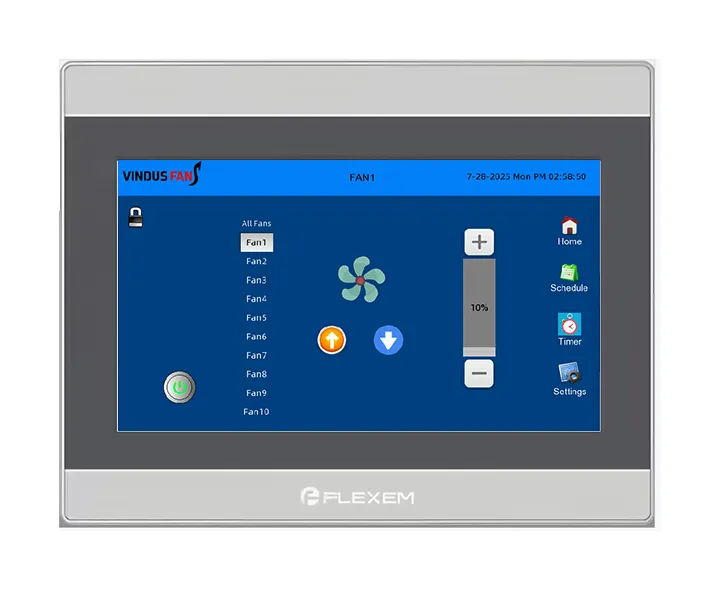
3) Controls matter more than people expect
This is where efficient hvls becomes real:
- schedule by occupancy
- zone control by building area
- integrate with hvac logic so the system doesn’t fight itself
- keep “comfort speed” as default, not max speed
4) Commissioning: prove performance in one page
Here’s a simple acceptance set you can hand to an engineer:
- Measure temperature at two heights (floor and near ceiling) before/after (destratification proof)
- Confirm comfort air speed in occupied zone (avoid over-blowing)
- Confirm operating cost and run schedule (ROI traceability)
That’s the difference between “spinning blades” and a commercial system.
Short case study: winter destratification with measured savings (real published data)
A published technical feature on an airplane hangar installed a 20 ft HVLS fan. With the fan off, the hangar showed an average 6.0°F floor-to-ceiling gradient. With the fan on, that gradient fell to 0.7°F, and the report states a 29% decrease in normalized gas use while the fan was operational.
What I like about this case is the operational detail: the fan ran at 25% speed, drew ~100 W, and was set so it did not interfere with worker operations or create a noticeable breeze. That’s exactly how real commercial sites operate: comfort first, then savings.
Perguntas frequentes
Do HVLS fans actually cool the air?
No. They don’t lower the air temperature. They help people feel cool by increasing air movement and heat loss from the body. That “cooling effect” is a key comfort mechanism.
Can I reduce HVAC costs with an HVLS fan?
Often yes—if you use it to support higher setpoints and better comfort distribution. DOE notes you can raise thermostat settings with ceiling fans while maintaining comfort (the comfort logic applies when you design coverage well).
Are HVLS fans useful in winter?
Yes. Destratification is a major benefit in tall buildings. Published field data showed a floor-to-ceiling gradient drop from 6.0°F to 0.7°F and 29% lower normalized gas use in one hangar study.
Do HVLS fans improve air quality?
They can improve perceived air quality by reducing stagnant air and mixing air better, but they do not filter or remove pollutants. You still need proper ventilation/filtration for true contaminant control.
Are fans safe for heat-stress situations?
Fans can help cool workers by increasing airflow, but OSHA notes they’re generally effective only when air temperature is below skin temperature (often under ~95°F dry bulb). In hotter conditions, you need additional controls.
How do I avoid a disappointing installation?
Ask for a commissioning plan: temperature gradient checks, comfort air-speed targets, and control strategy. Also compare traditional ceiling fans versus large-diameter systems—big spaces need big coverage, not just higher RPM.
Bullet-point summary: the most important things to remember
- The best commercial HVLS fan results are measurable: comfort uniformity, stratification reduction, and HVAC relief.
- Fans don’t lower air temperature; they help people feel cool through a fast “cooling effect.”
- Winter destratification can be a major savings lever in tall spaces; published data showed 6.0°F → 0.7°F gradient and 29% lower normalized gas use in one case.
- In a warehouse, coverage and obstacles matter more than “max speed.” Design for work zones and aisles.
- Perceived air quality can improve by reducing dead zones, but filtration/ventilation still does the cleaning.
- OSHA’s rule of thumb matters: fans help with heat stress only under certain temperature limits—don’t oversell.
- The “benefits” don’t happen by luck—set targets, choose the right fan size, and commission performance like a real system.