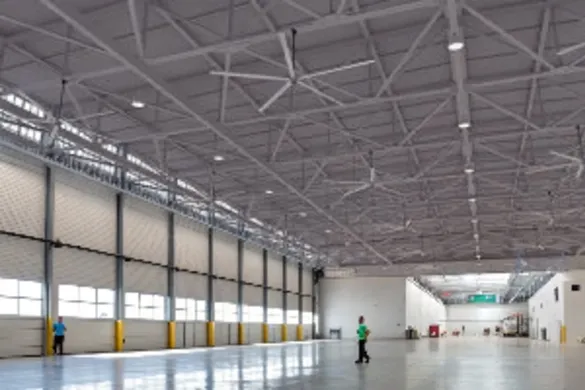
Choosing a large fan seems easy. But it is not. Big buildings have big problems. Hot air gets trapped at the ceiling in winter. Stale, stuffy air makes people uncomfortable in summer. This makes your heaters and air conditioners work too hard. You pay high energy bills, but your space still feels bad. This is a big problem for a armazém, planta de fabricação, ou academia.
You know you need better air movement. You hear that Ventiladores de alto volume e baixa velocidade (HVLS) are the answer. But now you have a new problem. The market is full of confusing claims. One brand says their fan has the most power. Another says theirs is the biggest. If you choose based on these claims, you might make a costly mistake. You could get a fan that is too noisy, creates awful drafts, or fails an inspection because it violates safety codes. Your big investment could become a big regret.
The solution is to use a clear, step-by-step process. This guide will show you how to choose an HVLS fan the right way. We will look at what you need to measure, which ratings matter, and how to create a checklist to get the right fan for your building. This is your Guia de seleção de ventiladores HVLS. It will help you find the perfect balance of performance, safety, and cost.
Quick Selection Checklist (For Buyers)
Before you dive deep, here is a quick list to guide you. If you can answer these questions, you are on the right track.
- What is my main goal? Do I need summer cooling, winter heating savings, or both? This is about your primary goal.
- What is in my space? Note your altura do teto and any obstructions like cranes, lights, or sprinklers.
- Where do I need airflow? Identify the key coverage zones where people work or products are stored.
- How is performance proven? Ask for verified performance data. Do not trust claims in a brochure. Look for tests like AMCA 230.
- What are my safety rules? Check for sprinkler and fire alarm rules (NFPA 13) and electrical safety (UL listed).
- How will I control the fans? Do you need a simple wall switch or smart controls that link to your Building Management System (BMS)?
- What is the total cost? Think about the full HVLS fan lifecycle cost (TCO). This includes the fan, installation, maintenance, and warranty.
Step 1 — Define The Outcome You’re Buying
Problem: Many people buy a fan just to move air. This is too simple. It is like buying a car without knowing if you need to haul lumber or drive in a race.
Agitate: If you do not set a clear goal, you cannot measure success. You might buy a powerful fan for summer cooling when your biggest energy loss comes from winter heating. Your team could complain the fan is too breezy in one spot and does nothing in another. You waste money on a fan that solves the wrong problem.
Solution: You must first pick your primary goal and set clear success criteria.
Pick Your Primary Use Case
What is the main job for your fan?
- Summer air movement: Create a breeze that makes people feel cooler. This is for comfort.
- Winter destratification: Push the warm air that is stuck at the ceiling back down to the floor. This saves on heating costs. The HVLS fan winter destratification mode is a key feature for this.
- HVAC support: Help your existing heating and cooling system work better by mixing the air.
- Zoned comfort: Target specific areas like loading docks, assembly lines, or gym courts.
Set Success Criteria
How will you know if the fan is working?
- Comfort targets: Decide on the right amount of air movement for each area. A person sitting at a desk needs a gentler breeze than a person working on a loading dock.
- Operating hours: Will the fans run all day? Do you need them to turn on and off automatically? This defines your need for automation.
- Energy goals: Do you want to reduce your HVAC runtime by a certain amount? Do you want to make the temperature in your building more stable?
Defining your goal is the most important step. It will guide every other choice you make.
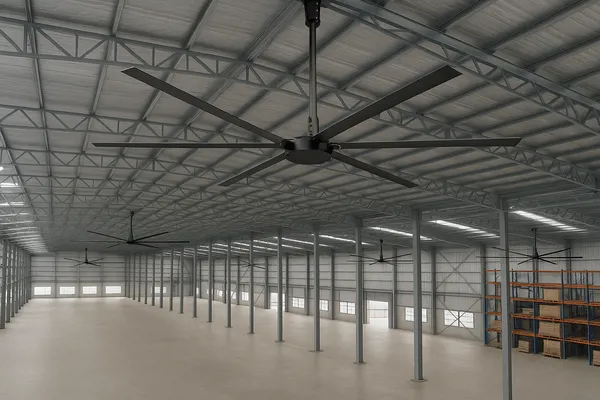
Define The Outcome You’re Buying
Step 2 — Collect Site Data (Don’t Size From Square Footage Alone)
Problem: The biggest mistake buyers make is choosing a fan based only on the building’s square footage.
Agitate: A fan that looks perfect on paper might be a disaster in real life. If you ignore obstacles, the fan’s airflow could be blocked by a giant beam or a light fixture, creating dead zones. If your ceiling is too low, a large fan could create an unpleasant draft. Worst of all, you might install a fan and then discover it is too close to a sprinkler head, forcing you to move it. This is a costly rework.
Solution: You must measure and map your space carefully. Treat it like a science project.
Measure and Document
Get a measuring tape and a notepad. Document the following:
- Building dimensions: Write down the length, width, and height of your space. If the ceiling height changes, note that.
- Obstructions map: Draw a simple map of everything hanging from your ceiling. This includes lights, beams, cranes, and mezzanines. Note the minimum mounting height for HVLS fans under these objects.
- Fire protection layout: Map out your sprinkler grid. Pay close attention to the location of the sprinkler heads.
- Temperature symptoms: Do you feel a big difference in temperature between the floor and the ceiling? This is a sign of desestratificação. Real-world studies in big buildings show this difference can be up to 20°F. This is wasted heat and money.
This data is your blueprint for a successful layout. A good HVLS fans manufacturer will ask for this information. They know that a fan is only as good as its placement.
Step 3 — Choose Fan Diameter and Quantity (Sizing + Spacing)
Problem: How do you pick the right size? How many fans do you need? Guessing can lead to poor results.
Agitate: If you choose a fan that is too big for your ceiling height, you will create a wind tunnel. People will be uncomfortable and complain. If you choose a fan that is too small, you will have dead zones with no air movement. If you place multiple fans too close together, they can fight each other, creating turbulence and wasting energy. If they are too far apart, you will have gaps in coverage.
Solution: Use proven rules of thumb for sizing and a logical strategy for layout. This is where the HVLS fan sizing guide becomes critical.
Diameter Selection Rules of Thumb
The right diameter depends on ceiling height and your goal.
- Low Ceilings (12-20 ft): Fans in the 7-14 ft range often work well. They provide gentle air movement without creating strong drafts.
- Mid-Range Ceilings (20-30 ft): Fans in the 14-20 ft range are common. They can cover a large area effectively.
- High Bay Buildings (>30 ft): É aqui que large diameter ceiling fans up to 24 ft shine. They are perfect for moving huge volumes of air in spaces like armazéns e centros de distribuição.
Layout Planning
- Spacing Logic: A common rule is to space fans about 2 to 3 times the fan’s diameter apart. You also need to keep fans away from walls. A good HVLS fan layout and spacing plan ensures even coverage.
- Zoning: Sometimes, a group of smaller fans is better than one huge fan, especially in rooms with odd shapes or many obstructions. For example, you might use smaller fans over individual workstations.
- Irregular Spaces: For L-shaped rooms or buildings with mezzanines, you may need a custom layout. This ensures all areas get the airflow they need.
Companies with deep engineering expertise, often built on global experience from places like Spain, Sweden, and China, excel at this. They use advanced software to model airflow and create a layout that is perfect for your unique space. They can help you choose between our versatile ventiladores de teto hvls or our more powerful models for larger areas.
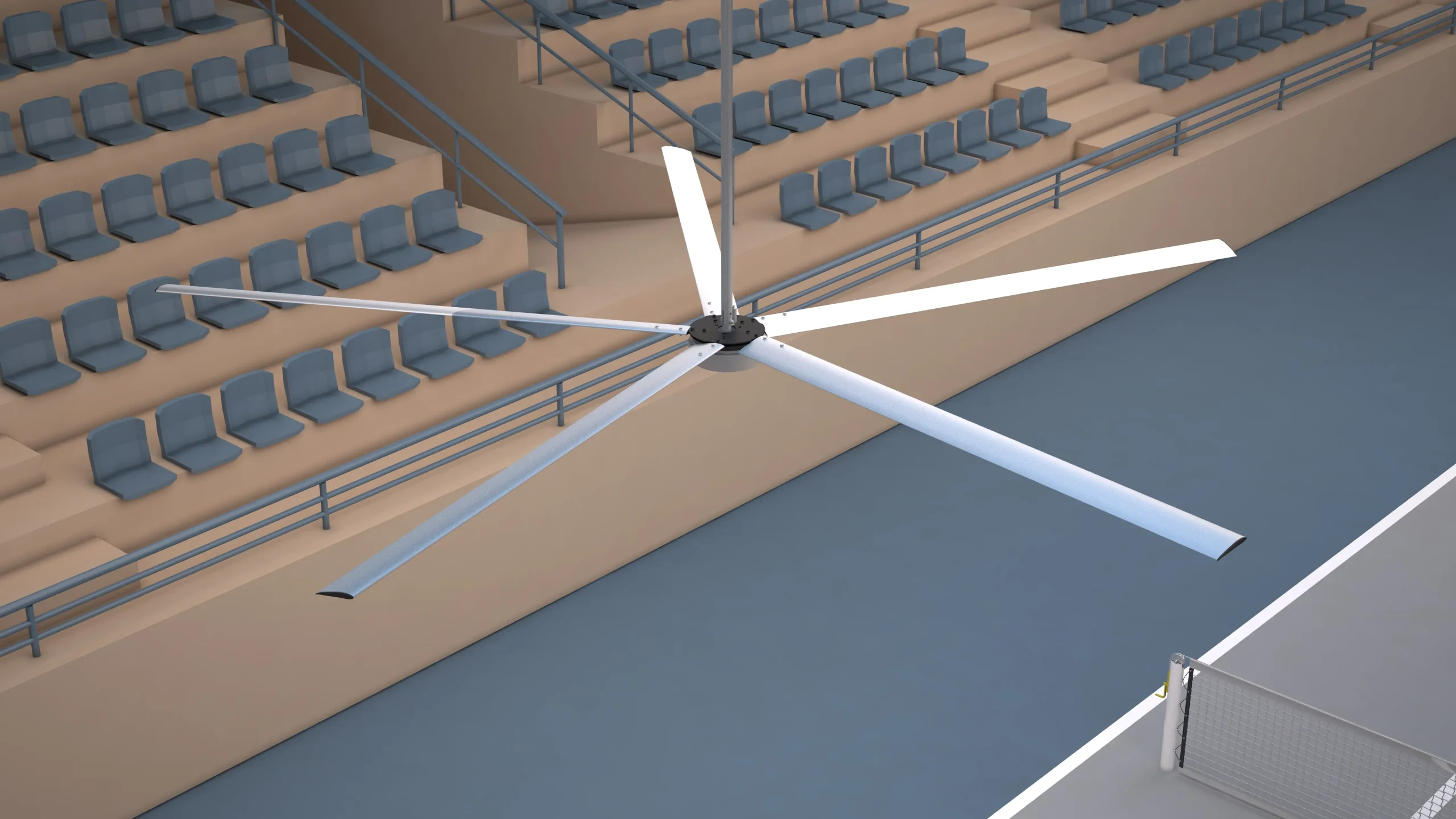
Choose Fan Diameter and Quantity
Step 4 — Verify Performance With The Right Standards (Ratings That Matter)
Problem: Every fan brochure claims to have high “CFM” (cubic feet per minute). But these numbers are often meaningless.
Agitate: If you buy a fan based on a marketing claim, you are gambling. The fan may use far more energy than advertised or move much less air. You will be stuck with a product that does not deliver. It is like buying a car that claims to get 100 miles per gallon without any proof.
Solution: Demand proof. Ask for performance data that is tested and certified according to real industry standards.
Airflow Performance Testing
The gold standard for testing is ANSI/AMCA Standard 230-23. O Air Movement and Control Association (AMCA) is an independent body that creates testing standards. If a fan is tested to AMCA 230, you can trust its performance data. Ask the vendor if they have AMCA certified HVLS fan ratings.
Efficiency Metrics You Can Compare
In the United States, the U.S. Department of Energy (DOE) has rules for large fans. One key metric is the CFEI (Ceiling Fan Energy Index). A higher CFEI means the fan is more efficient. Look for documentation that shows the fan is a DOE compliant large diameter ceiling fan. This ensures you are getting an energy-efficient product.
What to Request in Submittals
When a vendor sends you a proposal, it should include:
- Tested airflow and power use at different speeds.
- The type of motor, such as a gearless direct drive motor, which is often quieter and more efficient.
- The fan’s warranty and required maintenance.
A commitment to technology and transparency is key. A trustworthy company will be proud to share its certified data.
Step 5 — Safety and Code Constraints
Problem: You found the perfect fan and the perfect spot for it. But you forgot about safety codes.
Agitate: This is a nightmare scenario. Your installer is ready to go, but the building inspector stops the job. The fan is too close to a sprinkler head, or it does not have the right electrical safety listing. Now you face expensive rework, project delays, and a fan that may not be safe.
Solution: Plan for safety from the start. Verify all electrical, fire, and structural codes.
Electrical/Mechanical Safety Listing
Your fan must be certified for electrical safety. In North America, look for a UL 507 listing or an ETL ou CSA mark. This means the fan has been tested to be safe from electrical and mechanical hazards.
Sprinkler-Protected Buildings (NFPA Coordination)
This is a big one for warehouses. NFPA 13 is the standard for sprinkler systems. There are rules about how close fans can be to sprinklers.
- Fans must often be centered between four sprinkler heads.
- There must be a minimum clearance, often 3 feet, between the fan blades and the sprinklers.
- The fan must be connected to the fire alarm system. If the sprinklers activate, the fan must shut down immediately. This is critical.
Structural and Mounting Safety
An HVLS fan is heavy. It must be mounted securely.
- A structural engineer should approve the mounting points, whether it is an I-beam mount ou um purlin mount.
- The fan must have a safety cable kit as a backup.
- The installation team should follow a commissioning checklist to ensure everything is balanced and secure.
Step 6 — Controls, Automation, and Integration
Problem: You install a great fan, but your team leaves it running at full speed all year long.
Agitate: This wastes a huge amount of energy. It is like leaving all the lights on in an empty building. A fan running at high speed in the middle of winter will make people cold and drive up your heating bill. A fan that does not run when it is hot and stuffy is useless.
Solution: Choose the right controls for your needs. Modern controls can make your fans smart.
Control Options to Specify
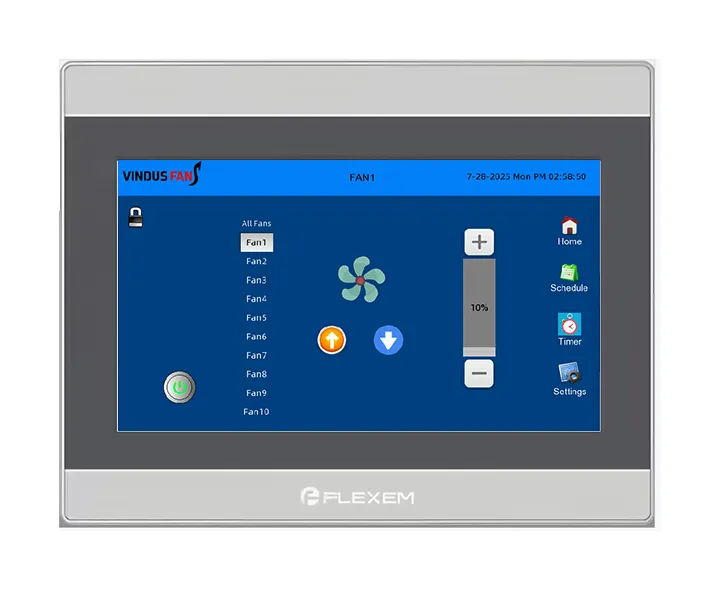
- Basic vs. Networked: A basic wall controller is simple. A networked system lets you control all your fans from one screen or even your phone.
- Scheduling and Sensors: You can schedule fans to run only when needed. You can use a HVLS fan temperature sensor control to automatically adjust speed or direction for destratification. A HVLS fan occupancy sensor control can turn fans on when people enter an area.
- BMS Integration: If you have a Building Management System (BMS), your fans can be integrated using protocols like BACnet ou Modbus. This allows for total building automation.
Operational Design
Think about how you will use the fans day-to-day.
- Summer Profile: Run the fans forward to create a cooling breeze.
- Winter Profile: Run the fans in reverse (HVLS fan reverse function) or at a very slow forward speed to gently push warm air down without creating a draft.
Smart controls turn your fans from a simple tool into a powerful energy-saving system.
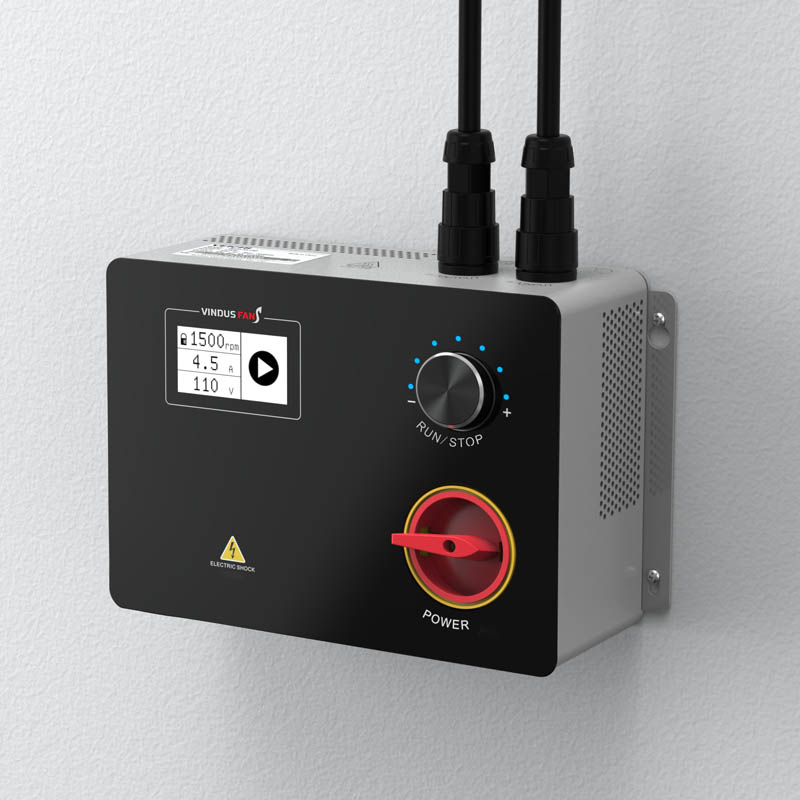
Controls, Automation, and Integration
Step 7 — Application and Environment Fit
Problem: Not all buildings are the same. A fan that is perfect for a clean, dry warehouse might fail quickly in a dusty factory.
Agitate: If you put a standard fan in a harsh environment, it will not last. Dust and dirt can clog the motor. Humidity and corrosive air can rust the parts. The fan will fail, and you will have to pay for a replacement sooner than you think.
Solution: Match the fan’s specifications to your environment.
- Dusty/Dirty Areas: Look for fans with a high IP rating. This means the motor is sealed against dust. Ask about blade cleaning and maintenance.
- Corrosive/Humid Areas: For high-humidity environments, you need a fan with corrosion resistance. This might mean special coatings or a Ventilador de teto suspenso galvanizado.
- Food/Clean Areas: Para food processing facilities, fans must be easy to clean and comply with health codes.
- High-Heat Areas: In hot facilities, the fan’s motor needs proper thermal protection to ensure it can run for a long time.
Many manufacturers offer specialized ventiladores de teto industriais para a indústria transformadora that are built to handle these tough conditions.
Step 8 — Budget, ROI, and Total Cost of Ownership
Problem: You choose the cheapest fan you can find to save money.
Agitate: The cheapest fan is rarely the best value. It might use more energy, require more maintenance, and have a shorter warranty. The initial savings disappear when you factor in higher operating costs and earlier replacement. You are not just buying a fan; you are making a long-term investment.
Solution: Compare fans based on the Total Cost of Ownership (TCO) and calculate your Return on Investment (ROI).
Cost Drivers to Compare
When you get quotes, make sure you are comparing everything:
- Fan + mount kit + controller
- Electrical wiring and installation costs
- Structural work if needed
- Controls setup and integration
- Warranty terms and service response
ROI Model Inputs
You can build a simple ROI model.
- Economia de energia: Studies have shown that destratification can reduce heating costs by 20-30%. Using fans for cooling allows you to raise your AC setpoint, saving about 5% on cooling costs per degree.
- Operating Cost: An efficient 24-foot HVLS fan can cost as little as $1 a day to run.
- Maintenance Cost: Look for a low maintenance HVLS fan to save on labor.
When you look at the total picture, a high-quality, efficient fan often provides a much better return on your investment.
Step 9 — Vendor Shortlist Scorecard
Problem: You have multiple quotes. They all look good. How do you choose?
Agitate: You are at the final step, and you do not want to stumble. If you cannot compare vendors apples-to-apples, you might choose one that talks a good game but cannot deliver on their promises.
Solution: Use a scorecard. Ask every vendor for the same set of documents. This makes it easy to see who is serious about performance and safety.
- Provide AMCA 230-based performance data.
- Provide DOE/CFEI efficiency documentation.
- Provide proof of safety listing (UL 507 or equivalent).
- Provide a clear sprinkler coordination plan.
- Provide a detailed layout drawing showing spacing and clearances.
- Provide a clear installation and commissioning plan.
- Provide full details on warranty, spare parts, and support.
The vendor who can easily provide all of this information is likely the one you can trust. They are not just selling a product; they are providing a complete, engineered solution. This is the mark of a leading fabricante de ventiladores hvls.
Common Mistakes (And How to Avoid Them)
- Buying on diameter only: Ignores height and obstacles.
- Trusting “marketing CFM”: Demand certified test data.
- Ignoring sprinkler codes: Leads to failed inspections.
- Incorrect fan layout: Creates drafts and dead spots.
- No controls strategy: Wastes energy and reduces comfort.
By following the steps in this guide, you can confidently navigate the selection process and choose the melhores fãs de hvls that will deliver comfort, energy savings, and value for years to come.