Hot air trapped under the roof, weak air movement on the floor, and rising operating costs can quietly hurt productivity in large buildings. Many ventilation products promise relief, but poor product selection or weak supplier support often leads to uneven results, service trouble, and missed project opportunities.
A strong hvls fan supply program helps improve comfort, support airflow management, and simplify project delivery in warehouse environments, commercial spaces, and large industrial buildings. For businesses building a distribution portfolio, the right manufacturer matters because product quality, lead time, support, and consistency shape long-term success as much as the fan itself.
Schema dell'articolo
Why Is the HVLS Fan Category Growing Across Warehouse and Commercial Projects?
What Makes HVLS Ceiling Fans Different in Large Industrial and Commercial Spaces?
How Does Product Line Design Affect Market Expansion?
Why Do Pricing Stability, MOQ Flexibility, and Lead Time Matter So Much?
What Defines a Reliable HVLS Fan Supply Partner?
How Do Technical Support and Project Assistance Strengthen Competitiveness?
What Product Features Help Commercial HVLS Fans Perform Better in Real Projects?
How Do HVLS Fan Solutions Fit Warehouses, Distribution Centers, Gyms, and Manufacturing Facilities?
How Do After-Sales Service, Spare Parts, and Documentation Protect Long-Term Value?
How Should Buyers Compare HVLS Fan Brands and Supply Models?
Domande frequenti
Punti chiave
Why Is the HVLS Fan Category Growing Across Warehouse and Commercial Projects?
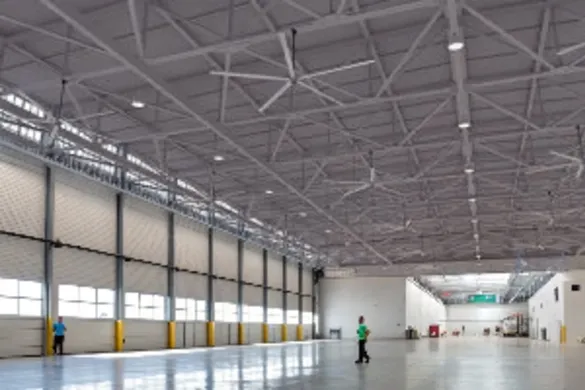
The market for the hvls fan category continues to grow because more building owners now expect ventilation equipment to do more than simply move air. They want better comfort, lower operating pressure on building systems, simpler maintenance, and better value across the life of the project. In a tall warehouse, a large open workshop, or a logistics hall, poor air circulation is easy to feel and hard to ignore.
That is why commercial hvls fans are becoming a more serious category in modern building equipment portfolios. Instead of treating fans as secondary accessories, many project buyers now see them as part of a broader indoor comfort and operating strategy. Good air movement supports people, helps balance temperature layers, and improves how large buildings feel during long working hours.
From our side as an hvls fan manufacturing plant, we see the strongest demand from customers serving industrial and commercial spaces where standard ventilation products are often too small, too scattered, or too inefficient for the job. The appeal is clear: one well-matched solution can create wide, steady airflow across large areas without the noise and clutter of too many smaller units.
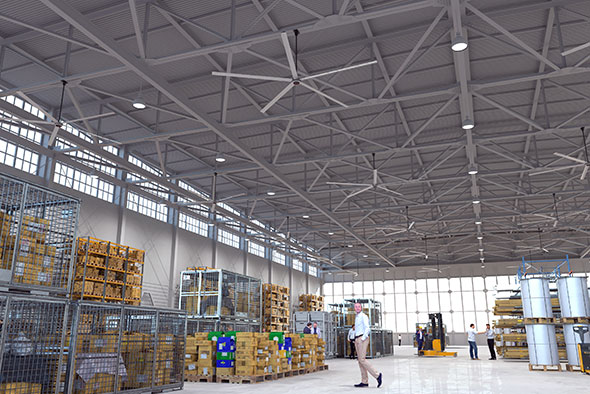
HVLS Fan Category in Warehouse
What Makes HVLS Ceiling Fans Different in Large Industrial and Commercial Spaces?
Ventilatori da soffitto HVLS are designed for scale. Their role is not to create a narrow jet of air in one corner. Their job is to move large volumes of air across large spaces in a controlled and efficient way. That difference matters in buildings where comfort is affected by ceiling height, equipment heat, roof exposure, or uneven temperature zones.
A traditional ceiling fan may work well in a small room, but a large building needs a different approach. An hvls fan uses a wide diameter and low speed operation to create broad air movement. Instead of forcing a harsh wind downward, it spreads air gently across the floor level where people work, walk, pack, train, or assemble products.
This operating principle is why the category is often described as high volume low speed. The point is not aggressive wind. The point is to move massive volumes of air in a useful and comfortable pattern. In large industrial and commercial buildings, that makes a major difference in perceived comfort, especially where stale air and heat stratification reduce the quality of the working environment.
How Does Product Line Design Affect Market Expansion?
A product line grows faster when it is easy to position across multiple applications without becoming difficult to quote, explain, or support. That is why product line design matters so much. A strong hvls fan program should offer enough model range to cover real projects, but not so much complexity that every quotation becomes slow and confusing.
In practical terms, that means a product line should cover common use cases such as warehouse fans, factory circulation, sports buildings, logistics halls, and edifici commerciali. It should also provide options that reflect real site conditions, such as ceiling height, required coverage, building width, and control preference. A well-planned model range makes it easier to respond to more project types without losing clarity.
When the structure is right, the sales conversation becomes simpler. Instead of presenting too many overlapping choices, the supplier can guide the customer through a clear path: standard models for general use, selected premium options for performance-focused projects, and OEM support where brand development is important. This kind of clarity improves execution and helps the category scale with fewer internal problems.
Why Do Pricing Stability, MOQ Flexibility, and Lead Time Matter So Much?
Strong product performance alone does not build momentum in the market. The supply side matters just as much. Even a good hvls fan can become difficult to grow if quotations change too often, stock planning is uncertain, or lead times stretch unpredictably. In project business, these issues affect trust faster than most product brochures suggest.
Pricing stability is important because the ventilation category often enters a project alongside lighting, HVAC, electrical systems, and structural planning. When pricing changes too sharply, it becomes harder to hold offers, support planning, and build repeat confidence. Stable pricing does not mean fixed pricing forever. It means a reasonable commercial structure that buyers can plan around.
MOQ flexibility also matters. A market does not always develop in full-container steps. Early-stage growth often begins with sample orders, small project orders, or a mixed first shipment. When the supplier can support that growth pattern, expansion becomes more realistic. Lead time follows the same logic. Consistent delivery matters because every delayed fan can affect installation schedules, labor coordination, and overall project timing in industrial facilities and other fast-moving environments.
What Defines a Reliable HVLS Fan Supply Partner?
A reliable partner is one that understands both manufacturing and project execution. The product itself is only one part of the value. The other part is the supplier’s ability to respond clearly, prepare documents, assist with selection, support installation, and stay consistent after the order is placed. In real B2B work, that combination matters far more than appearance alone.
Several factors usually define whether a supply partner is truly dependable:
| Area |
What Strong Support Looks Like |
Why It Matters |
| Produzione |
Stable output, controlled quality, organized process |
Reduces risk |
| Product range |
Clear models for real applications |
Improves quotation speed |
| Commercial policy |
Reasonable pricing structure and supply flexibility |
Supports growth |
| Technical support |
Selection help, documents, layout guidance |
Improves project accuracy |
| Service support |
Spare parts, manuals, troubleshooting response |
Protects long-term value |
A strong supplier should be able to discuss more than blade size. They should understand site layout, ceiling structure, control logic, safety details, and application goals. When this level of support exists, the product becomes easier to introduce into commercial and industrial applications, especially where buyers expect technical confidence rather than general marketing language.
How Do Technical Support and Project Assistance Strengthen Competitiveness?
In many projects, the decision is not delayed because the buyer dislikes the product. It is delayed because the buyer needs more confidence. They may want to know how many fans are required, which diameter makes sense, how the mounting should be handled, or whether the solution fits around lighting, sprinklers, cranes, or racking. This is where technical support changes the outcome.
A supplier with strong project support helps close the gap between interest and decision. That support may include layout review, recommended fan spacing, installation suggestions, electrical matching, control options, and model comparison guidance. This support is especially valuable in manufacturing facilities, logistics halls, and warehouse facilities where building conditions are rarely identical.
We see this often in real projects. A customer may first ask for a general quote, but what actually moves the project forward is clear recommendation support. When a supplier helps translate building conditions into an organized solution, the conversation shifts from product shopping to project planning. That is a better position for everyone involved.
What Product Features Help Commercial HVLS Fans Perform Better in Real Projects?
A product becomes easier to place in the market when its design supports performance, safety, and long-term simplicity. In other words, the fan should not only look solid in a catalog. It should be built to perform well in real buildings where dust, height, heat, long running hours, and site variation are normal conditions.
Some features consistently matter in real project work:
- Stable motor design
- Safe and well-engineered mounting system
- Durable fan blades with reliable balance
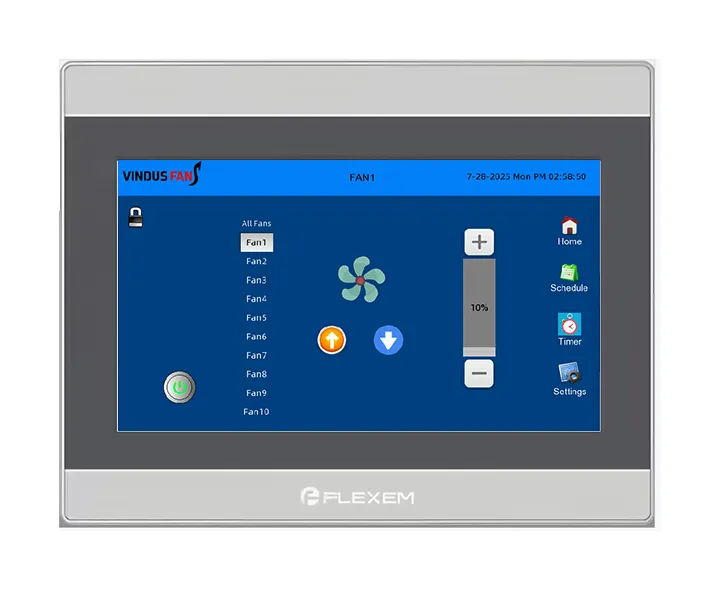
- Clear controls for speed adjustment and grouping
- Strong safety cable and hardware systems
- Clean product finish for both industrial and public-facing spaces
- Practical maintenance access
- Consistent documentation
A modern hvls industrial fan should deliver superior airflow while staying stable over long operating periods. Whether the system uses a geared solution or a direct-drive motor, buyers want confidence in long-term operation. They also look for ease of installation, because difficult installation often increases labor cost and project complexity.
The best products are not always the ones with the most dramatic brochure language. They are the ones that deliver reliable air circulation, maintain peak performance, and remain easy to support after the project is complete.
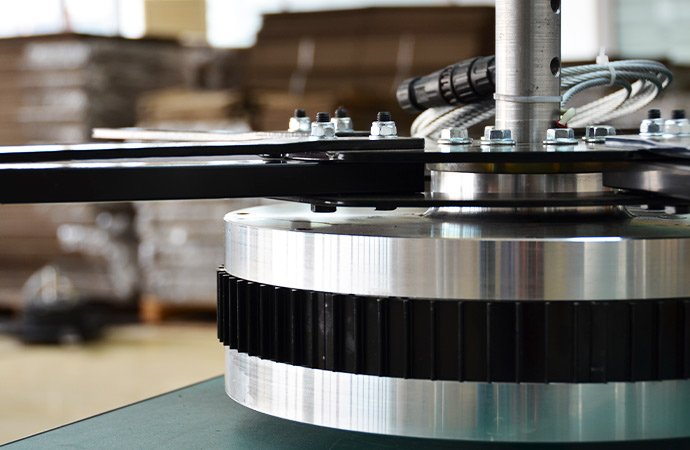
What Product Features Help Commercial HVLS Fans Perform Better
How Do HVLS Fan Solutions Fit Warehouses, Distribution Centers, Gyms, and Manufacturing Facilities?
One reason the category remains attractive is that hvls fan solutions can serve many building types with only moderate changes in configuration. The same general airflow principle can be applied in a magazzino, a packaging hall, a palestra, a production building, a sports center, or even a barn, although the installation logic and control strategy may differ.
In distribution centers, the priority is often wide coverage, worker comfort, and better air balance across loading, packing, and storage zones. In manufacturing facilities, the focus may be on supporting floor comfort near equipment, reducing hot spots, and keeping industrial air from feeling stagnant. In large public-use buildings, appearance, quiet operation, and comfort consistency may be even more important.
The table below shows how priorities often shift by application:
| Applicazione |
Main Priority |
Typical Benefit |
| Magazzino |
Wide coverage |
Meglio circolazione dell'aria e conforto |
| Distribution centers |
Long operating hours |
More balanced floor conditions |
| Factory |
Heat and process zones |
Meglio airflow and temperature regulation |
| Palestra |
Comfort during activity |
Smooth, broad air movement |
| Centro sportivo |
Open-span comfort |
Wide, even coverage |
| School hall |
Simple comfort support |
Cleaner indoor environment |
| Barn |
Animal comfort |
Meglio ventilazione and steady air |
This range of applications gives the category useful flexibility. It also helps build a stronger market story, because one product family can serve several project paths without needing a completely different sales approach each time.
How Do After-Sales Service, Spare Parts, and Documentation Protect Long-Term Value?
A project is not truly complete when the shipment leaves the factory. Real value continues after installation, and that value depends on service response, parts support, and document quality. If these areas are weak, even a technically good product can become difficult to sustain in the field.
After-sales support is especially important for products used in industrial spaces and large commercial spaces, where buyers expect dependable operation over time. They do not want long downtime because a small electrical issue cannot be diagnosed or a replacement part takes too long to identify. Clear manuals, wiring information, maintenance instructions, and responsive service make the system easier to trust.
Spare parts support should also be organized. Common items should be easy to identify, easy to order, and clearly linked to the correct model. Good documentation reduces confusion and protects brand confidence. In B2B projects, service quality often shapes the next order more than the first sales pitch did.
How Should Buyers Compare HVLS Fan Brands and Supply Models?
The market includes many familiar names and model references. Buyers may encounter comparisons involving big ass fans, macroair, hunter industrial, powerfoil, titan hvls, eco hvls, xp hvls, titan, and eco as they review the category. These names may influence expectations, but comparison should always come back to project fit and business practicality.
A useful comparison should include:
| Comparison Point |
Why It Matters |
| Product consistency |
Supports repeat confidence |
| Coverage and performance |
Affects comfort and project value |
| Control and electrical options |
Improves application fit |
| Service response |
Protects installed projects |
| Documentation quality |
Speeds approval and installation |
| OEM potential |
Helps brand development |
| Lead time |
Supports planning and deadlines |
| Supply flexibility |
Helps different order sizes |
This is where surface-level marketing often gives way to real commercial judgment. The best hvls option is not always the one with the loudest message. It is the one that best combines product quality, support quality, and operational practicality. In a category built around energy efficiency, comfort, and scale, reliability matters more than hype.
Why Does a Well-Structured HVLS Program Create Stronger Long-Term Market Value?
A well-structured program works because it supports growth from several angles at once. It provides the physical product, of course, but it also supports quoting, positioning, documentation, service, and future expansion. That mix gives the category strength in the market and makes it easier to build stable momentum.
At the building level, the advantages are easy to explain. HVLS fans provide broad, comfortable air at low speeds, help improve air circulation, support efficient climate control, and in many cases help provide cooling through perceived comfort rather than extreme wind. In real operating environments, this may complement hvac strategy and reduce discomfort caused by trapped heat or stale air.
At the business level, the category becomes even more attractive when the supply model is stable. A strong program can support industrial and commercial use cases, work across commercial spaces, adapt to large industrial projects, and even help buyers replace multiple small fans with a more coordinated approach. That combination of technical value and commercial practicality is what makes the category durable over time.
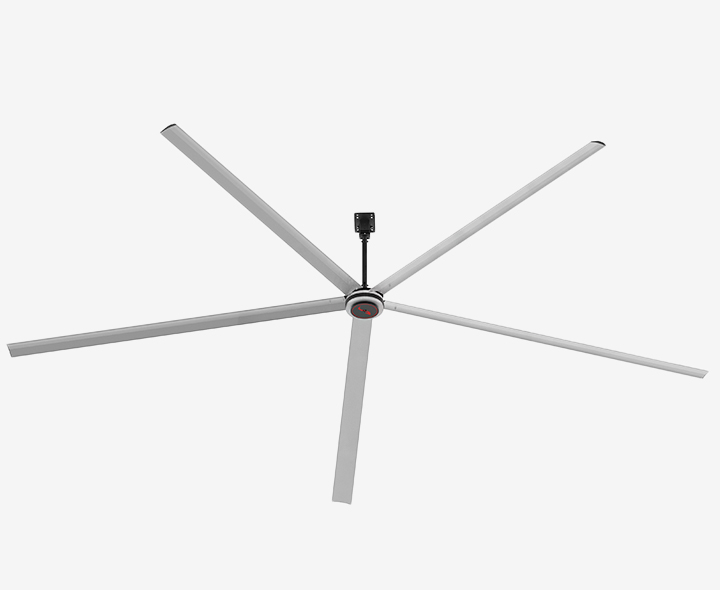
Ventilatori HVLS serie M750
A Practical Framework for Building Category Confidence
When evaluating or presenting an hvls fan line, it helps to organize the discussion around a simple framework rather than isolated product claims. The most practical framework usually includes four layers:
1.Application fit
Does the product suit the building type, ceiling height, and use pattern?
2.Supply stability
Can the product be quoted, delivered, and supported consistently?
3.Technical confidence
Are documents, guidance, and installation support strong enough for real projects?
4.Long-term service value
Will the system remain easy to maintain and trusted after installation?
This framework works well because it connects performance to actual business outcomes. It also avoids overcomplicating the conversation. In a category built around high-volume air movement, low-speed comfort, and coverage of large spaces, clarity often wins more trust than technical overload.
Domande frequenti
How is an HVLS fan different from standard low speed fans?
An hvls fan is built to move much larger air masses across broad floor areas. While general low speed fans may serve smaller zones, an HVLS system is designed for large volumes of air, wider coverage, and larger buildings.
Are HVLS fans suitable for both industrial and commercial buildings?
Yes. They are commonly used in industrial and commercial projects including warehouses, logistics halls, workshops, sports centers, schools, and other open buildings that need better air balance and comfort.
Can one HVLS fan replace several smaller fans?
In many applications, yes. A correctly selected large fan can often replace multiple small fans, reduce clutter, and create more even coverage than scattered small units.
Does an HVLS fan lower energy costs?
It can support lower overall energy costs by helping improve perceived comfort and assisting building air balance. Actual savings depend on building design, operating schedule, control strategy, and how the fan works with other systems.
What matters more, brand name or supply support?
Both matter, but long-term results often depend more on consistent product quality, service response, documentation, and supply reliability than on brand visibility alone.
Where do HVLS fans work especially well?
They work especially well in tall buildings and open-plan structures such as warehouse projects, logistics facilities, factories, sports halls, and other large areas where standard fans do not create enough useful coverage.
Punti chiave
- A strong hvls fan category is built on product performance and supply reliability together.
- HVLS ceiling fans are effective because they move large volumes of air across large spaces with controlled, comfortable coverage.
- Pricing stability, supply flexibility, and lead time consistency are essential for long-term market growth.
- Technical support, clear documentation, and project assistance make solutions easier to deliver and easier to trust.
- Real-world applications across warehouses, factories, gyms, schools, and logistics buildings give the category strong commercial depth.
- Long-term value depends heavily on after-sales service, spare parts support, and practical operating stability.
- The right program should strengthen both project performance and market competitiveness over time.