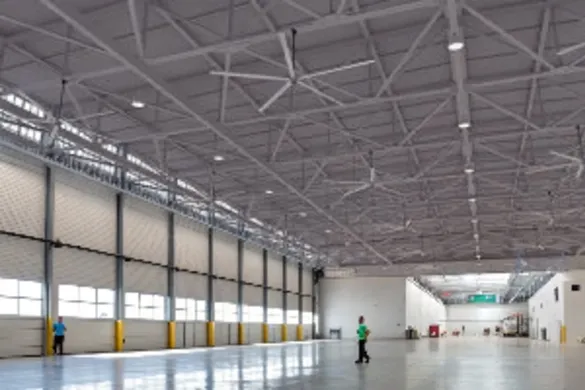
In the operational management of modern industrial, logistical, and large-scale commercial facilities, the optimization of the internal environment is a critical determinant of both energy expenditure and workforce productivity. The challenge of maintaining thermal comfort and adequate air quality across vast, high-ceiling spaces presents a significant operational hurdle. While conventional Heating, Ventilation, and Air Conditioning (HVAC) systems offer a solution, their substantial energy consumption and intensive maintenance schedules represent a major component of a facility’s operating expense. This economic pressure has catalyzed the search for more efficient, sustainable, and cost-effective air circulation technologies.
In this context, High-Volume, Low-Speed (HVLS) fan technology has emerged as a transformative solution. However, a comprehensive understanding of its economic viability requires an analytical approach that extends beyond the initial procurement cost. This article provides a detailed analysis of the true cost of HVLS fans, executing a full lifecycle financial examination that contrasts the initial purchase price vs lifetime operating cost. By adopting a Total Cost of Ownership (TCO) framework, this analysis aims to equip facility managers and financial planners with the quantitative data necessary for informed capital investment decisions.
Deconstructing Capital Expenditure (CapEx): The Upfront Investment
The initial financial outlay for an HVLS system is its Capital Expenditure, which comprises several key components. A granular understanding of these costs is the first step in a comprehensive HVLS fan financial planning प्रक्रिया।
The Core Asset: Fan Purchase Price
The primary driver of the HVLS fan upfront cost is the price of the fan unit itself. This cost is variable and influenced by several engineering and market factors:
- Diameter and Scale: Fan diameters typically range from 2.4 meters (8 feet) to 7.3 meters (24 feet). Larger diameters command a higher price but offer exponentially greater air movement coverage, impacting the overall system design and number of units required.
- Motor and Drive Technology: The drivetrain is a critical cost and performance differentiator. The debate of Direct Drive Motor vs. Gearbox Motor maintenance cost is central; direct-drive motors, especially the Permanent Magnet Synchronous Motor (PMSM) type, often have a higher initial cost but offer superior energy efficiency and near-zero maintenance. Traditional gearbox motors may be less expensive upfront but incur long-term maintenance liabilities.
- Blade and Aerodynamic Design: Advanced airfoil blades, often constructed from Anodized Aluminum, are engineered for maximum air displacement with minimal energy input. Features like a sophisticated winglet design या wingtip fence technology, which reduce vortex shedding and improve efficiency, can also influence the price. The HVLS fan airfoil design efficiency is a key determinant of its long-term value.
- Manufacturer and Brand Equity: The market includes a range of manufacturers, from established leaders like बड़े गधे प्रशंसक, मैक्रोएयर पंखे, और Rite-Hite to specialized engineering firms such as विंदुस प्रशंसक. Founded in Spain in 2019 and expanding with a hub in Qingdao, China in 2020, Vindus Fans leverages a Swedish engineering team to produce a diverse portfolio of एचवीएलएस छत पंखे. Brand reputation is often correlated with build quality, warranty, and R&D investment, which is reflected in the price.
Installation and Commissioning Costs
The HVLS fan installation expenses are a significant part of the initial CapEx. These are not trivial and require professional execution to ensure safety and performance. Costs include structural analysis of the ceiling and support beams, electrical wiring, the use of certified hardware, and skilled labor for assembly and mounting. Adherence to safety standards from bodies like OSHA (Occupational Safety and Health Administration) and fire safety codes such as NFPA 13 is mandatory and contributes to the overall capital expenditure for industrial ventilation.
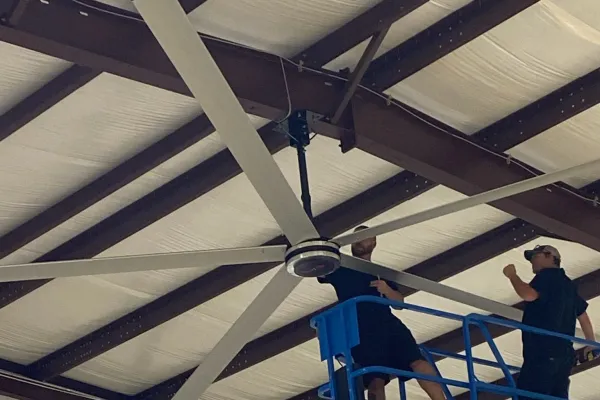
The Core Asset: Fan Purchase Price
Control Systems and Systems Integration
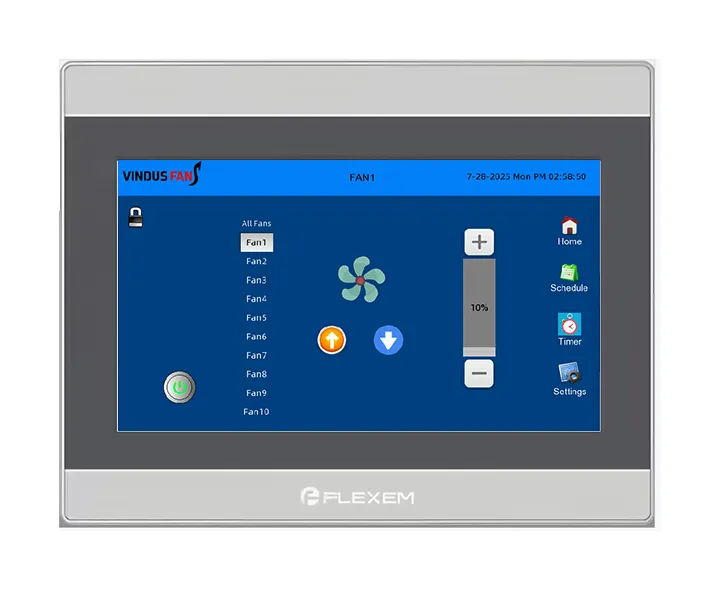
Modern HVLS systems are rarely simple on/off devices. The control interface is a crucial component of the initial cost. Options range from basic wall-mounted controls to advanced Variable Frequency Drives (VFDs), which allow for precise speed regulation. The VFD impact on fan operating cost is substantial, as it enables operators to tailor airflow to specific needs, maximizing energy savings. Furthermore, the cost of integrating HVLS with building management systems (BMS) allows for centralized, automated control, further enhancing operational efficiency and future-proofing the investment.
Quantifying Operational Expenditure (OpEx): The Lifetime Savings Engine
While the CapEx is a one-time event, the Operational Expenditure defines the fan’s true economic impact over its 15-to-20-year lifespan. It is here that the economic benefits of large diameter fans become profoundly evident.
Energy Consumption and Return on Investment (ROI)
The single most significant factor in the HVLS fan lifecycle cost analysis is its dramatic reduction in energy consumption. This efficiency is rooted in the principles of fluid dynamics and fan affinity laws, which state that power consumption is proportional to the cube of the rotational speed. By moving massive air volumes at extremely low speeds, an HVLS fan consumes a fraction of the energy of multiple smaller, high-velocity fans required to cover the same area.
- Summer Cooling (Evaporative Cooling Effect): In warmer months, the large, gentle air column produced by an HVLS fan accelerates moisture evaporation from the skin, creating a cooling sensation that can lower the perceived temperature by 4-6°C (7-11°F). This allows for a significant increase in the HVAC thermostat setpoint, directly leading to a 15-25% reduction in summer cooling costs. द HVLS fan vs. air conditioner cost for achieving thermal comfort is overwhelmingly in favor of the fan.
- Winter Heating (Thermal Destratification): During colder months, expensive heated air naturally rises and becomes trapped at the ceiling, a phenomenon known as thermal stratification. An HVLS fan, running at a low speed, gently pushes this warm air back down to the occupant level without creating a draft. This process of विस्तरीकरण can reclaim wasted heat and reduce a facility’s heating energy consumption by 20-30%. द thermal destratification cost benefits are a primary driver of year-round savings.
The Return on Investment (ROI) for an HVLS system is consequently very rapid. The payback period for HVLS fans is frequently cited by facility managers as being between 6 months and 2 years, after which the energy savings translate directly into net profit.
Maintenance, Repair, and Operations (MRO) Costs
The industrial fan maintenance costs associated with HVLS technology are minimal. Unlike complex HVAC systems that require regular filter changes, fluid checks, and mechanical servicing, HVLS fans are engineered for longevity and reliability. Systems featuring gearless motor HVLS fan maintenance plans are particularly attractive, as they eliminate the most common point of failure and maintenance in traditional systems: the gearbox. Annual inspections of mounting hardware and blade cleaning are typically the only requirements. The long-term durability and warranty of HVLS fans from reputable manufacturers further reduces the financial risk and lowers the amortized cost of commercial fans.
Indirect Economic Benefits: Productivity and Asset Preservation
The financial advantages of large fans extend beyond direct cost savings.
- Enhanced Productivity: Numerous studies correlate thermal comfort with cognitive function and physical output. By creating a more consistent and comfortable environment and mitigating heat stress, HVLS fans contribute to a more productive workforce. This improved thermal comfort and productivity is a tangible, albeit indirect, economic benefit.
- Asset and Product Integrity: In applications like warehousing, agriculture, or manufacturing, consistent air circulation prevents condensation, reduces spoilage, and mitigates moisture-related damage to inventory, packaging, and equipment.
A Comparative Economic Analysis: HVLS vs. Conventional Systems
To contextualize the TCO, the following table provides a comparative analysis:
| Cost-Benefit Metric |
HVLS Fan System |
Conventional HVAC/Multiple Small Fans |
Quantitative Impact |
| Initial Capital Outlay (CapEx) |
Moderate to High |
High to Very High |
One HVLS fan can cover over 20,000 sq. ft., often replacing dozens of smaller fans or reducing HVAC tonnage requirements. |
| Annual Energy Cost (OpEx) |
Extremely Low |
Very High |
Up to a 30% reduction in annual heating and cooling energy bills. Operating costs can be as low as pennies per hour. |
| Annual Maintenance Cost (MRO) |
Negligible |
Moderate to High |
Drastically reduced MRO budgets due to simple, robust mechanical design and fewer units to service. |
| Impact on Existing HVAC |
Synergistic; reduces load |
Independent system; high operational load |
Extends the operational life of existing HVAC equipment by reducing its runtime and stress. |
| Return on Investment Period |
Rapid (0.5 – 2 Years) |
Long-Term (5 – 10+ Years) |
A study found an average ROI of over $11,530 in 5 years, with many facilities achieving payback in under 24 months. |
Considerations for Optimal Fan Selection and Implementation
Achieving these results is contingent upon proper system design and product selection.
- Engineering Quality and Compliance: Opt for fans from a reputable hvls fans manufacturer that adheres to stringent quality and safety standards. Certifications from the Air Movement and Control Association (AMCA), along with safety listings like UL 507 और CE marking, are indicators of a well-engineered and tested product.
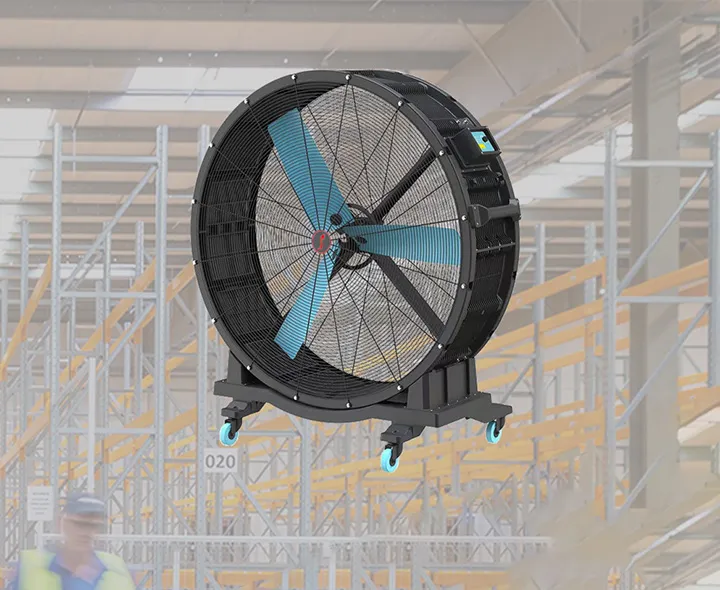
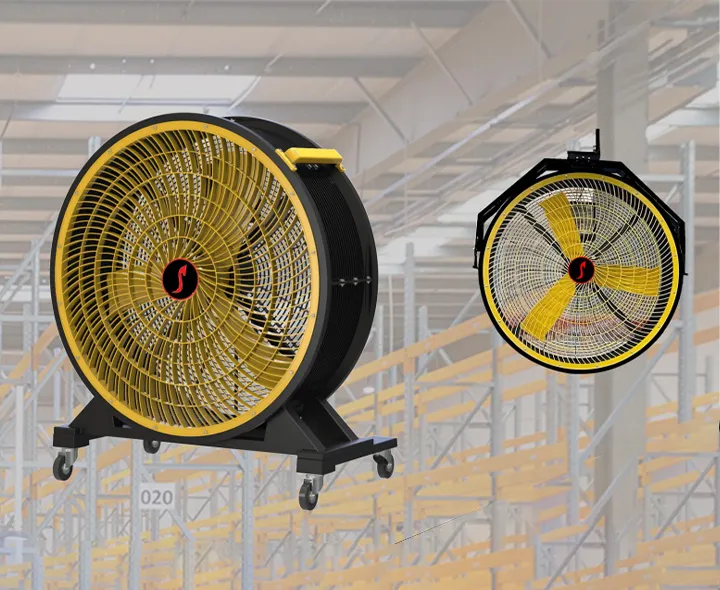
- Application-Specific Sizing and Layout: The performance of an HVLS system is highly dependent on its application. The requirements for वेयरहाउस एचवीएलएस पंखे are different from those for कृषि या एक quiet fan for sport-center. A professional analysis of the facility’s dimensions, airflow obstructions, and operational needs is essential for correct sizing and placement. Many manufacturers offer a wide selection of वाणिज्यिक छत पंखे to suit these varied needs.
- Advanced Features and Technology: में निवेश automated HVLS fan systems and smart controls can maximize efficiency. These systems can integrate with sensors to adjust fan speed based on temperature and occupancy, ensuring optimal performance with zero manual intervention.
Conclusion: An Investment in Long-Term Operational Efficiency
The analysis conclusively demonstrates that the true cost of HVLS fans is not found on the initial invoice but is revealed through a comprehensive Total Cost of Ownership evaluation. The initial capital expenditure, while significant, is rapidly offset by profound and sustained reductions in operational expenditures, primarily through energy savings. The low maintenance requirements, coupled with indirect economic benefits such as increased productivity, position HVLS technology not merely as a piece of equipment, but as a strategic investment in operational efficiency, sustainability, and long-term profitability. For facility managers confronting the dual challenges of rising energy costs and demanding environmental standards, the data overwhelmingly supports the adoption of HVLS fans as a financially sound and technologically superior solution for large-space air circulation.