Hot work areas, poor exhaust, and weak ventilation can slow people down and raise operating costs. Many buyers choose the wrong fan because all suppliers sound similar. The better path is simple: match the problem to the right industrial fan, blower, or HVLS airflow solution.
An industrial fan supplier helps factories, warehouses, schools, gyms, commercial buildings, and manufacturing facilities choose the right industrial fan, blower, fan and blower, or exhaust system for comfort, air quality, process needs, and energy use. The best suppliers compare airflow, pressure, fan type, lead times, replacement parts, installation support, and long-term service before recommending a solution.
Outline
What does an industrial fan supplier actually provide?
How are industrial fan, blower, and exhaust solutions different?
When should you choose centrifugal fans, axial fans, or HVLS fans?
Why do airflow, CFM, pressure, and ductwork matter?
How do industrial fan manufacturers support manufacturing facilities?
What should buyers know about exhaust fans, filtration, and contaminants?
Why do lead times, replacement parts, and troubleshooting affect project value?
How do energy efficiency and HVLS systems reduce energy use?
How should buyers compare top industrial fan manufacturers?
What makes Vindus Fans a practical partner for large-space air movement?
Preguntas frecuentes
Puntos clave
What Does an Industrial Fan Supplier Actually Provide?
A strong industrial fan supplier does not only sell equipment. It helps you understand the job. Is the site trying to move hot air? Remove smoke or particulate? Improve comfort in a gym? Support hvac operation? Push air through ductwork? Each task may require a different product family.
Large suppliers often cover many categories. Twin City Fan & Blower describes itself as a “designer and manufacturer of high-quality” custom, semi-custom, and standard fans for heavy-duty industrial process work, OEM products, and commercial supply and exhaust markets. It also highlights global manufacturing and service operations in the U.S., Europe, India, China, and Singapore.
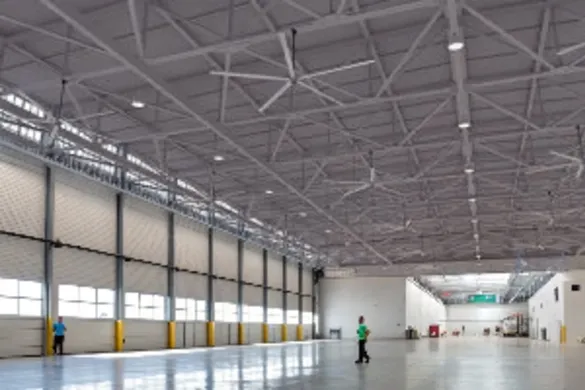
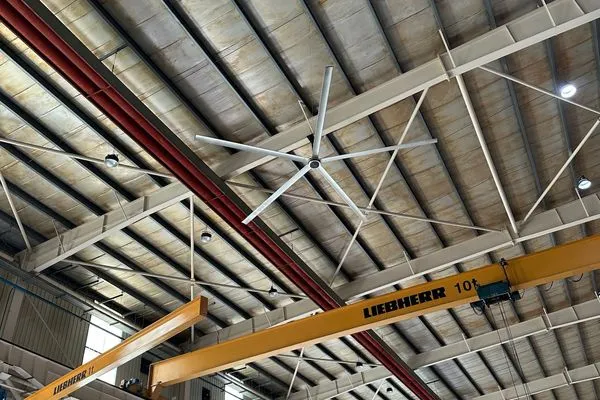
As Vindus Fans, our focus is more specific. We manufacture HVLS and large-space industrial fan solutions for factories, warehouses, sports centers, schools, and edificios comerciales. That means our role is strongest when the buyer needs wide-area air movement, comfort, better air circulation, and lower operating pressure in large indoor areas.
How Are Industrial Fan, Blower, and Exhaust Solutions Different?
Un ventilador industrial usually moves air for comfort, cooling, circulation, or general ventilation. A blower often handles higher-pressure air delivery or process air. An exhaust system removes air from a space, sometimes with heat, dust, fumes, or chemical vapor. They may look similar from the outside, but their jobs are different.
For example, New York Blower presents industrial fans and blowers across a wide range of industries, including pollution control, water treatment, wood products, paper and pulp, coal, nuclear, foundry, mining, glass, petrochemical, and spray booth exhaust. That range shows why industrial fans and blowers are often selected by process and hazard, not only by size.
A good selection starts with this simple question: what problem should the air solve?
| Need |
Better product direction |
| Worker comfort in large open space |
HVLS or large ceiling fan |
| Dust, fumes, vapor, or gas removal |
Local exhaust and filtration |
| Air through ducts |
Inline, axial, or centrifugal fan |
| Process heat or pressure |
Industrial blower or process fan |
| Cooling a machine zone |
Cooling fan or directional system |
This is why “shop industrial fans” is only a starting search term. The real answer depends on the application.
When Should You Choose Centrifugal Fans, Axial Fans, or HVLS Fans?
Centrifugal fans are commonly used when air must move through resistance, such as ducts, filters, hoods, or process systems. Twin City Fan says centrifugal fans are designed for general HVAC and industrial applications where large volumes of clean air are required at low to moderate pressures, and it notes several impeller types such as backward inclined, backward curved, airfoil, and forward curved designs.
Axial fans move air along the shaft direction. Twin City Fan describes tubeaxial fans for general ventilation and process air supply, while vaneaxial fans serve applications where large volumes of air are needed at moderate to high pressures. It also notes direct and belt drive options with fixed or adjustable blade propellers.
HVLS fans are different again. AMCA explains that large-diameter ceiling fans provide air mixing, destratification, and cooling effects in commercial, industrial, agricultural, and residential settings; it also notes that the U.S. Department of Energy defines large-diameter ceiling fans as having a blade span greater than 7 feet.
Related categories at a glance
| Category |
Typical use |
Common strength |
| Centrifugal |
Ducts, filters, pressure systems |
Pressure and control |
| Axial flow fans |
General ventilation, process air supply |
High volume in compact form |
| Exhausters |
Removing process air or contaminants |
Source removal |
| Ventiladores HVLS |
Large open rooms |
Comfort and destratification |
| Duct fans |
Inline air transfer |
Space-saving installation |
| Industrial blower |
Higher pressure process air |
Directed air power |
Why Do Airflow, CFM, Pressure, and Ductwork Matter?
Every fan discussion eventually comes back to airflow. In many markets, airflow is measured in CFM, or cubic feet per minute. But airflow alone is not enough. A fan also has to overcome pressure from filters, elbows, hoods, dampers, ducts, and outlet losses.
This is where a real spec matters. A buyer should provide room size, temperature issue, duct layout, exhaust hood details, filter type, and required air changes or capture goal. Without this information, the supplier can only guess. Guessing causes noise, weak performance, wasted power, and sometimes unsafe results.
For large-space comfort, the logic is different. Vindus explains that to optimize airflow with an HVLS fan, buyers should choose the correct diameter, place fans for full coverage, and run them at low speed for winter destratification and summer comfort.
How Do Industrial Fan Manufacturers Support Manufacturing Facilities?
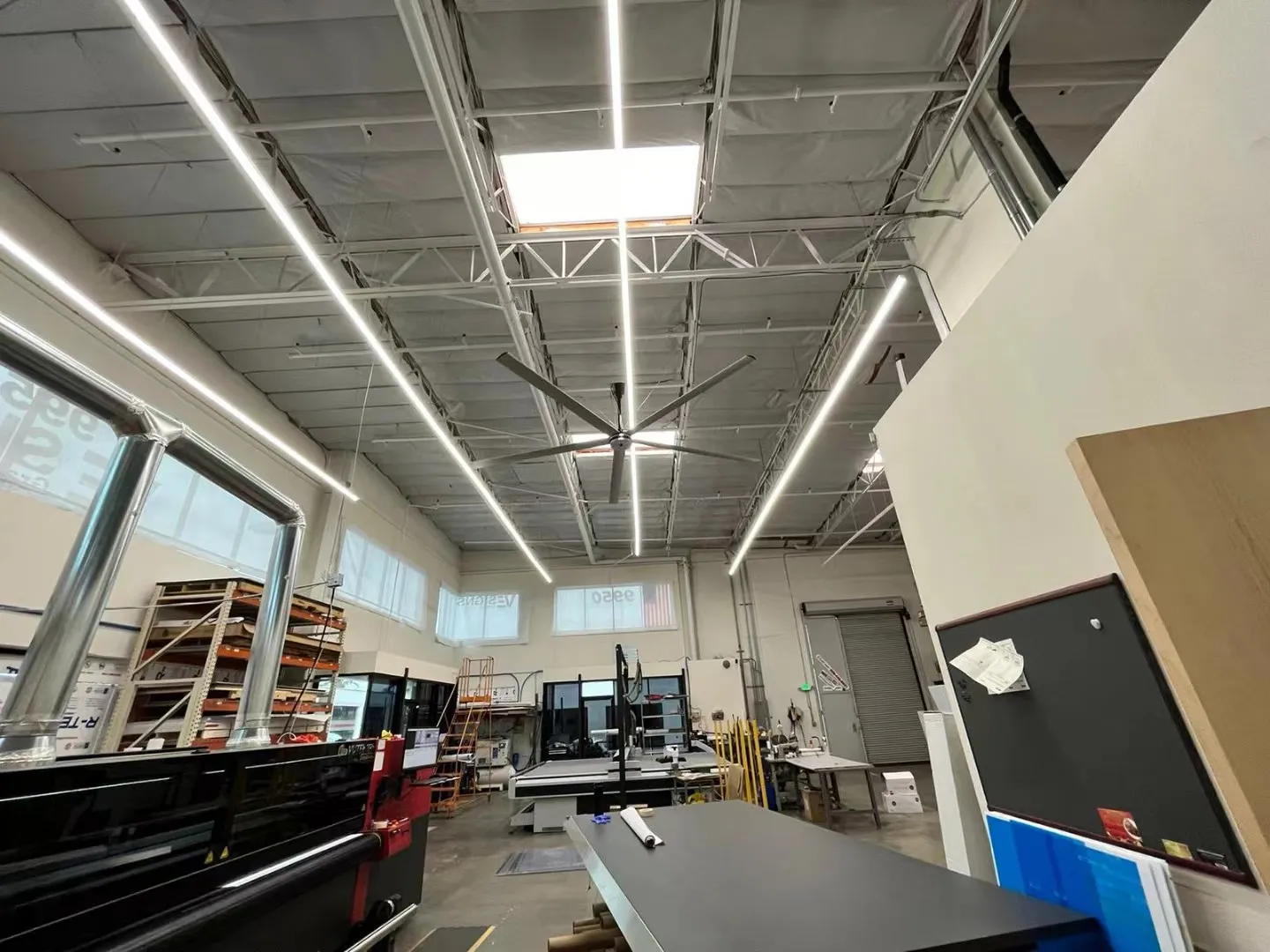
Manufacturing facilities often need more than one kind of air solution. A welding area may need local exhaust. A paint line may require filtration. A packaging hall may need efficient cooling. A tall assembly area may need Ventiladores HVLS to move warm air and create a more stable working zone.
That is why experienced industrial fan manufacturers ask many questions before recommending equipment. They want to know the process, temperature, space height, contamination risk, pressure needs, duty cycle, and maintenance plan. In harder sites, the right answer may combine centrifugal fans, exhausters, blower systems, and HVLS air circulation.
As a manufacturer, we see this often. A plant manager may ask for one large cooling fan, but the real issue is layered heat plus poor roof-level mixing. In that case, an HVLS system can create better comfort with lower speed air, while a separate exhaust or filtration system handles source contamination.
What Should Buyers Know About Exhaust Fans, Filtration, and Contaminants?
An exhaust fan is not just a fan pointed outside. In industrial settings, it may be part of a safety and environmental system. OSHA says industrial ventilation generally uses supply and exhaust ventilation to control emissions, exposures, and chemical hazards in the workplace. OSHA also describes ventilation as an important engineering control for maintaining air quality in occupational work environments.
When dusts, fumes, vapors, gases, or mists are present, the system may need hoods, ducts, separators, filtration, safe discharge, and make-up air. OSHA’s construction ventilation rule says local exhaust systems should be designed so dusts, fumes, mists, vapors, and gases do not spread through the work area.
Buyers should be especially careful with explosion proof or spark-resistant requirements. If flammable vapor or dust may be present, do not rely on a normal fan quote. Ask for a qualified safety review, local code review, proper motor location, material selection, and any required protective coating. The goal is not only airflow. The goal is safe airflow.
Why Do Lead Times, Replacement Parts, and Troubleshooting Affect Project Value?
A good product with poor support can still become expensive. Long lead times, unclear wiring, missing replacement parts, and slow troubleshooting create downtime. In a factory or school, downtime is not a small inconvenience. It affects comfort, schedules, and daily operation.
When comparing fan companies, ask these questions:
Are standard models in stock or built to order?
Are custom fans, semi-custom models, or retrofit packages available?
What are the normal production and delivery times?
Which replacement parts should be kept locally?
Can the supplier support remote troubleshooting?
Are drawings and installation documents clear?
Can the supplier support OEMs or project contractors?
This is where service separates average suppliers from strong suppliers. Twin City Fan highlights technical design capabilities, comprehensive testing services, and a responsive sales team, while New York Blower emphasizes customer-focused air solutions and support for many industries.
How Do Energy Efficiency and HVLS Systems Reduce Energy Use?
Energy use is one of the main reasons buyers compare fan options carefully. A poorly selected fan can waste power every hour it runs. A well-selected system supports comfort, airflow, and energy efficiency with less waste.
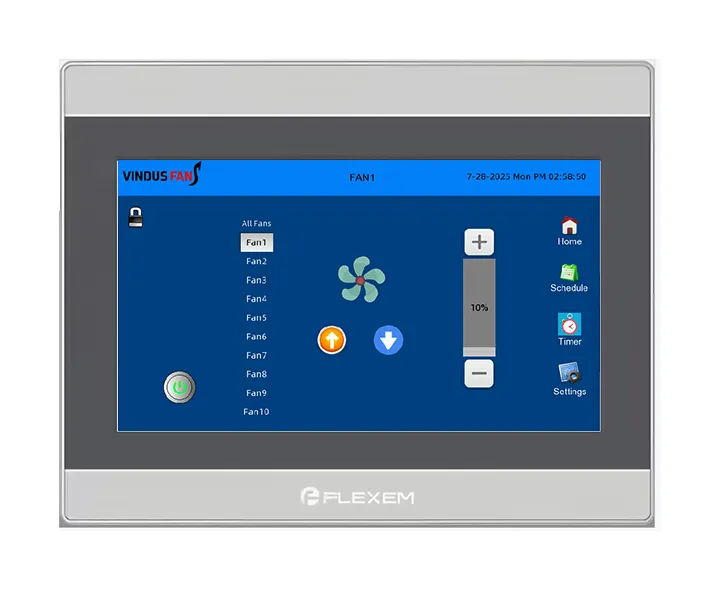
For large open buildings, HVLS can be very useful. Vindus states that the M650 Series delivers comfortable airflow through the year, cools efficiently in summer, and helps equalize building temperature in winter. Vindus also highlights floor-level HMI access for easier service on the M650.
The U.S. Department of Energy says fans cool people, not rooms, and explains that using a ceiling fan can allow a higher thermostat setting without reducing comfort. This is important for energy efficient planning because the right fan may reduce overcooling while keeping people comfortable.
Where energy savings often come from
| Source |
Practical result |
| Better destratification |
Less wasted heat near the roof |
| Better air mixing |
More stable floor comfort |
| Lower fan speed |
Less noise and lower power draw |
| Better controls |
Run only when needed |
| Right fan type |
Less wasted pressure or airflow |
For large industrial and commercial and industrial spaces, the best system is not always the largest system. It is the one that matches the room, the people, and the operating schedule.
How Should Buyers Compare Top Industrial Fan Manufacturers?
Search results may show many “top industrial fan manufacturers,” but a good buyer should not choose by list position alone. Compare capability, not slogans. A supplier for process blower systems may not be the best partner for HVLS comfort. A supplier of HVLS fans may not be the right source for corrosive exhaust in chemical plants.
A practical comparison should include:
| Factor |
Why it matters |
| Product focus |
Comfort, exhaust, process, or mixed use |
| Test data |
Confirms performance claims |
| Engineering support |
Reduces wrong selection |
| Quality system |
Ask about ISO 9001 or similar process control |
| Custom ability |
Needed for custom fans and unusual sites |
| Spare parts |
Protects long-term uptime |
| Installation support |
Reduces field risk |
| Safety knowledge |
Critical for hazardous exhaust applications |
This is how to judge top industrial suppliers in a serious way. Names such as Twin City Fan, New York Blower, Robinson Fans, and Big Ass Fans all appear in industrial air movement discussions, but they do not all target the same job. The strongest choice is the one whose technical expertise matches your application.
Where Do HVLS Suppliers Fit Beside Fan and Blower Companies?
HVLS suppliers fit best when the buyer needs comfort, mixing, and wide-area overhead circulation. They are not a replacement for every blower, compressor, or exhaust system. Instead, they complement them.
For example, a workshop may use a local exhaust system to remove fumes at the source while HVLS fans support comfort and air mixing in the rest of the building. A gym may only need HVLS comfort. A manufacturing line may need both process air moving equipment and large-space circulation.
This is why a complete plan may involve both system solutions and targeted equipment. The right mix can create solutions that meet comfort, process, safety, and energy goals at the same time.
Why Choose Vindus Fans for Large-Space Industrial Air Movement?
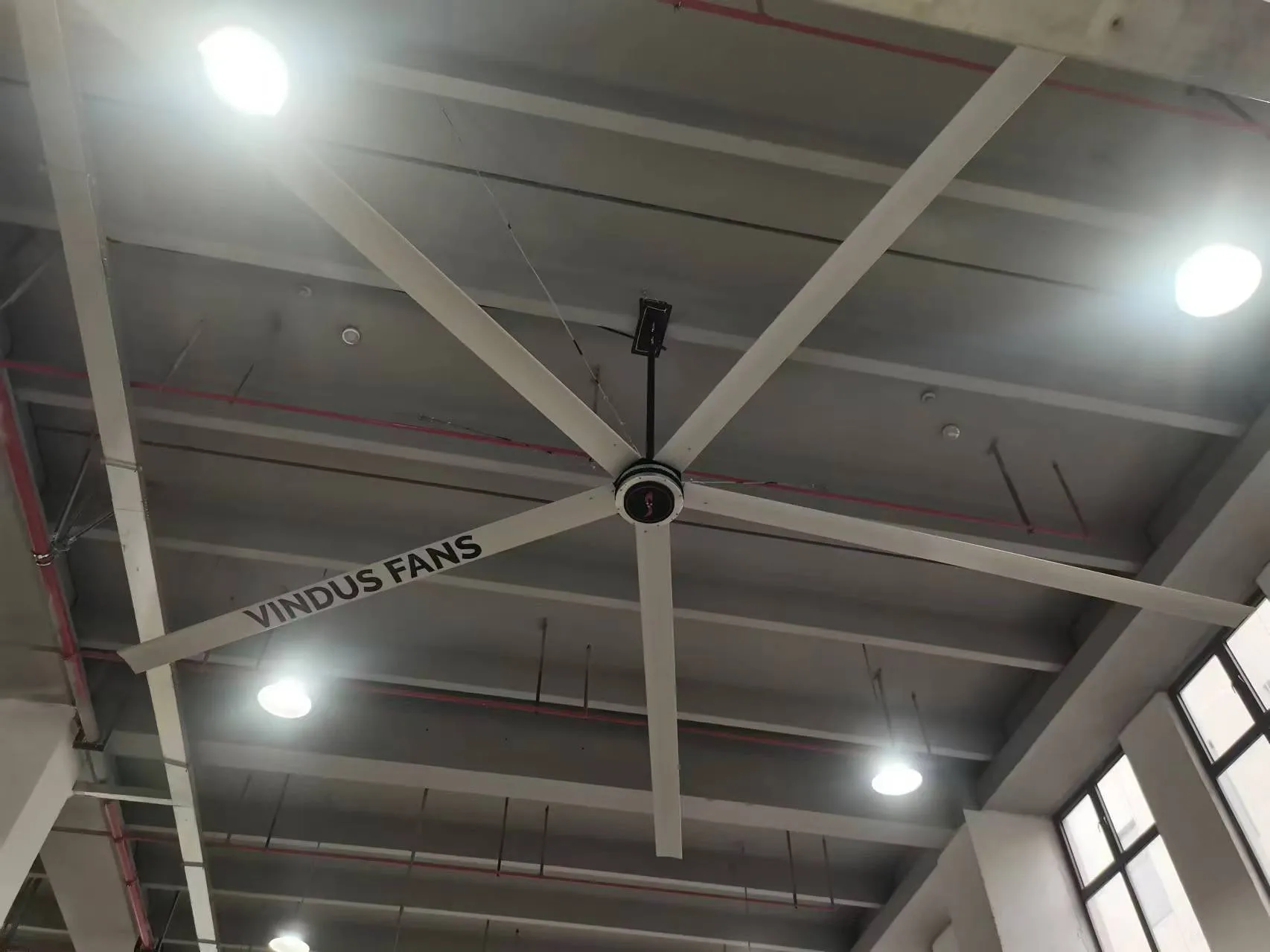
Vindus Fans is best suited for buyers who need large-space comfort, destratification, and efficient overhead circulation. Our HVLS fans support factories, warehouses, sports centers, schools, logistics buildings, and other manufacturing facilities where people need better comfort and managers need lower operating pressure.
Our product focus is clear: large-diameter HVLS fans, factory-backed selection support, and practical controls for real buildings. Instead of trying to be every type of fan and blower supplier, we focus on wide-area airflow and commercial comfort.
For project buyers, that focus creates three benefits:
- Clear selection for large buildings
- High-performance HVLS equipment for comfort and mixing
- Practical service support for long-term operation
When you need fan solutions for a large room, a focused HVLS manufacturer can be more useful than a general catalog supplier.
Mini Case View: Warehouse Cooling and Exhaust Planning
Imagine a logistics building with a hot roof, busy loading doors, and tired workers. The first request may be simple: “We need a bigger industrial fan.” But the better plan starts with an audit.
The site may need HVLS fans for comfort, door-area exhaust fans for heat and truck movement, and better scheduling to reduce wasted runtime. If a nearby process releases fumes, the plan may also need local exhaust and filtration. This is how air movement solutions become practical, not theoretical.
The result should be a cooler, safer, and more comfortable workplace. Good fans deliver comfort only when they are selected as part of the whole building.
Preguntas frecuentes
What is the difference between an industrial fan and a blower?
An industrial fan usually moves air for comfort, cooling, general ventilation, or process support. A blower often delivers air at higher pressure for directed process use. The best choice depends on airflow, pressure, ductwork, temperature, and the material in the air.
When should I use centrifugal fans?
Use centrifugal fans when the system has resistance, such as ducts, filters, hoods, or process equipment. Twin City Fan notes that centrifugal models are used in HVAC and industrial applications where large volumes of clean air are needed at low to moderate pressures.
When should I use axial flow fans?
Use axial flow fans where you need high air volume in a compact path, often for general ventilation, process air supply, roof exhaust, or ducted applications. Twin City Fan describes tubeaxial and vaneaxial fans for these types of uses.
Do I need explosion proof fans?
You may need explosion proof construction or spark-resistant design if the air contains flammable vapors, dust, or gases. This should be reviewed by qualified engineers and local safety experts before purchase.
How important are replacement parts?
Replacement parts are very important for industrial sites. Motors, controllers, belts, bearings, impellers, guards, and drive components should be easy to identify and source. Poor parts support increases downtime.
Can HVLS fans replace exhaust systems?
No. HVLS fans improve comfort and circulation, but they do not replace source capture for harmful fumes, dusts, or gases. OSHA describes ventilation and local exhaust as engineering controls used to control workplace air hazards.
Puntos clave
- Industrial fan suppliers should be chosen by application fit, not by price alone.
- A blower, exhaust fan, axial fan, centrifugal fan, and HVLS fan solve different problems.
- Centrifugal fans are often used where pressure and duct resistance matter.
- Axial fans are useful for high-volume ventilation and compact layouts.
- Local exhaust systems are critical when fumes, dust, vapors, or contaminants are present.
- Lead times, replacement parts, documentation, and service support protect long-term value.
- HVLS fans help improve comfort, air mixing, and energy efficiency in large open spaces.
- Vindus Fans is a strong partner when the goal is efficient large-space air movement for factories, warehouses, gyms, schools, and commercial buildings.