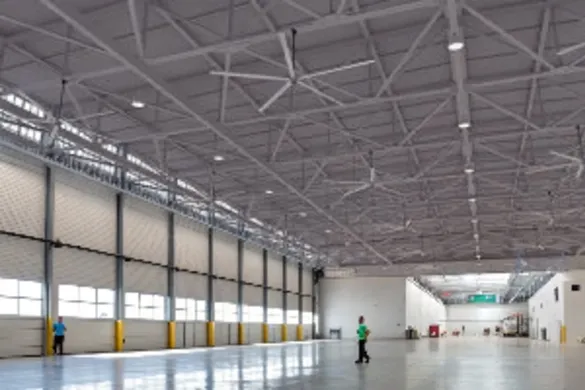
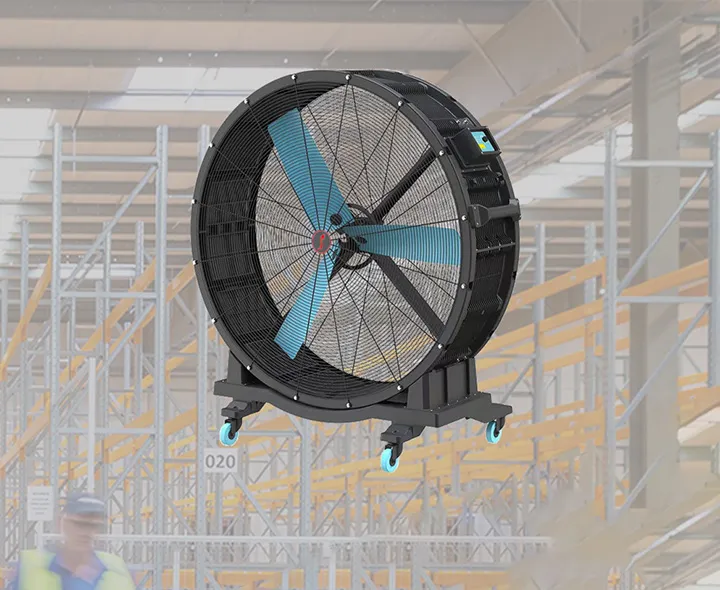
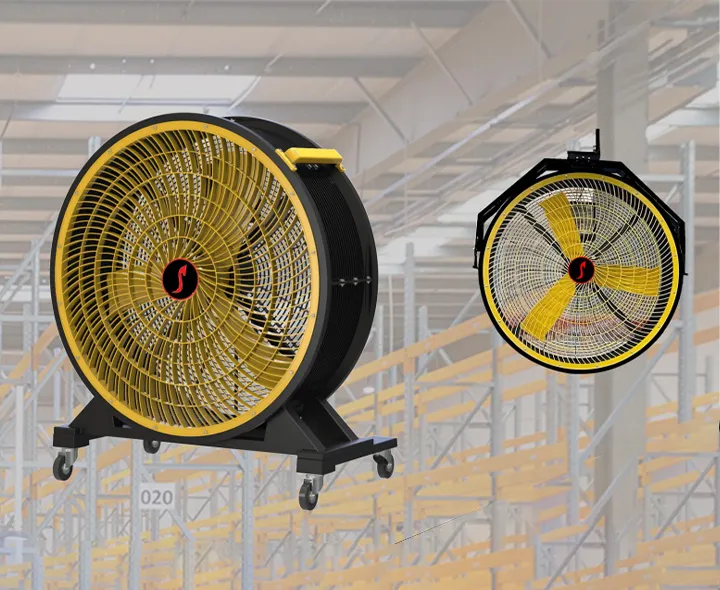
Poor barn air can hurt birds, cattle, and profits fast. When heat, moisture, dust, and stale air build up, animal comfort drops and performance follows. A well-designed HVLS 风扇 system gives farms a practical way to improve comfort, airflow, and daily operating efficiency.
Yes—an HVLS 风扇 is often ideal for a poultry house or 谷仓 because it moves a wide column of air gently and evenly, helping manage heat, moisture, and stale air in large animal spaces. For many modern farms, it is one of the simplest ways to support healthier conditions and steadier performance.
What is an HVLS fan, and why does it fit a barn so well?
一个 HVLS 风扇 是 高音量低速度 fan built to move a broad mass of air with slow rotation instead of sharp blast cooling. According to AMCA, large-diameter ceiling fans commonly run from 7 至 24 英尺, and some reach 直径24英尺. That size matters because farms need air coverage over a large footprint, not a narrow jet pointed at one corner.
In simple words, these 风扇设计 到 移动大量空气 across a wider zone, which is why they fit a poultry house or 谷仓 so well. In animal buildings, you do not just need wind. You need steady, even air where birds rest, where feed is delivered, and where cattle stand or lie down. That broad, calm pattern is what makes an HVLS 风扇 different from many small 高速风扇.
As a manufacturer, we see this every season: buyers first ask for stronger cooling, but what they often need is better whole-building air management. That is where provided by HVLS design makes sense in 农业环境. A single system can support comfort, moisture control, and more stable conditions in one package.
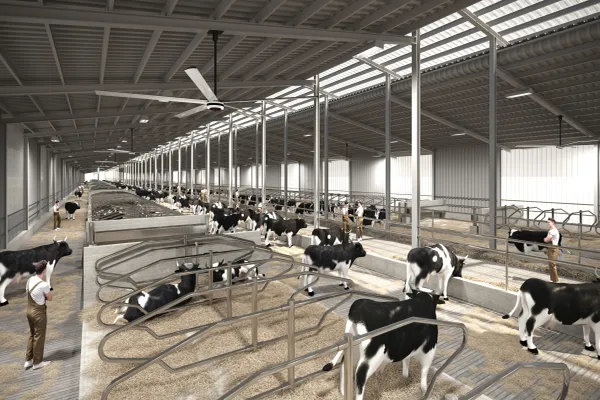
Why are poultry houses and barns so hard to ventilate well?
A poultry house or 谷仓 is not a simple open room. It is a working animal space with body heat, bedding moisture, manure gases, equipment heat, and outdoor weather all changing at the same time. In poultry facilities, ventilation must remove excessive heat, moisture, air pollutants, and airborne pathogens to support bird health. USDA-linked sources also note that elevated ammonia and dust can raise the risk of respiratory problems in layers.
That is why basic 通风 often feels like a balancing act. Mississippi State notes that broiler growers must maintain healthy conditions without overcooling birds, because poor temperature control can hurt feed conversion and flock performance. Arkansas Extension adds that poultry ventilation must manage oxygen, carbon dioxide, odor, ammonia, and moisture at the same time, even though higher rates can raise fuel and electric use.
The same problem shows up in a dairy farm. University of Tennessee and Wisconsin extension materials explain that barns need enough air exchange to remove stale air, moisture, ammonia, and dead-air pockets while also supporting cooling during hot periods. When a cow seeks fresh air near an opening, that is often a sign the system is not moving enough air through the space.
How do HVLS fans help reduce heat stress in poultry and dairy livestock?
HVLS 风扇如何帮助降低家禽和奶牛的热应激?
This is one of the biggest reasons farms use HVLS. Warm weather does not only make animals uncomfortable. It can reduce feed intake, disrupt behavior, and slow production. Michigan State explains that 热应激 can lower milk production, hurt reproduction, and increase health risks in dairy cows. Tennessee also notes that cattle can begin feeling heat stress at relatively modest temperature-humidity levels, not just during extreme heat waves.
For poultry, the logic is similar. Birds need fresh air and temperature control so more feed goes to growth instead of body-temperature maintenance. In broiler houses, poor temperature handling can push birds to use more energy just to stay comfortable. That is why strong, even 空气流动 matters in the summer months and beyond.
一个 HVLS 风扇 supports cooling by increasing air speed over animals without the harsh blast many 高速 units create. Extension guidance for cattle cooling emphasizes internal 空气流动 and adequate 通风 in holding pens, resting areas, and feed alleys. In daily operation, HVLS 风扇帮助 keep cattle more comfortable, and they can help birds avoid heavy, hot air gathering above the litter line.
“Ventilation is critical” for bringing fresh air into the barn, creating air velocity, and cooling cows.
What are the benefits of HVLS fans for airflow, humidity, and air quality?
The short answer is balance. The benefits of hvls design go beyond simple cooling. A well-placed HVLS 风扇 can support more even 空气流动, better moisture movement, and less 空气不流通 under the roof and around animals. NC State shows that mixing fans installed near the ceiling can reduce thermal stratification in poultry houses, while Kentucky poultry guidance explains that air exchange removes moisture from bird respiration and litter.
That matters because 湿度 and dirty air create a chain reaction. When litter gets wet and heavy air sits too long, ammonia, odor, and disease pressure become harder to control. Arkansas Extension notes that ventilation helps farmers manage acceptable humidity levels, odor, ammonia, oxygen balance, and carbon dioxide inside poultry barns. In dairy buildings, Wisconsin explains that circulation fans create more uniform temperature and 湿度 conditions inside the 谷仓.
So when people ask about the HVLS 风扇的优点, I usually explain it this way: they can 改善空气, help 改善空气质量, and support promoting better air circulation in one step. They do not replace a full 暖通空调系统 or tunnel design, but they can make the inside environment more stable. In practical farm terms, fans remove dead pockets, fans aid moisture control, and fans prevent some of the uneven conditions that make animal buildings harder to manage.
Are HVLS fans better than barn fans, farm fans, recirculation fans, or exhaust fans?
Each fan type has a job. Wisconsin Extension draws a useful line here: circulation fans move air inside the 谷仓, 尽管 排气扇 pull fresh air in and stale air out. That means the smartest system is often not “HVLS or exhaust.” It is “HVLS plus the right exhaust and inlet strategy.”
传统的 barn fans, farm fans, 和 recirculation fans can work well in smaller zones or targeted cooling points. But in big sheds, poultry houses, or freestall barns, they often create uneven patterns. An HVLS 风扇 is better at covering more floor with fewer units because the fan is built around a 大直径 sweep and gentle mixing. This is why many growers looking at agriculture fans move toward HVLS when they expand to large agriculture 建築物。
Here is a simple comparison:
| Fan type |
Main job |
Best use |
| HVLS 风扇 |
Broad mixing and comfort air |
Large poultry and 家畜 buildings |
| 排气扇 |
Pull stale air out |
Mechanical ventilation systems |
| Basket or panel fans |
Spot cooling or directional flow |
Small zones or narrow targets |
| Recirculation fans |
Internal mixing |
Supplemental circulation in specific areas |
In other words, hvls 风扇工作 best when the goal is whole-building coverage. Smaller fans still matter, but they are usually helpers, not the main answer.
How do size, height, and fan blades affect the effectiveness of HVLS fans?
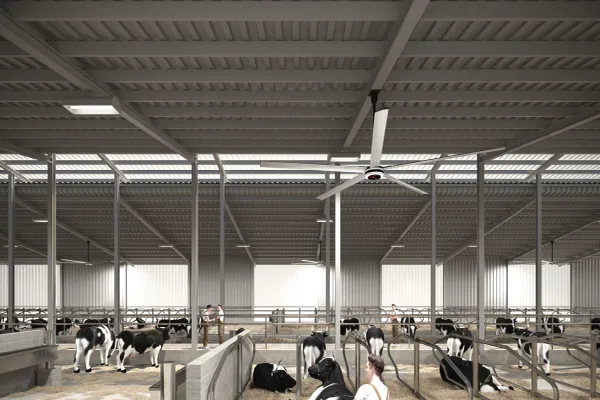
这 effectiveness of hvls fans depends on more than just buying the biggest model. AMCA notes that large-diameter ceiling fans commonly range from 7 至 24 英尺, and that wide sweep is what lets them handle 低空气量 velocity. The aim is not a harsh draft. The aim is strong coverage with air at low speeds.
Mounting height matters too. In many agricultural buildings, a larger fan works best when it has enough vertical room to form a stable column of air. That is why growers often ask whether an HVLS 风扇 can work in a poultry house with lower trusses or a 谷仓 with lights, feeders, and equipment lines. The answer is usually yes, but the layout must match the structure.
Quick sizing view
| Building type |
Typical fit |
| Small poultry house |
Smaller HVLS or mixing solution |
| Open dairy shed |
Mid or large HVLS |
| Tall freestall 谷仓 |
Larger HVLS with careful spacing |
| Multi-zone animal house |
Combination layout |
This is also where 风扇叶片 and blade profile matter. Well-designed blades move more air with less wasted turbulence. Some buyers compare suppliers across the wider 工商 market, including names like vindus Industrial, but the real question is simple: can the fan match the building and the animals inside it?
What should farms know about motor type, variable speed, and energy use?
这 发动机 and control system shape long-term value more than many buyers realize. Wisconsin Extension notes that belt-driven fans can be more efficient, but they need more maintenance, while direct-drive options reduce belt service needs. The same source highlights 变速 control as a way to improve 能源效率, cut noise, and tune 空气流动 more precisely.
For farms, that matters because the right fan does not need to run at full output all day. During mild weather, lower settings may keep air fresh without overdoing it. During heat events, more aggressive cooling may be needed. This is why many buyers now ask for an 节能 HVLS 风扇 with flexible control rather than a fixed-output unit.
Simple cost logic
- Better control can lower 能源消耗
- Good sizing can reduce wasted run time
- Lower maintenance can cut service costs
- Smarter operation can help reduce 能源成本
简而言之, fans consume power, but good design helps make every watt work harder. For farms that already have an 暖通空调 或者 暖通空调系统, an HVLS unit can support air mixing and comfort instead of forcing heating and cooling equipment to do all the work alone.
Where should you place an HVLS fan in a poultry house or barn?
Good 风扇安装 is just as important as fan selection. University of Tennessee guidance for cattle cooling says correct fan placement, choice, and maintenance are key, especially in holding pens, feed alleys, and resting areas. NC State also shows that fans placed near the ceiling can reduce stratification in poultry buildings.
In a poultry house, placement should support litter conditions, feed lines, and even distribution. In a 谷仓, layout should reflect where the cow spends time—lying, eating, or waiting. The aim is not just wind. The aim is to avoid dead corners, wet zones, and trapped 热空气.
Here is a practical checklist:
- Keep the airflow path clear
- Avoid blocking the sweep with trusses or lights
- Match fan spacing to building length and width
- Review bird or cattle height, bedding, and equipment
- Coordinate HVLS with sidewall openings and exhaust layout
When growers get this right, fans stand out because the whole building feels more even. When they get it wrong, even a strong fan cannot solve layout problems by itself.
Can HVLS fans improve animal comfort and farm productivity?
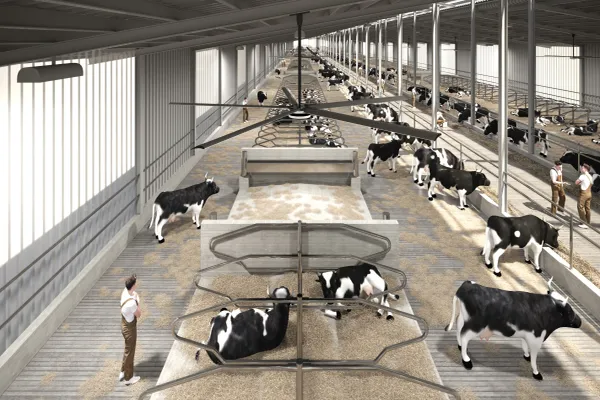
Yes, and this is where the business case becomes clear. Better comfort supports better behavior, steadier feeding, and a healthier environment for livestock. MSU reports that dairy heat stress can cut performance and raise health risk, while poultry ventilation research links healthy air to stronger flock conditions.
In plain words, better air often supports better 生产率. It is not magic. It is animal biology. When birds or cattle spend less energy fighting heat and bad air, more of that energy can go toward growth, laying, or milk. That is why many producers say hvls fans create value well beyond comfort alone.
As manufacturers, we often explain ROI in a very simple way. If using hvls fans helps a farm keep animals calmer, drier, and more comfortable, then the system supports labor efficiency too. Staff spend less time reacting to hot spots, wet bedding, and uneven conditions. Over time, fans contribute to a steadier operation.
Why are HVLS fans in agriculture a strong long-term choice?
这句话 hvls fans in agriculture keeps getting more relevant because barns are getting larger, expectations are higher, and labor is tighter. Farms want better conditions without filling the roofline with too many separate devices. A single barn ceiling fan or group of HVLS units can offer broad coverage with simpler control logic than many patchwork systems.
That is why hvls livestock fans keep gaining attention in modern 农业. They work well in poultry housing, dairy buildings, and mixed 家畜 facilities where air mixing, moisture control, and comfort all matter. They are especially attractive when buyers want a clean, scalable solution rather than a maze of small 低速风扇 and targeted spot coolers.
If your goal is healthier birds, stronger cattle comfort, and a more stable building climate, an hvls agricultural system is a practical option. It will not replace every other piece of ventilation equipment, but it can make the whole system perform better.
Mini case view: what changes do farms usually notice first?
On a poultry project, the first thing teams often notice is that the house feels less heavy. That is the effect of moving air through the whole volume instead of only the center aisle. Fans generate a broad circulation pattern, and 粉丝也 help reduce the layered feeling between floor level and the upper roof zone.
On a cattle project, the first visible change is often animal behavior. A cow that was crowding openings or bunching in one cooler area may spread out more evenly once internal air improves. Tennessee notes that visible air-seeking behavior can signal weak ventilation, while proper air velocity helps cool cows and remove stale pockets. That is one reason growers use HVLS to help cattle cool without relying on one narrow blast of air.
From the management side, the common theme is simple: fans keep the building more even. And when the environment is more even, daily control gets easier.
常见问题解答
Are HVLS fans good for poultry farms?
Yes. An HVLS 风扇 can help a poultry house manage temperature layering, moisture, and stale air, which supports better bird comfort and building conditions. Poultry sources also show that good 通风 is important for controlling heat, moisture, ammonia, and dust.
Can an HVLS fan replace exhaust fans in a barn?
No. 排气扇 and inlets still handle fresh-air exchange. An HVLS 风扇 mainly improves internal mixing and coverage. The best design usually uses both.
Do HVLS fans help dairy cows in hot weather?
Yes. Extension guidance shows that moving air across cows helps cool them and reduce the effects of 热应激. This matters because heat load can hurt comfort and performance in dairy animals.
Are HVLS fans expensive to run?
They use electricity, but good sizing, smart controls, and 变速 operation can improve 能源效率 and lower wasted runtime. That is why many farms view them as a practical long-term tool, not just a seasonal extra.
What size HVLS fan should I choose?
That depends on roof height, width, animal density, and equipment layout. Large-diameter ceiling fans commonly range from 7 至 24 英尺, so the right answer comes from layout, not guesswork.
Are HVLS fans only for barns?
No. They are also used in warehouses, production halls, and other 商业建筑. But they are especially useful in farm buildings because animal housing needs both comfort and environmental control.
References
主要收获
- 一个 HVLS 风扇 is a strong fit for a poultry house or 谷仓 because it covers more area with gentler, wider air mixing.
- Farms need more than cooling; they need balanced 通风, moisture control, and better 空气质量.
- Better internal air can help reduce animal discomfort and support steadier performance in birds and cattle.
- HVLS 风扇帮助 most when they work with, not against, the building’s full ventilation design.
- Good sizing, layout, and control matter just as much as the fan itself.