Winter in a 健身房 can be frustrating: warm air sits up high, the floor feels cold, and members complain even when the heat is on. That usually pushes you to raise the thermostat—and your average energy bill follows. The better fix is smarter mixing, not more heat.
一个 HVLS 风扇 helps a fitness center in winter by gently mixing trapped warm air down into the workout zone at 低速,改善 温度控制 without an icy draft. You get steadier comfort, fewer cold spots, and more efficient heating in big spaces.
Why does your gym feel cold in winter even when the heat is on?
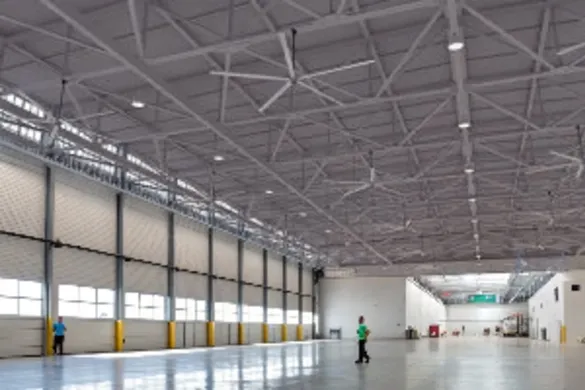
Warm air naturally rises. In tall buildings—many gymnasium layouts, warehouses, and training halls—heat collects near the roof while the training zone stays cooler. This “layering” is called thermal stratification.
Here’s the painful part: you pay to heat air that nobody breathes. If your ceiling is 8–12 meters high, it’s easy to see a big temperature gap from floor to ceiling. In an ASHRAE Journal study of a tall facility, the average floor-to-ceiling temperature difference was about 6.0°F when the HVLS fan was not used, and stratification spiked higher on colder days.
What members feel (real life):
- Cold feet during rest periods
- Sweaty then chilled near doors or loading areas
- Uneven comfort between cardio, weights, and courts
This is exactly where 超低密度脂蛋白 destratification shines: it fixes the temperature layers.
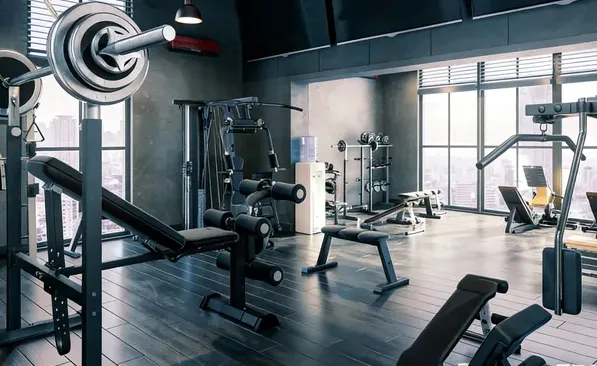
Why does your gym feel cold in winter
What is an HVLS fan—and why is it better than ceiling fans for gyms in winter?
超大吸力 means 高音量,低速度. The whole point is simple: move a lot of air, slowly. A big fan can mix the air without blasting people.
ASHRAE describes large-diameter HVLS units running downward at low speeds in winter to mix warm ceiling air with cooler floor air, while avoiding the “unwanted cooling” sensation on skin.
在 维德斯风扇, we build this type of system for large spaces—factories, commercial buildings, sports centers, schools, warehouses, and athletic facilities—because winter comfort is mostly about 空气循环 and consistency.
Quick comparison: HVLS vs standard ceiling fan (simple truth)
| 特征 |
HVLS 风扇 |
Standard home ceiling fan |
| 覆盖范围 |
Whole large zone |
Small room |
| Winter mixing |
Strong |
Weak in high ceilings |
| Draft risk |
Low (when tuned) |
Higher (narrow jet) |
| 控制 |
Often 变速 |
Often basic / single speed |
| Fit for gyms |
Great for big floors |
Only for studios |
That’s why “ceiling fans for gyms” usually means commercial-grade, not residential.
HVLS industrial fan or industrial gym fans: what airflow feels right during workouts?
Many buyers search “hvls industrial fan“ 或者 ”industrial gym fans” because they want power. But winter comfort is not about “more wind.” It’s about gentle mixing and stable temperatures.
In the ASHRAE Journal hangar study, the HVLS fan ran at 25% speed, used about 100 W, and was tuned so occupants didn’t feel a noticeable breeze (they referenced about 30 fpm at occupant level).
That’s the “sweet spot” for a winter 舒适的环境:
- Enough 空气流动 to mix layers
- Not enough to chill sweaty members
- Quiet enough for classes and coaching
This is why an hvls工业 approach often beats a smaller 工业风扇 that creates a sharp, fast stream.
Where should gym ceiling fans (overhead fan) go for the best air circulation?
Placement decides results. A perfect fan in the wrong spot can underperform.
When we plan a large hvls layout at Vindus Fan, we start with three questions:
- What is the ceiling height and structure (trusses, beams, rigs)?
- Where do people actually train (weights, cardio, courts)?
- Where does heat enter or escape (doors, glass walls, rooftop units)?
In the ASHRAE facility study, they installed a 20 英尺 diameter fan centered in the space with blades about 27 ft above the floor.
Simple layout tips (easy to apply):
- Center the fan over the main open training zone (not over cluttered racks)
- Keep clear of sprinklers, lights, and hanging equipment
- Avoid placing directly above strong supply vents that may short-circuit airflow
A well-placed 吊扇 helps create even 空气循环 across the floor instead of hot/cold islands.
What direction and speed should you run an HVLS ceiling fan in winter?
For most ceiling fan guidance, winter operation means 低速时顺时针旋转. The U.S. Department of Energy says to reverse direction to clockwise and set it to low speed to circulate warm air down from the ceiling.
ENERGY STAR gives the same winter guidance: low speed, clockwise, to push warm air down into the occupied zone.
对于 gym or fitness space, I like this simple rule:
- Start very low
- Increase until you see the temperature even out
- Stop before members say “I feel wind”
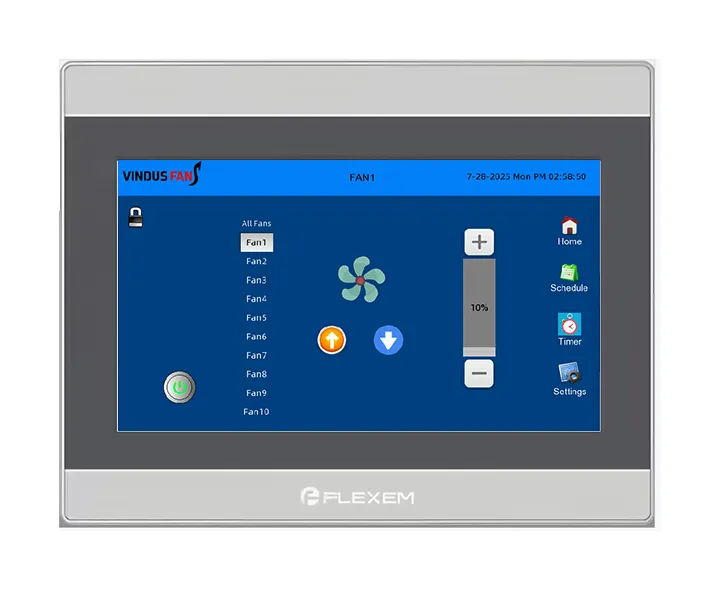
If your controls include scheduling, you can run a “warm-up mix” before peak hours and then hold a steady, gentle speed.
This is also where systems branded like trak (and trak commercial) can help—because good controls make the fan easy for staff, not a mystery switch.
How much can an HVLS fan cut winter heating costs? Real data, not hype
Everyone asks for a number. I’ll give you one—based on published measurements.
In the ASHRAE Journal hangar study:
- Normalized gas use dropped from 465 ft³/HDD (fan off) to 330 ft³/HDD (fan on)
- That’s a 29% decrease in normalized gas use during the study period
- The average floor-to-ceiling temperature difference dropped from about 6.0°F (fan off) to 0.7°F (fan on)
- The space reached near-uniform temperatures in about 10 minutes after turning the fan on
Tiny “before vs after” chart (from that study):
Fan Off: ██████ 6.0
Fan On: █ 0.7
- Normalized gas use (ft³/HDD):
Fan Off: ██████████ 465
Fan On: ███████ 330
That’s the business case in one glance: better mixing can reduce heating waste.
Are gym fans also about air quality? Yes—but know what they can’t do
A fan moves air. It does 不 add outdoor air and it does 不 filter particles by itself. Still, good air movement supports comfort and helps your HVAC deliver more even conditions across a big room.
The U.S. EPA notes that ventilation and filtration can reduce exposure to indoor pollutants and improve indoor air quality.
CDC also explains that better ventilation practices can reduce airborne concentrations of respiratory viruses indoors.
So what’s the practical takeaway for fitness facilities 和 recreation facilities?
- Use HVAC to bring in outdoor air and filter it
- Use an HVLS system to spread that treated air more evenly
- Clean filters on schedule and keep supply/return paths clear
That combo can lift perceived freshness and overall air quality, especially in high-occupancy class hours.
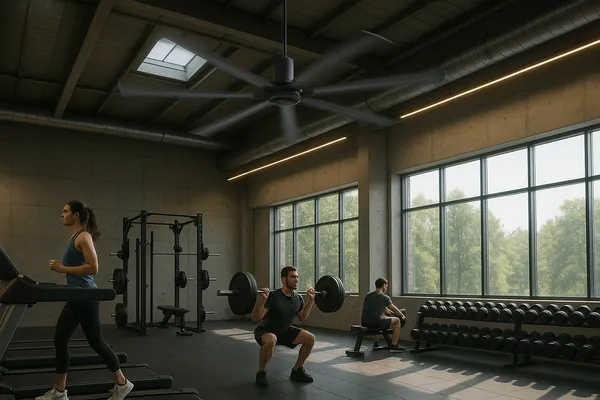
Are gym fans also about air quality?
HVLS vs drum fan, pedestal fan, air circulators: what should a gym choose?
Not every facility needs the same tool. Here’s how I explain it to buyers shopping fans for gyms:
| 选项 |
最适合 |
Typical downside |
Winter mixing |
| HVLS 风扇 |
Whole building comfort |
Higher upfront |
出色的 |
| drum fan |
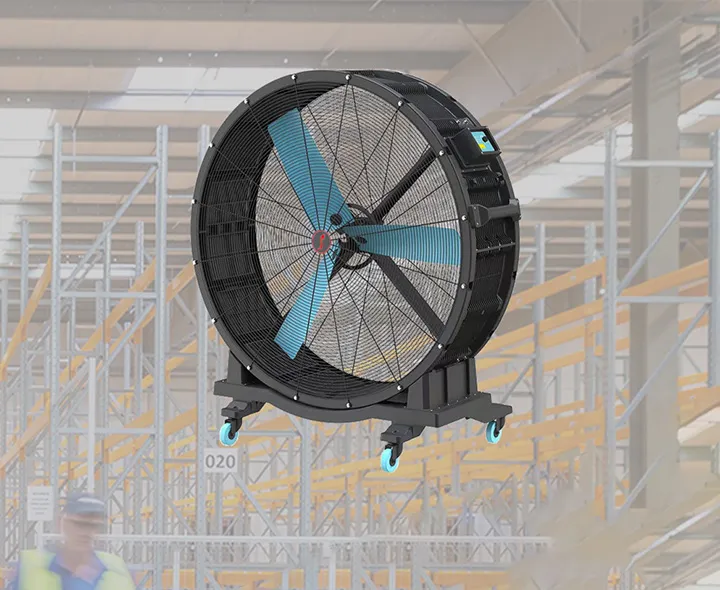
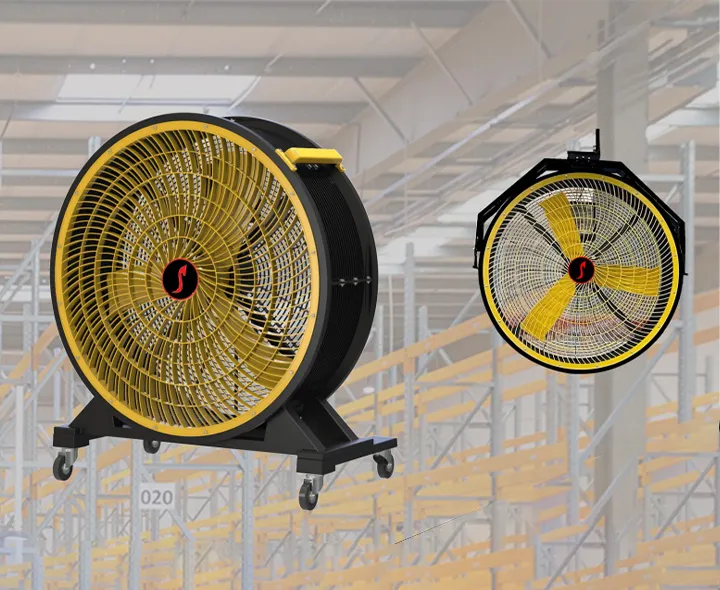
Spot cooling, drying floors |
Drafty, noisy |
有限公司 |
| 落地扇 |
小房间 |
Narrow reach |
有限公司 |
| air circulators |
Targeted mixing |
Adds floor clutter |
中等的 |
You might also see searches like “fan industrial air circulators” or “big fans.” Those can help temporary hot/cold spots, but they rarely fix whole-space stratification the way an HVLS ceiling solution can.
If your goal is even winter comfort across a large floor, choose the ceiling approach.
How to compare brands l and eco options
Buyers often Google brand terms. It’s fine to compare brands—but compare the right things.
What matters more than the label:
- Verified performance data and coverage plans
- Safety design (mounting, retention, fault protection)
- Control quality (true 变速, scheduling, direction)
- Noise at low speeds (classes hate whine)
- Service plan and spare parts availability
- Fit for indoor and outdoor zones (semi-open courts, loading doors)
You may also see “生态 HVLS 风扇” or eco marketing. Great—just confirm the energy data and motor efficiency claims in writing.
At Vindus Fan, we’ll always recommend the same buyer behavior: ask for a layout drawing and a winter operating plan. Specs without layout are guesswork.
Installation and safety: what gym owners should check before buying
A high ceiling fan is serious equipment. Treat it like mechanical infrastructure.
Pre-install checklist (fast but important):
- Structural approval for mounting (especially in 大型工业 roofs)
- Clearance to sprinklers, lights, scoreboards, and rigs
- Electrical plan (breaker, wiring route, control location)
- Safety policies for operation during lifts or maintenance
- Staff training: winter settings and summer settings
ENERGY STAR also stresses proper installation and avoiding wobble—small mistakes can turn a good system into a noisy one.
One more practical note: if your ceiling is “industrial,” you need 工业天花板 mounting methods—not the kind used for a decorative residential fan. That’s why buyers searching “工业吊扇” should also ask about structure, not only motor power.
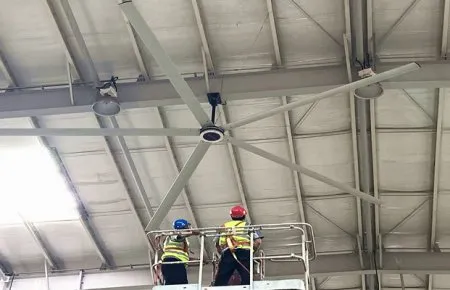
安装 HVLS 风扇
Buying checklist: how to choose commercial gym fans that actually work
If you want this to go smoothly, use this simple spec list when you request a quote from Vindus Fan (or anyone):
Performance & coverage
- Space size and ceiling height
- Obstructions map
- Target comfort zones (cardio, weights, courts)
控制装置
- Winter direction + low setting plan
- Scheduling (open, peak, close)
- Integration options with hvac systems if needed
舒适
- Desired 空气流动 level (gentle mixing, not wind)
- Noise expectations
Service
- Warranty and spare parts
- Lead time and support
And don’t fall for the “ultimate industrial” vibe if the plan doesn’t match your building. A “powerful” fan installed wrong is still wrong.
常见问题解答
Will an HVLS fan make people feel colder in winter?
Not when you run it correctly. Keep speed low and focus on mixing warm air down. DOE and ENERGY STAR both recommend clockwise rotation at low speed for winter.
What’s the biggest mistake gyms make with ceiling fans in winter?
Running too fast. The goal is temperature mixing, not wind. A gentle setting improves comfort without chilling sweaty members.
How quickly can an HVLS fan reduce stratification?
In the ASHRAE Journal hangar study, near-uniform temperatures were reached in about 10 minutes after turning the fan on.
Can HVLS fans replace ventilation or filtration?
No. Fans move air but don’t add outdoor air or filter it. EPA and CDC both emphasize ventilation and filtration for healthier indoor air.
Are portable fans better than ceiling fans for gyms?
Portable fans help spot areas, but they rarely fix whole-room winter stratification. For large open floors, ceiling-mounted HVLS usually performs better for even comfort.
What info should I send Vindus Fan to get a correct layout?
Send ceiling height, floor size, a simple equipment map, HVAC type, and your winter comfort complaints (cold floor, hot ceiling, drafts). We can size the coverage and propose control settings.
来源
主要收获
- Tall gyms often feel cold because heat rises and forms layers.
- A properly tuned 超低烟无卤风扇 mixes warm ceiling air down without a harsh breeze.
- Winter setup usually means clockwise direction and very low speed.
- Real published data shows destratification can cut heating waste (ASHRAE reported a 29% normalized gas-use drop in one study).
- Fans support comfort and distribution, but ventilation and filtration still drive 空气质量.
- If you want predictable results, ask for a layout plan—not just a fan model name.
If you share your ceiling height, floor size, and a quick layout sketch, 维德斯风扇 can recommend the right HVLS coverage and winter control settings for your facility.