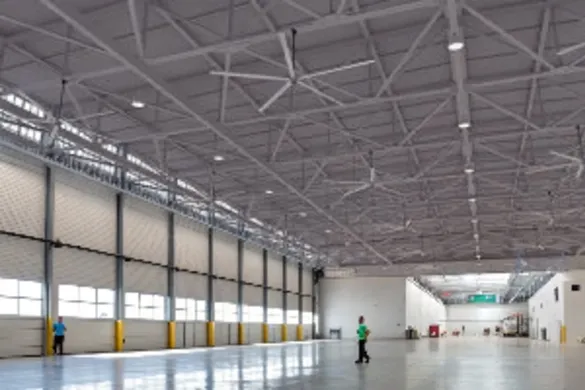
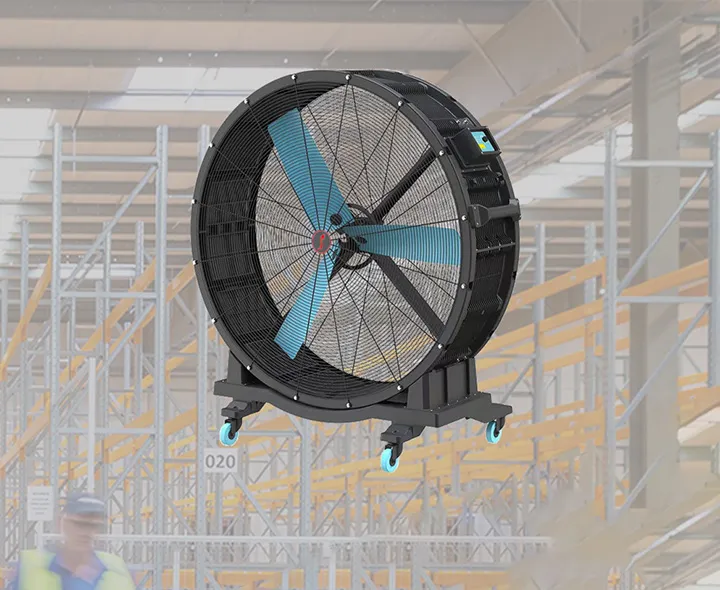
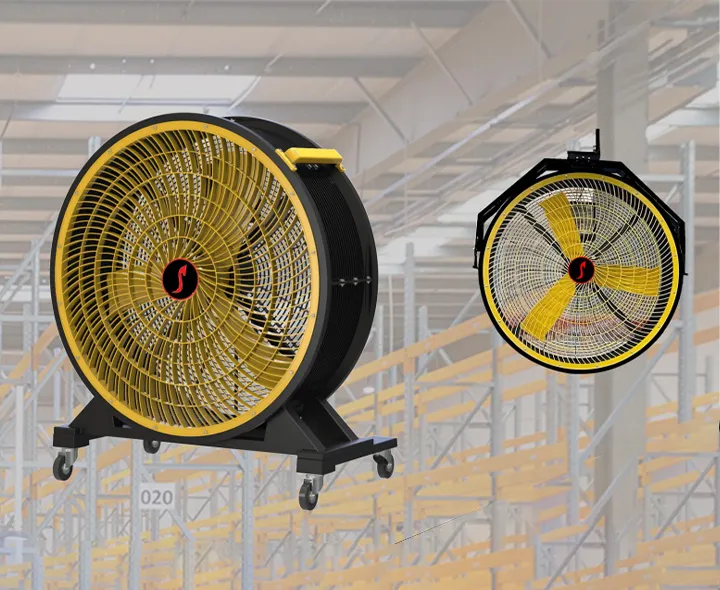
Hot, still air in a big warehouse or gym makes people tired, hurts productivity, and wastes energy. When fans run with no plan, you pay more for power and still feel uncomfortable. A smart HVLS fan control system fixes that, step by step.
一个 HVLS fan control system is a smart way to manage every big ceiling fan in your building from one place. It lets you set speed and direction, group zones, link to your building management system, and use automatic schedules so your space stays comfortable while you cut energy 储蓄 and protect equipment.
目录
- What is an HVLS fan control system?
- How does a standard touchscreen HVLS fan control panel work?
- Single fan vs centralized control system: which fits your facility?
- What control options do you get for speed, direction, and schedule?
- Integrating HVLS controls with your building management system (BMS)
- Planning installation, mounting, and wiring for multiple HVLS fans
- Smart sensors, temperature and humidity, and automatic fan operation
- From stand-alone fan units to sophisticated BMS-integrated multi-fan systems
- Key features of modern HVLS fan controllers (and what we build into ours)
- Case study: how industrial fans improved airflow and efficiency in a warehouse
- How advanced controls work with building management systems and BACnet
- Security, passwords, and user roles in HVLS fan control
- What about numbers: 10 fans, 20 fans, or 30 fans on one system?
- HVLS fan control system FAQs
- Why work with an HVLS fans manufacturing plant for your control system?
- Action step: how to move forward
What is an HVLS fan control system?
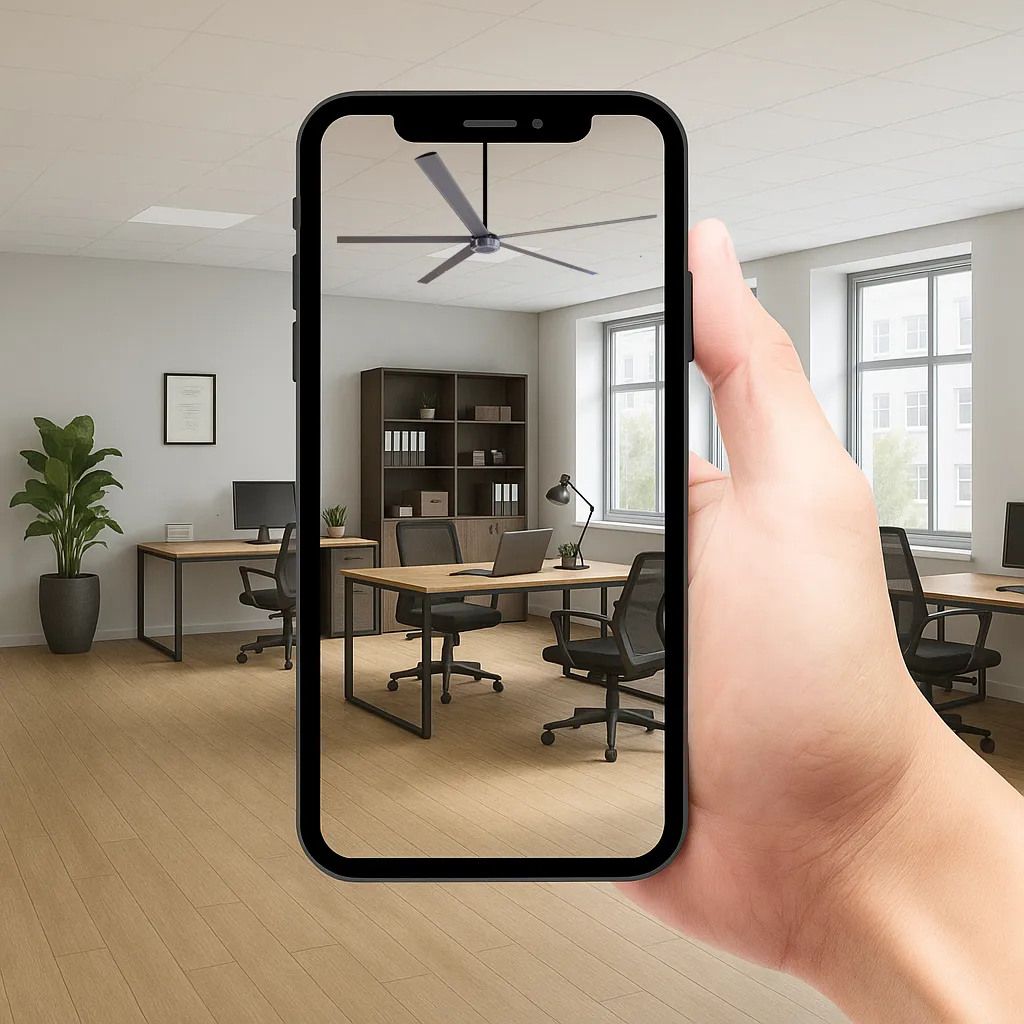
一个 HVLS fan control system is the “brain” behind each big fan. Instead of walking around and pressing buttons on every unit, you use one controller and a simple interface to manage how the fans run across the whole facility.
As an HVLS fans manufacturing plant, we design both the fans and the hvls controls together. That means airflow patterns, motor behavior, and fan control logic are tuned as one system. In practice, this helps you:
- Keep people comfortable with steady 空气流动 in large open areas
- Support heating and cooling systems so they work more efficiently
- Cut HVAC energy use by roughly 20–30% in many projects when HVLS fans support air mixing and destratification.
Modern HVLS 工业风扇 are no longer “dumb” machines. With networked fan controllers, BMS 融合, and software analytics, they become active parts of an intelligent building, helping optimize comfort, safety, and energy use.
What is an HVLS fan control system?
How does a standard touchscreen HVLS fan control panel work?
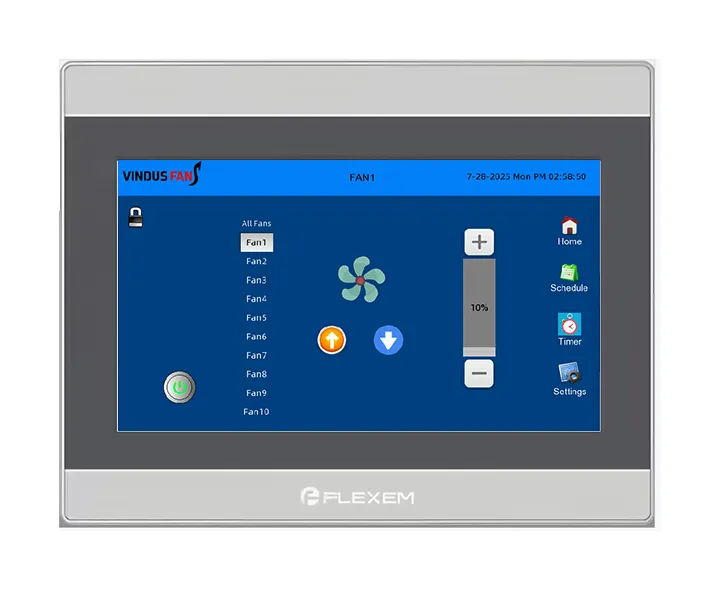
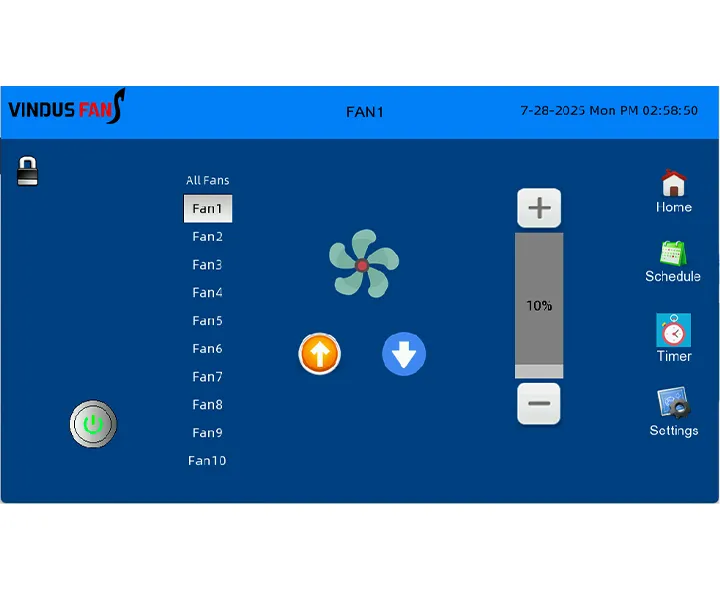
Most of our projects use a wall-mounted hvls fan control panel 和 standard touchscreen。 这 digital device gives you an intuitive graphic view of each fan and zone. You can tap a zone, slide a bar to set 速度, and change fan control modes with a few touches.
A typical panel:
- Shows each unit or group on the screen
- Lets you control fan direction and speed (forward for cooling effect, reverse for destratification)
- Allows simple adjustment of run time, 温度 setpoints, and groups
In many systems, the control allows you to see basic diagnostics and alarm messages for troubleshooting, so your maintenance team can respond faster. Some models even highlight fault codes right on the touchscreen.
Because the panel is sleek and compact, 安装 it near a supervisor’s office or in a control room is easy. The interface is designed so non-technical staff can run the fan with ease, reducing training time and improving convenience.
Single fan vs centralized control system: which fits your facility?
Not every project needs the same level of control. That’s why we offer control options from single fan wall switches all the way up to fully networked systems.
For small buildings, a stand-alone controller that manages a 单风扇 may be enough. These options from single fan units are simple, low-cost, and ideal when you have just one or two fan units to sophisticated bms-integrated projects later in your growth.
As your building grows, you may centralize control. A centralized control system allows you to control one or multiple zones from one screen. You can adjust each fan individually, or run groups independently in different facility areas like loading docks, production floors, or sports courts.
Here’s a simple comparison:
| 设想 |
Recommended control style |
Key benefit |
| Small workshop with 1 HVLS fan |
Simple stand-alone controller |
Low cost, easy 安装 |
| Medium gym with 3–5 fans |
Small multi-zone panel |
Basic zoning and schedule |
| Large warehouse with 10–30 fans |
Networked, BMS-ready hvls controls |
Full building centralize and analytics |
This flexibility lets you grow from single fan units to sophisticated networked systems without throwing away earlier hardware.
What control options do you get for speed, direction, and schedule?
Even a simple system should do more than just “on/off.” Good fan controllers give you rich 控制选项 right out of the box.
Typical options include:
- Speed and direction control for each fan or zone
- Time-based schedule so fans slow down at night
- Seasonal modes (summer cooling vs winter destratification)
- Lockouts so only managers can change settings
In our own line of controllers, a mid-range panel can control up to 20 fans, while smaller models focus on up to 10 fans, and premium networked versions manage as many as 30 fans in a single layout.
When fans can be grouped, you get extra capability: slow down the dock area during breaks, turn up production lines when heat loads rise, or keep the mezzanine cooler for office staff. This kind of simple operation puts real comfort in reach.
Integrating HVLS controls with your building management system (BMS)
For larger factories and commercial buildings, the big step is linking HVLS controls to a building management system. A BMS (also called building automation) provides centralized control over HVAC, lighting, security, and more from one platform.
当你 integrate HVLS fans with the BMS:
- You can see fans on the same screen as chillers and AHUs
- Fans respond to room temperature and humidity or occupancy data
- The system can coordinate HVAC and fans for higher efficiency 和 储蓄
Many vendors now support BMS integration with gateways that talk BACnet or Modbus. In our own products, we design units that can be networked and connected over Ethernet or RS485. Gateways use protocols like BACnet and PLC-based logic so fans are fully integrated into the wider building control strategy.
This turns HVLS 风扇 into active tools for automatic climate optimization rather than stand-alone accessories.
Planning installation, mounting, and wiring for multiple HVLS fans
Controls only work well if 安装 and wiring are done right. As a manufacturer, we support the installer with clear drawings, pre-terminated harnesses, and simple addressing schemes.
Key points we always check:
- Correct 安装 height and structure for each fan
- Safe cable paths from VFDs to the control panel
- Neat communication wiring so fans can be networked together
In many projects, we design units that can be networked in a daisy chain, so one CAT5 cable links fans back to the control panel. This keeps costs down and makes future expansion easier. Clear labels and a simple manual help technicians keep track of addresses even years later.
什么时候 安装 is done well, staff can easily control every fan from day one instead of chasing wiring errors or configuration issues.
Smart sensors, temperature and humidity, and automatic fan operation
Modern HVLS systems increasingly use 传感器 data, not just manual settings. Temperature probes, humidity sensors, and sometimes CO₂ sensors feed data into the controller or BMS.
和 temperature and humidity inputs, the controller can:
- Start or stop fans based on real room conditions
- Adjust run time 和 速度 when heat loads rise
- Protect sensitive inventory or processes in the facility
For example, a warehouse might set an automatic rule: if average 温度 rises above 28°C, the system runs fans at 60% 速度 to boost 空气流动; at night, fans slow to 20% for air mixing and energy 储蓄.
Advanced controllers also offer built-in diagnostics and alarms. When a drive trips or a network link fails, staff see the alert on the touchscreen and can act quickly, rather than waiting until workers complain.
From stand-alone fan units to sophisticated BMS-integrated multi-fan systems
As a manufacturer, we serve very different customer sizes, so our range covers:
- Simple stand-alone controls for one or two small fans
- Mid-range systems for multiple hvls fans in a single hall
- Enterprise-level systems with sophisticated bms-integrated multi-fan units across several buildings
In our brochures we talk about a variety of HVLS fan solutions, from simple switches to full BMS gateways. Many projects start with control options from single fan layouts, then grow into options from single fan units and light networking. Over time, they evolve from single fan units to sophisticated networks, and even fan units to sophisticated bms-integrated systems that share data with HVAC and lighting.
At the top level, we design units to sophisticated bms-integrated multi-fan architectures, often with fans grouped by zone, floor, or process area. These are units that can be networked and managed from a central room, or even remotely via secure VPN.
This stepped path means you can start small and maximize your long-term investment without replacing everything each time you expand.
sophisticated BMS-integrated multi-fan systems
Key features of modern HVLS fan controllers (and what we build into ours)
To make this more concrete, here is a simplified “feature snapshot” based on what we provide as an HVLS fans manufacturing plant and what leading brands offer.
| Feature type |
What it means in practice |
| Capacity |
Basic panels handle 1–5 fans; mid-range can control up to 20 fans; premium models manage up to 30 fans or more in one network. |
| Control style |
控制 each fan individually, by zone, or whole building at once. |
| Interface |
Color interface with map-style layout, plus simple buttons and sliders. |
| Security |
Manager-level settings, plus features password protection so only approved staff change critical values. |
| BMS and PLC links |
Gateways for BMS, 融合 和 PLC logic and higher-level platforms. |
| Smart functions |
Auto modes based on 温度, time, or process states. |
| Diagnostics |
On-screen diagnostics, error codes, and logs for easier troubleshooting. |
In our own line, controllers:
- 是否 stand-alone but ready to be fully integrated into a building network later
- Offer grouping so you can run one or multiple zones at different levels
- Provide functionality tailored to factories, sports centers, and logistics hubs
This gives you convenience and versatility without making the system hard to use.
Case study: how industrial fans improved airflow and efficiency in a warehouse
Let’s look at a simple example based on real projects we handle as a factory.
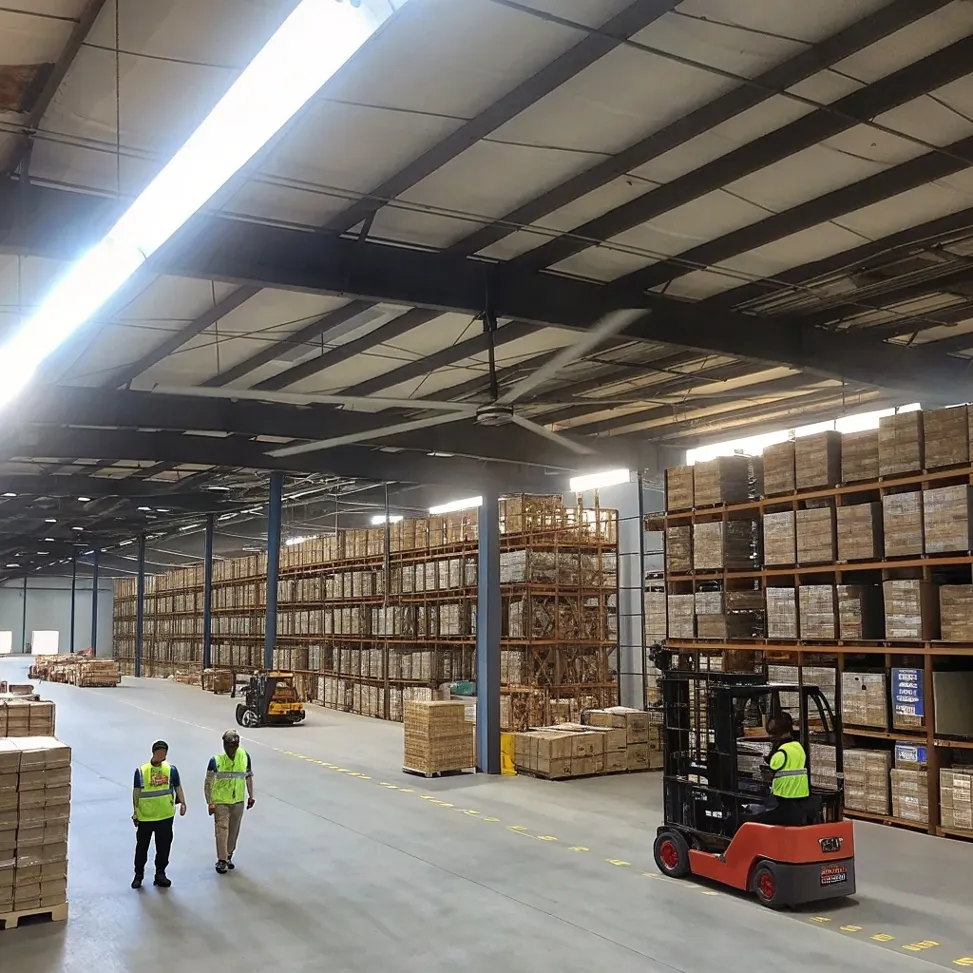
A distribution center with 12 HVLS fans had hot, stuffy picking aisles in summer. HVAC alone could not keep up, and workers complained daily. After installing an HVLS control system with a wall touchscreen, the building manager could see every 扇子 on one screen and tune speeds by zone.
Results after the first season:
- Average perceived temperature dropped by 4–6°C on the shop floor
- Workers reported better comfort and fewer heat-related breaks
- Energy use linked to cooling dropped by about 25–30% compared with the previous summer, thanks to better air mixing and fan/HVAC coordination
The manager particularly liked how the new system allows you to control one or multiple zones, and how the fans’ operation data helped plan maintenance by watching run hours and alarms.
This is the kind of real-world performance we target every time we design HVLS fans and controllers for a new facility.
仓库里的大型吊扇
How advanced controls work with building management systems and BACnet
In larger sites—airports, big malls, production plants—HVLS fans often sit alongside dozens of HVAC units. Without smart hvls controls, each system tries to do its own job, which can waste energy.
和 BMS 和 building management system links, the story changes:
- A BMS gateway lets fans share data with chillers, boilers, and air handlers
- Through protocols like BACnet, the BMS can see fan status, alarms, and even basic power data
- Fans ramp up or down based on HVAC load, room temperature and humidity, or occupancy
Many gateway products now support a hvls fan control panel locally plus a remote HMI or software view. We often design these as units that can be networked so one gateway connects a network of up to 30 fans in a typical layout.
For multi-site users, this combination of BMS control and local fan controllers brings strong efficiency, better visibility, and cleaner reporting for sustainability teams.
Security, passwords, and user roles in HVLS fan control
Any system that affects comfort and safety needs basic security. We design our controllers so daily users get simple ease of use, while managers keep tight control of settings.
A common setup:
- Operators can start and stop fans, or change 速度, from a home screen
- Supervisors can change setpoints, groups, and schedule templates
- Admins can access network and BMS settings, protected by password levels
Our premium controller even features password protection with multiple roles. Only trusted users can change high-level parameters like BMS 融合 or Modbus addresses. Settings for run time limits, advanced diagnostics, and alarm outputs are often optional and hidden from basic users so they cannot be changed by mistake.
This balance keeps the system safe while still giving everyday staff a fan with ease experience.
What about numbers: 10 fans, 20 fans, or 30 fans on one system?
When you plan a project, one big question is: “How many fans can one controller manage?”
Based on what we and other manufacturers offer:
- Small network controllers often manage around 10 fans per panel
- Mid-range units typically control up to 20 fans in one area
- High-end systems can connect up to 30 fans in a standard configuration, sometimes more with extended gateways
These numbers help you size your system. You might use one unit per building, or dedicate a controller to each floor. Because units can be networked together across Ethernet, you can still see the entire system from one PC or BMS screen.
HVLS fan control system FAQs
Do I really need a control system for my HVLS fans?
If you have only one small HVLS 风扇, you might manage with basic switches. But once you have multiple HVLS fans, a proper control system makes a big difference. It lets you centralize control, match fan operation to real needs, and avoid wasting energy when spaces are empty.
Can HVLS fans work with my existing building management system?
Yes. Modern systems are designed for BMS 融合. With the right gateway, your fans can talk to your building management system using protocols such as BACnet or Modbus. This helps you coordinate fans with HVAC for higher efficiency and better comfort across the whole facility.
How hard is it to install the fan controllers?
For most projects, licensed electricians handle 安装. We provide clear wiring diagrams, addressing guides, and setup steps so the installer can get the system running quickly. Because our controllers are designed for ease of use and 安装 on standard walls, the work is usually straightforward.
Can I control each fan individually if I need to?
Yes. Even in a large network, you can control each fan or group them by zone. Operators can adjust a 单风扇 over a work cell, or individually tune fans at loading docks, while still following the overall schedule for the building.
Will a control system really save energy?
When HVLS fans are used with clear logic and, ideally, BMS links, many customers see cooling-related energy 储蓄 of 20–30% or more, mainly by reducing HVAC load and improving 空气流动. The more your controls match real usage (time of day, weather, process heat), the higher the potential benefit.
Why work with an HVLS fans manufacturing plant for your control system?
Because we design both the HVLS 风扇 和 controller, we can guarantee that motors, drives, and software logic all fit together. Our engineers think about:
- How 工业风扇 behave at low 速度
- How to keep run time within safe limits
- How to protect electronics and VFDs for long life
We also know the day-to-day reality inside factories, 体育中心, gyms, warehouses, and schools. That helps us tune default settings so your system has strong functionality out of the box, with room to grow into more advanced, fully integrated solutions later.
If you are planning a new project or upgrading existing fans, we can help you choose the right combination of hvls fan controllers, panels, gateways, and software for your building.
Action step: how to move forward
If you are serious about better comfort and lower energy bills, the next step is simple: map your current 扇子 layout, HVAC system, and zones. Then work with a specialist HVLS fans manufacturer to design the right hvls fan control setup for your building.
We can review your drawings, model your 空气流动, and recommend:
- Stand-alone controls for small halls
- Networked systems for multiple HVLS fans and complex zoning
- BMS-ready gateways for smart buildings and future upgrades
With the right plan, you get long-term 储蓄, safer and more comfortable spaces, and a system your team can actually use every day.
Key points to remember
- 一个 HVLS fan control system is the brain that links fans, zones, and sometimes your building management system.
- Smart fan controllers give you control of speed and direction, time-based schedules, and easy zoning from a single touchscreen.
- Networked systems can handle 10, 20, or even 30 fans and still keep the interface simple for staff.
- BMS 融合 and sensor inputs turn HVLS fans into active tools for energy efficiency and comfort.
- Good design, clean 安装, and clear security (role-based password access) keep your system safe and easy to run.
- Working with an HVLS fans manufacturing plant ensures your fans, drives, and hvls controls are designed as one complete package, ready to grow with your facility.