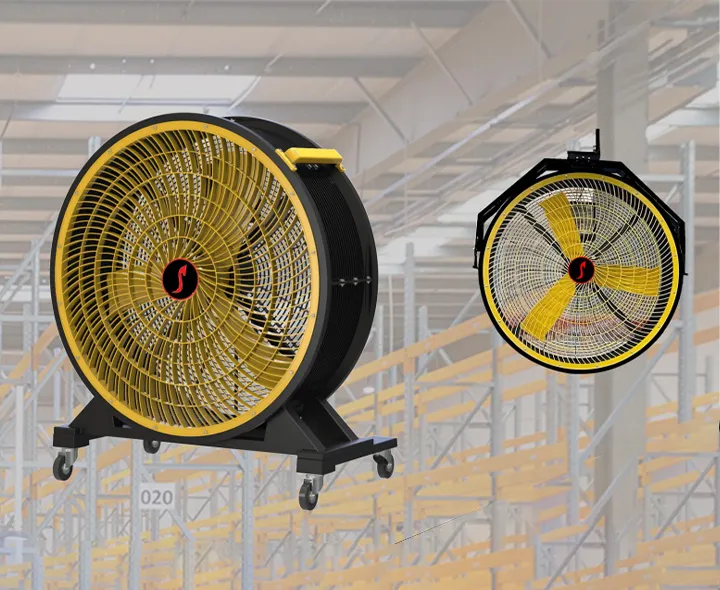
Core Summary: The operational lifespan of an industrial fan is typically between 10 to 20 years. For high-quality, well-maintained High-Volume, Low-Speed (HVLS) fans, this can extend up to 50 years. A fan’s ultimate longevity is contingent upon three core engineering factors: the quality of its manufacturing and materials science, the severity of its operating environment, and the consistency of its preventive maintenance schedule. The vast majority of industrial-grade fans are designed for 24/7 continuous operation.
An Engineering Perspective on Operational Durability
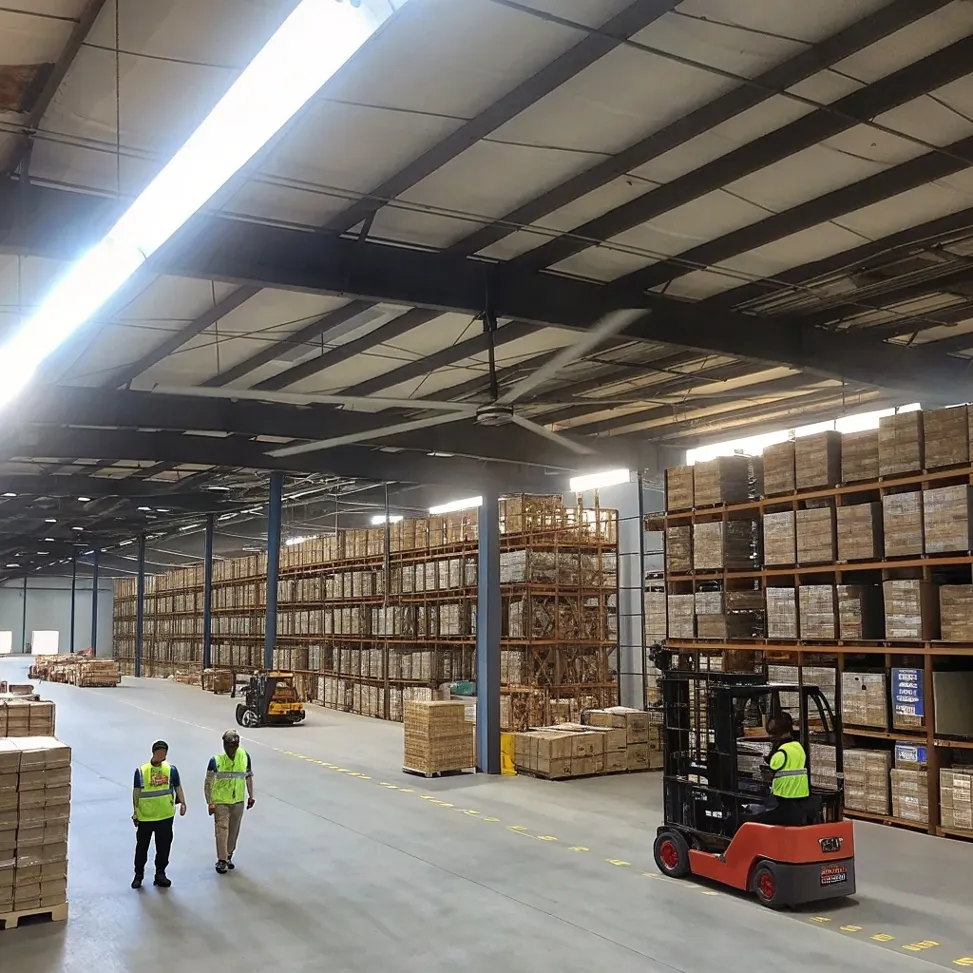
In any industrial setting, consistent air circulation is a critical engineering control for maintaining productivity, personnel safety, and equipment reliability. Unplanned downtime in a ventilation or cooling system, particularly when caused by the failure of a core component like an industrial fan, leads directly to production stoppages and significant unplanned maintenance costs. Therefore, when selecting equipment, one fundamental question must be answered: “What is the reliable operational lifecycle of this fan?”
This guide moves beyond marketing language to provide a systematic analysis from an engineering and maintenance perspective. We will deconstruct the key variables that determine a fan’s capacity for continuous operation and its overall service life, offering data-driven strategies to maximize its Mean Time Between Failures (MTBF).
An Engineering Perspective on Operational Durability
The Core Engineering Variables That Determine Fan Lifespan
The lifespan of an industrial fan is not a fixed number but a dynamic range dictated by a confluence of factors. Understanding these variables is fundamental to reliability forecasting and equipment selection.
1. Design, Materials Science, and Manufacturing Processes
The intrinsic integrity of the equipment forms the foundation of its longevity.
- Materials Science: Premium fans utilize materials with high corrosion resistance, such as Stainless Steel 或者 Galvanized Steel. Fan blades may be constructed from high-strength Aluminum alloys or Reinforced Plastics to achieve a balance of rigidity and low weight. In highly corrosive environments like chemical plants or coastal facilities, specifying a corrosion-resistant fan is a prerequisite for a long service life.
- Core Component Integrity:
- Motor: As the prime mover, a Brushless DC (BLDC) motor or another heavy-duty industrial motor rated for a continuous duty cycle is essential. The motor’s insulation class and thermal dissipation design directly impact its stability under high-temperature loads.
- Bearings: According to data analysis from sources like the U.S. Department of Energy, bearing failure is a leading cause of failure in rotating machinery, including fans. High-quality Ball Bearings 或者 Sleeve Bearings, combined with a correct lubrication regimen, are critical for long-term smooth operation.
- Structural Design: Superior structural engineering effectively mitigates operational vibrations. For example, expert HVLS fan manufacturers like Vindus Fans leverage their Swedish engineering team to optimize blade aerodynamics and internal support structures through computational fluid dynamics (CFD) and finite element analysis (FEA). This minimizes stress concentration and vibration at the source. Their product lines span both 轴流风机 和 离心风扇, including specialized designs like tube axial fans 和 vane axial fans.
2. Environmental Stress Factors
The operational environment is the ultimate test of a fan’s durability.
- Thermal Stress: A high operating temperature accelerates the degradation of motor winding insulation and reduces the efficacy of lubricants, thereby shortening the life of both the motor and bearings. In facilities like steel mills, specialized high-temperature fans are mandatory.
- Physical and Chemical Stress:
- Particulates and Debris: The accumulation of dust on fan blades (debris buildup) creates a condition of blade imbalance. This is a primary driver of destructive vibrations that can lead to catastrophic component failure. In such environments, a dust collection system is a vital complementary system.
- Moisture and Corrosives: Exposure to humidity or chemicals induces corrosive damage, which compromises the structural integrity of metal components like the 风扇外壳 和 箭杆.

The Core Engineering Variables That Determine Fan Lifespan
The Critical Role of Proactive Maintenance
A rigorously executed preventive maintenance schedule is the single most effective strategy for maximizing a fan’s operational life, often extending it by 30-50%.
Preventive Maintenance Schedule: An Engineer’s Checklist
| Frequency |
Task |
Engineering Rationale |
| Monthly |
Component Cleaning: Clean the 刀片, 叶轮, 和 guards. |
Prevents material buildup that leads to imbalance and increased load on the motor and bearings. |
| 季刊 |
Bearing Lubrication: Apply the manufacturer-specified lubricant. |
Mitigates friction and heat buildup. Inadequate lubrication is a primary cause of premature bearing failure. |
| 季刊 |
Belt Inspection: Check tension and alignment of V-Belts 和 pulleys. |
Ensures efficient power transmission and prevents slippage and excessive component wear. |
| Annually |
Full Structural & Electrical Inspection: Inspect all fasteners, welds, and electrical connections. |
Identifies potential fatigue points, loose connections, or signs of wear before they escalate to failure. |
Case Study: Mitigating Failure in a Manufacturing Plant
A manufacturing client was experiencing premature and critical failures of a fan’s motor and bearings. Root cause analysis determined that fan imbalance, caused by the adhesion of coolant and process exhaust to the blades, was the primary issue. The solution was a multi-pronged engineering approach:
- Materials Solution: A high-gloss powder coating was applied to the fan housing to simplify cleaning, while an anti-graffiti coating on the blades prevented material adhesion.
- Maintenance Protocol: A monthly power-washing schedule was implemented.
- Structural Reinforcement: Stiffener rings were added to the housing to resist deformation under imbalanced loads.
The result was a significant extension of the Mean Time Between Failures (MTBF) for the motor and bearings, improved system efficiency, and a drastic reduction in unplanned downtime and maintenance costs.
Identifying Early Warning Signs of Impending Failure
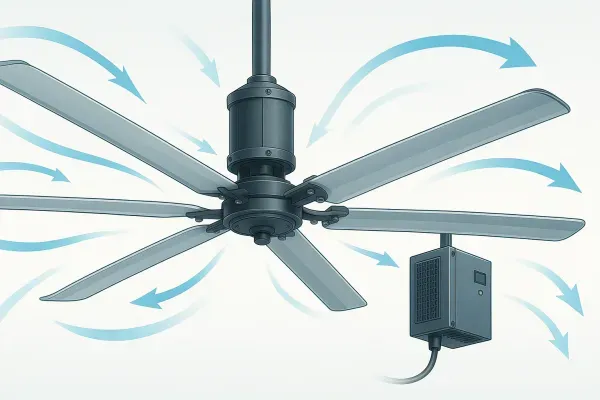
An industrial fan will typically exhibit observable symptoms before a catastrophic failure. Training operational staff to recognize these signs is a key part of a reliability-centered maintenance program.
- Anomalous Noises (Unusual fan noises): Grinding, squealing, or knocking sounds often indicate advanced bearing wear, component looseness, or an obstruction.
- Excessive Vibration: While all rotating machinery vibrates, a noticeable increase in amplitude is a critical warning sign. It almost always points to blade imbalance, bearing degradation, or misalignment.
- Reduced Airflow: A measurable decrease in airflow can indicate blade fouling, a blockage within the system (duct fans), or a decline in motor performance.
- Overheating: An abnormally high temperature on the motor or fan casing can signal electrical issues, insufficient lubrication, or restricted airflow over the motor itself.
Identifying Early Warning Signs of Impending Failure
Frequently Asked Questions (FAQ)
Q1: Can an industrial fan truly run 24/7 without stopping?
A: Yes. Most industrial fans, particularly those with heavy-duty motors and high-quality bearings, are specifically engineered for a continuous duty cycle (24/7 operation). The key to achieving this is adherence to the manufacturer’s maintenance schedule.
Q2: Is it better to run a fan continuously or intermittently?
A: From a mechanical wear perspective, continuous operation at a steady state is often less stressful on components than frequent start/stop cycles, which introduce thermal and mechanical stresses, particularly on the motor and drivetrain.
Q3: Why do HVLS fans have such a long potential lifespan (up to 50 years)?
A: The longevity of HVLS fans is due to their fundamental design: they operate at very low rotational speeds. This significantly reduces the mechanical stress and wear on the motor, gearbox, and bearings compared to high-speed fans, leading to a much longer operational life. You can learn more about what HVLS means in the context of fans.
Q4: How does the initial cost of a high-quality fan relate to its lifespan?
A: There is a strong correlation. A higher initial investment typically buys superior materials, more robust components (e.g., better bearings, higher-efficiency motors), and more precise manufacturing, all of which contribute directly to a longer, more reliable service life and a lower Total Cost of Ownership (TCO). This guide on how to choose an HVLS fan provides a complete overview of the selection process.
Conclusion: A Holistic Approach to Fan Longevity
The lifespan of an industrial fan is not determined by a single factor but by a holistic approach that begins with proper engineering and selection and extends through the equipment’s entire operational life. By investing in a well-designed fan built with quality materials, such as those found in a dedicated line of 仓库 HVLS 风扇, and committing to a disciplined, data-informed maintenance program, facilities can ensure decades of reliable, efficient, and continuous operation. The longevity of your fan is not a matter of chance; it is a direct result of sound engineering and diligent upkeep.