Is your big room hot? Does the air feel thick and still? Big spaces like a magazzino, UN fabbrica, or a palestra can feel very stuffy. In the summer, they get too hot. In the winter, the heat rises to the ceiling, leaving the floor cold. This makes people uncomfortable. It can slow down their work. It costs you a lot of money in energy bills. This is a big problem.
You have tried using many small fans. They are loud. They blow air hard in one small spot, but the rest of the room is still hot. You have to buy lots of them. Your power bill goes up and up. The constant noise is bad for everyone, raising concerns about occupational health and safety. You know there must be a better way. You need a real air movement solution, not just more noise and higher bills.
IL soluzione is to pick the right kind of fan for your big space. You have two main choices: a High-Volume, Low-Speed (Alto livello di voltura) fan system or many single, traditional fan installations. One choice saves you money and makes your space feel great. The other can cost you more in the long run. This guide will look at the science of moving air to help you choose wisely.
The Core Difference: How HVLS and Single Fans Move Air
To fix your air problem, you must know how fans work. It is not just about blowing fast. It is about moving the right amount of air in the right way. This is where we see the big difference between an HVLS fan and a regular fan.
Ventilatori HVLS
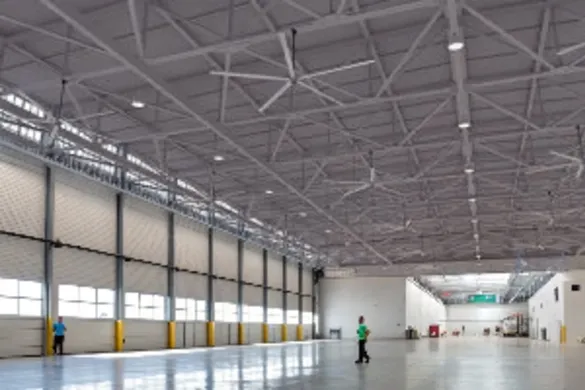
UN Ventilatore HVLS is very big. Its blades can be up to 24 feet wide. Think of them like airplane wings. These special airfoil blades spin very slowly. This is why it is called a Alto volume, bassa velocità fan.
Instead of a small, fast jet of wind, an HVLS fan pushes a huge column of air down to the floor. When this big column of air touches the floor, it spreads out in all directions. This creates a gentle, wall-to-wall breeze. It feels like a cool breeze on a nice day, not a harsh wind. This is a much better way to get air circulation for large spaces. It gets rid of hot and cold spots. The slow-moving air is quiet and uses very little power. This is the secret to its energy efficient warehouse cooling.
Single (Traditional) Fans
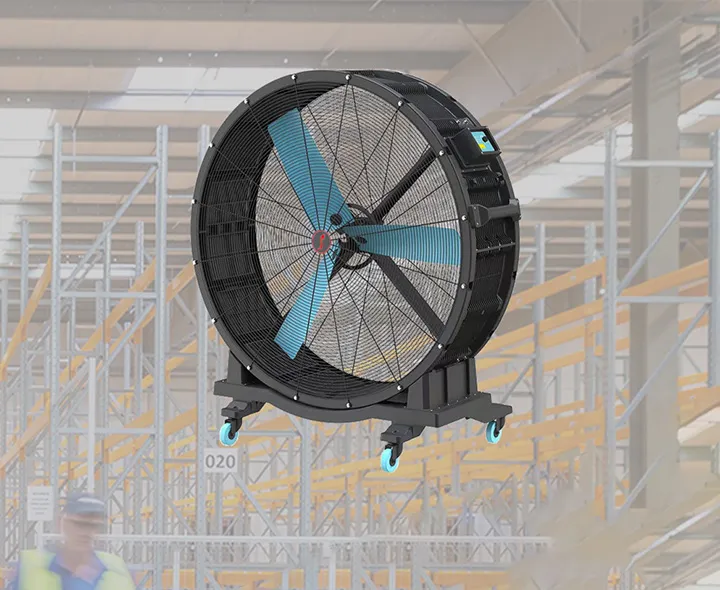
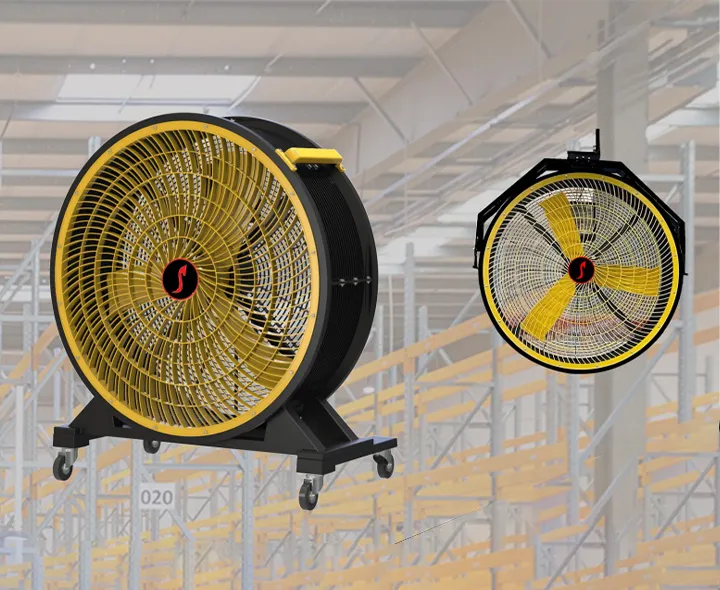
A single fan, like a ventilatore industriale ad alta velocità or a pedestal fan, works the opposite way. It has small blades that spin very fast.
This creates a small tube of turbulent airflow. The air moves fast but does not travel very far. It creates what we call localized air movement, meaning it only cools a small spot. To cool a big room, you need a multiple fan setup. This leads to many problems. You will have “dead spots” where no air is moving at all. The fans will be very loud. And using many fans means a very high industrial fan electricity consumption. Questo raffreddamento spot is not a good fix for a large building.
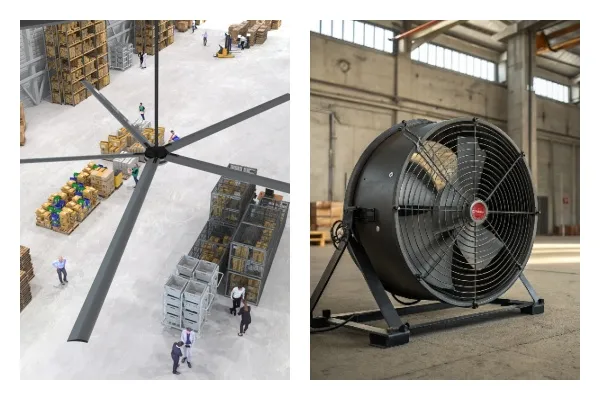
How HVLS and Single Fans Move Air
Head-to-Head Comparison: Which Fan Type Wins in Key Categories?
Let’s look at the facts. When we compare an HVLS vs traditional fans, the numbers show a clear winner for big spaces. A careful cost-benefit analysis of HVLS fans shows why so many are making the switch.
Disclaimer: The following data is based on typical industrial applications and manufacturer performance data. Actual performance can vary based on ceiling height, building layout, and specific operating conditions.
| Caratteristica |
HVLS Fan System |
Single Fan Installation (Multiple Units) |
Data-Driven Insights |
| Area di copertura |
Up to 22,000 sq. ft. with one 24-foot fan. |
Localized/Spot Coverage; needs many fans. |
One HVLS fan can replace 10+ traditional fans, reducing clutter and simplifying maintenance. |
| Airflow Volume (CFM) |
Up to 400,000+ CFM. |
5,000 – 25,000 CFM per fan. |
HVLS fans move huge volumes of air for total circulation, eliminating dead spots. |
| Consumo energetico |
Molto basso (0.5-2.0 kW). |
Alto. 34 small fans can use 8.5 kW/hr. |
An HVLS fan can be up to 70% more energy efficient than using multiple smaller fans. |
| Operating Cost |
Basso. Can save up to 30% on cooling costs in many cases. |
Alto. High energy use means high bills. |
A company can often achieve a full HVLS fan ROI in 1 to 2 years under typical conditions. |
| Noise Level (dBA) |
Very Quiet (35-60 dBA). Like a library. |
Loud (60-75+ dBA per fan). Like a vacuum. |
Quiet industrial fans create a safer and more productive work environment. |
| Investimento iniziale |
Alto ($3,000 – $9,000+). |
Basso ($2,500 for many floor units). |
IL payback period for HVLS fans is fast due to massive energy savings. |
| Manutenzione |
Basso. Built to last with less single fan maintenance. |
Alto. More fans mean more things to fix and more potential downtime. |
|
This data tells a clear story. While the HVLS fan price is higher at first, the long-term operating costs are much, much lower. This gives it a low total cost of ownership.
A Commitment to Better Air for Your Facility
Understanding these challenges is why Vindus Fans was founded. For facility managers, our focus on engineering excellence translates directly into reliability and cost savings. Our Swedish-engineered fans, like the powerful Ventilatori HVLS serie M650, use advanced technology like a Direct Drive Motor. What this means for your operation is fewer maintenance headaches, a longer product lifespan, and consistent performance you can count on. This commitment ensures we provide true air movement solutions for any large building, from an automobilistico plant to a edificio commerciale.
When to Choose an HVLS Fan System: The Ideal Scenarios
You should choose an HVLS fan system when you have a big space and want big results. Here is when an HVLS fan is the best choice.
- Large, Open Spaces: These fans are perfect for ventilazione del magazzino, factory cooling solutions, E distribution center fans. They work best with a high ceiling height for HVLS fans, usually 15 feet or more. They are also great for a large retail store cooling o un centro sportivo.
- Energy Savings is a Priority: If you want to lower your power bills, HVLS is the answer. They have very low HVLS fan energy consumption. They can even help your main air conditioner work less, which is called reducing air conditioning load. Many facilities report energy savings with large fans of 30% or more.
- Improved Comfort & Productivity: A happy worker is a good worker. HVLS fans create a better environment. They create a gentle breeze that makes people feel cooler. This is called the evaporative cooling effect. Questo comfort termico helps in reducing heat stress and makes people more productive. Studies show that people work better when they are not too hot.
- Year-Round Climate Control: HVLS fans are not just for summer. In winter, you face a problem called air stratification. This is when all your expensive hot air rises to the ceiling. An HVLS fan can be run in reverse to push that warm air back down. This is called destratificazione. This simple trick can cut your heating bills by a lot. The winter destratification benefits are huge.

How HVLS and Single Fans Move Air
When a Single Fan Installation Works Better: The Right Applications
There are some times when conventional cooling fans O high-velocity fans are a good choice.
- Small or Confined Spaces: If you have a small room or just need to cool one small area, a single portable industrial fan o un wall-mounted fan effectiveness can be enough.
- Budget Constraints: The low costo iniziale of a single fan can be helpful if you cannot afford the upfront cost of an HVLS system right now. They are a simple, quick fix.
- Targeted, Localized Airflow: If you only need to cool one person or one machine, a spot cooling fan O air circulator will do the job.
- Temporary or Flexible Solutions: If you need a fan you can move around easily, a pedestal fan is a good choice. Their limitations of HVLS fans are that they are fixed in one place.
The Verdict: It’s Not About “Better,” It’s About “Right Fit”
So, which is better? The answer is clear. It is not about which fan is “better” overall, but which is the “right fit” for your space and your goals.
To recap, single fans are for small, specific jobs. They are a patch for a bigger problem.
For any large space where you care about saving money, keeping people comfortable, and being energy smart, the HVLS fan system is the clear winner. The HVLS fan advantages in coverage, efficiency, and quiet operation are too big to ignore. From logistica centers to agricoltura barns, these grandi ventilatori industriali, sometimes called macro fans O high-bay ceiling fans, are the modern, smart solution. Learning how to choose a HVLS fan is a key step for any facility manager.
Think about these four things:
- Space Size & Ceiling Height: Is your space big and open?
- Primary Goal: Do you want whole-building circulation or just spot cooling?
- Bilancio: Can you invest now to save a lot more later?
- Noise and Energy Concerns: Are a quiet space and low bills important?
If your answers point to a big space with a need for efficiency, the choice is an HVLS fan.
A Note on Our Expertise: This guide is provided by the HVLS airflow specialists and industrial ventilation engineers at Vindus Fans. We are dedicated to helping facility operators understand the science of air movement to create safer, more productive, and more efficient environments.
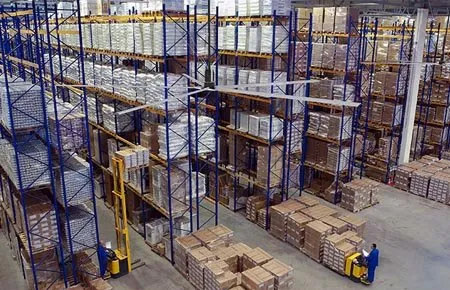
hvls fans for large warehouse
Frequently Asked Questions (FAQ)
Q1: Can one HVLS fan really replace multiple small fans?
A: Yes. One 24-foot HVLS fan can move as much air as 10 to 20 smaller high-speed fans. It does this more evenly and quietly.
Q2: Are HVLS fans expensive?
A: They have a higher initial cost. But when you look at the energy savings, lower maintenance, and longer life, they have a lower total cost of ownership. Many people ask, “Are HVLS Fans Worth It?,” and the answer for large spaces is almost always yes.
Q3: Can HVLS fans be used in winter?
A: Yes! This is one of their best features. By running in reverse, they perform destratificazione. This pushes trapped heat from the ceiling down to the floor. It can save you a lot on heating costs. It is a key part of an HVAC system integration.
Q4: How much power does an HVLS fan use?
A: Very little. A large HVLS fan might use about as much power as a toaster. This is why their long-term operating costs are so low. You can learn more about “Quanta potenza consuma un ventilatore HVLS?” in our detailed guide.
Q5: What are HVLS fans used for?
A: They are used in almost any large space. This includes produzione plants, commerciale edifici, istruzione facilities, agricoltura barns for livestock cooling, E centri sportivi. Any big room can benefit from the gentle, massive airflow of an HVLS fan.