Executive Summary
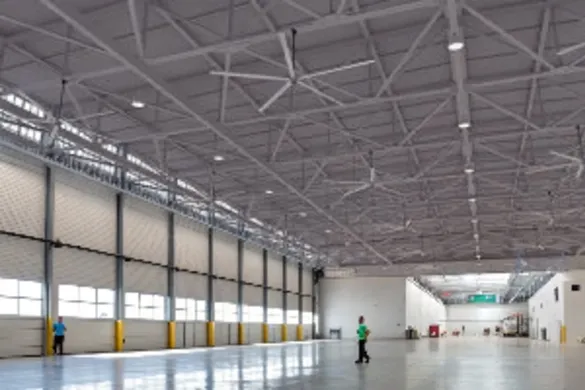
High-Volume, Low-Speed (HVLS) fans are climate control devices engineered for large, high-ceilinged spaces like warehouses and distribution centers. Their core principle of operation is seasonal. In the summer, they generate a broad, slow-moving column of air that enhances the “wind chill effect” by accelerating moisture evaporation from the skin, thereby improving perceived comfort without altering the ambient air temperature. In winter, their function shifts to “destratification,” a process where they slowly push the buoyant, heated air trapped at the ceiling back down to the occupied floor level. This recovers thermal energy, equalizes the indoor temperature gradient, and can significantly reduce the operational load on heating systems.
The efficacy of HVLS fans is conditional. Ideal warehouse applications require sufficient ceiling height (typically a minimum of 3-4 meters of clearance from the floor to the blades for safety and airflow development), relatively controlled air exchange (frequent opening of large bay doors can diminish their impact), the presence of internal heat loads (from machinery, lighting, and personnel, which the fans help mitigate in summer), and integration in concert with an existing HVAC system. HVLS fans do not replace air conditioning or heaters; they are air circulation tools designed to amplify the efficiency and overall comfort of the existing climate control infrastructure, specifically for warehouse and logistics applications.
The Summer Application: Enhancing Perceived Comfort and Operational Stability
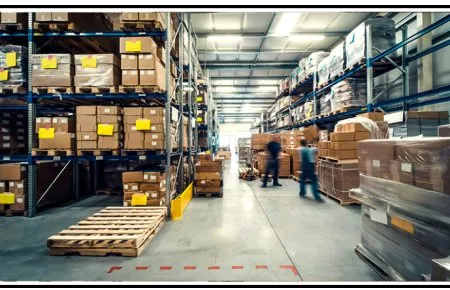
During summer months, warehouses often accumulate significant heat loads from solar gain through the roof, machinery operation, and personnel. This can lead to conditions of heat stress, which is linked to decreased employee focus, reduced productivity, and increased safety risks in a physically demanding environment.
HVLS fans address this by moving a massive volume of air at a low velocity. Their large blades (with diameters often exceeding 7 meters) create a vast, slow-moving air column that travels to the floor and then spreads horizontally across the workspace. This pervasive, gentle airflow creates a cooling sensation; its effect is often compared to a 4-6°C reduction in perceived temperature. This is achieved through evaporative cooling on the skin, not refrigeration, making it an exceptionally energy-efficient approach compared to running traditional air conditioning at lower setpoints.
Conditional Benefits:
- Productivity Improvement: Improved thermal comfort is positively correlated with worker performance. While specific productivity gains are highly variable and depend on the baseline temperature, work intensity, and the nature of the tasks, mitigating an overheated environment generally contributes to better operational outcomes.
- Moisture and Condensation Control: Consistent air movement increases the rate of evaporation from surfaces. This is effective in mitigating “Sweating Slab Syndrome,” a condition where moisture condenses on concrete floors, creating slip hazards and potentially damaging moisture-sensitive inventory like cardboard packaging or raw metal components.
The Summer Application: Enhancing Perceived Comfort and Operational Stability
The Winter Application: Recapturing Energy via Thermal Destratification
Heated air is less dense than cool air and naturally rises—a phenomenon known as thermal stratification. In high-ceilinged warehouses, this can result in a temperature differential of over 10°C between the floor and the ceiling. Consequently, heating systems must run excessively to maintain a target temperature at the occupant level, while a significant amount of thermal energy is wasted in the unoccupied space near the roof.
During winter, HVLS fans are operated at a very low forward speed. This action gently and systematically pushes the layer of trapped warm air from the ceiling back down to the floor. The key to this process is the slow speed, which ensures the air is mixed without creating a noticeable, uncomfortable draft for personnel below. This effectively homogenizes the temperature throughout the space.
Conditional Benefits:
- Heating Energy Savings: By recirculating pre-heated air, thermostats are satisfied more quickly, reducing the runtime of heating units. The potential for energy savings is influenced by several variables, and actual results will vary. Reports from entities like the Department of Energy and numerous case studies indicate that savings can be substantial under the right conditions.
| Metrico |
Potential Result |
Influencing Variables |
| Heating Energy Savings |
Typically ranges from 20-30% |
Building insulation quality, ceiling height, outdoor temperature, thermostat setpoints, existing HVAC efficiency. |
| Payback Period |
Varies widely, often cited as 1-5 years |
Initial investment cost, local energy prices, facility usage patterns (hours of operation), and realized energy savings. |
Engineering and Operational Considerations
Effective implementation of HVLS fans in a warehouse setting requires strategic planning and an understanding of their operational nuances.
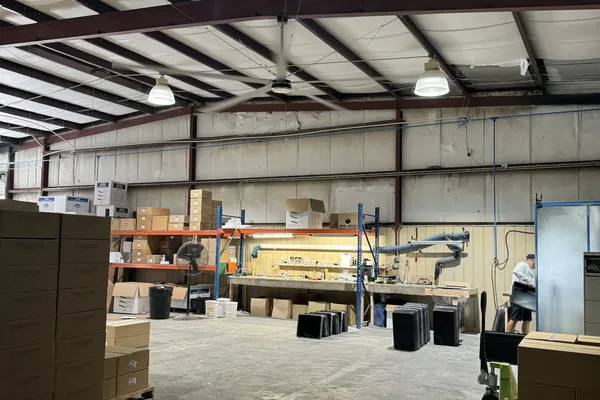
- Layout and Coverage Logic: The goal of fan placement is to create large, overlapping zones of gentle air movement across the maximum usable floor area. A layout must consider major obstructions like high-pile racking, interior walls, and large machinery, which can create “air shadows.” In complex layouts, multiple smaller HVLS fans may provide more uniform coverage than a single, larger one.
- Installation Planning: Installation must be coordinated with existing infrastructure. A critical check involves ensuring compliance with fire suppression system requirements (e.g., maintaining minimum clearance from sprinkler heads per NFPA 13). Fan placement must also account for lighting layouts to avoid creating a strobing effect and ensure adequate clearance from structural beams and conduit. Following detailed installation guidelines is crucial for safety and performance.
- Recommended Operational Modes: The most common winter recommendation is slow forward operation. Running fans in reverse can pull cooler air up from the floor, which is generally less effective for destratification than directly pushing the large, concentrated heat pocket down from the ceiling. The forward speed should be low enough to be imperceptible to occupants.
- Common Misconceptions:
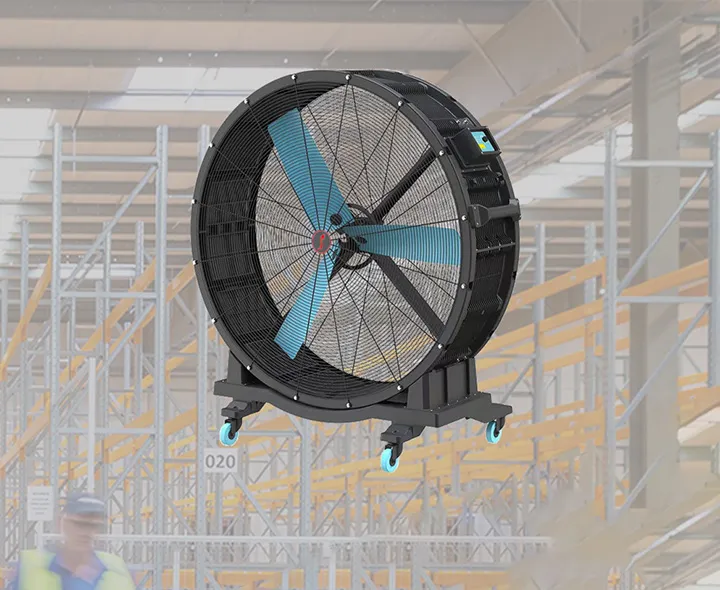
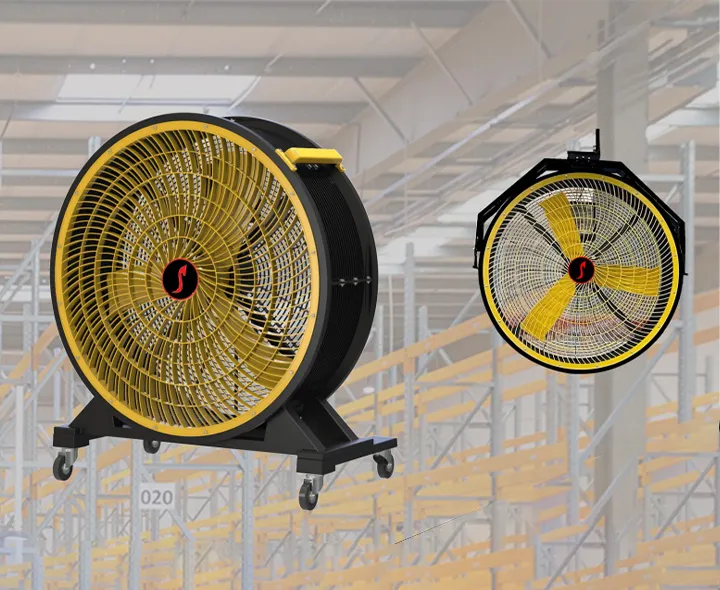
- “They are just bigger versions of industrial fans.” This is incorrect. HVLS fans are engineered on aerodynamic principles to move a large volume of air with minimal velocity, whereas residential and industrial high-speed fans are designed to create a high-velocity, turbulent jet of air over a small area. Understanding the fundamental differences between HVLS and conventional high-speed fans is key to proper application.
- “They can replace our air conditioning.” HVLS fans do not refrigerate air. They create a cooling effect. They work best to supplement an AC system, allowing for a higher thermostat setpoint, which is where significant energy savings are realized.
Engineering and Operational Considerations
An Evaluation Framework for HVLS Fan Adoption in Warehouses
Instead of a simple purchase decision, adopting HVLS technology should be approached as an engineering project. A proper evaluation framework for your warehouse includes the following steps:
- Conduct a Baseline Assessment: Before investing, quantify the existing problem. Use temperature sensors to measure the actual floor-to-ceiling temperature differential in your facility during the heating season. For the cooling season, establish a baseline of your energy consumption (kWh) for climate control and document any recorded instances of heat-related productivity loss or safety incidents.
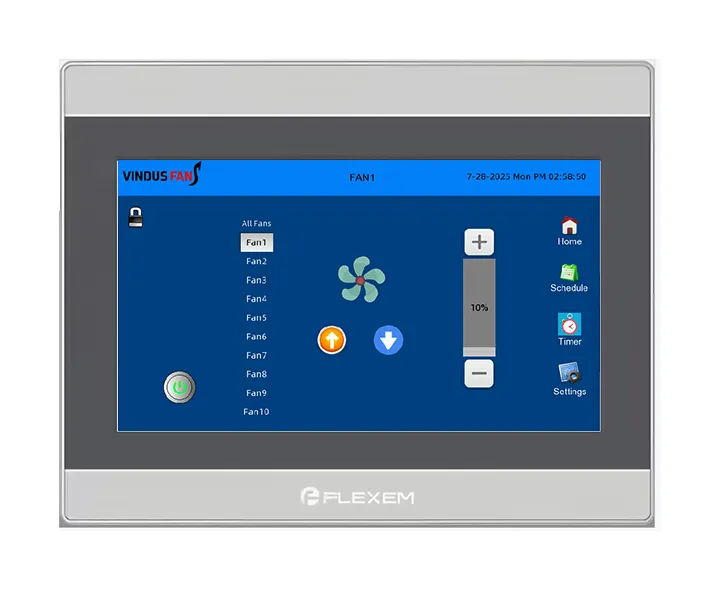
- Verify System Integration and Control: Determine if the fan’s control system can be integrated with your existing Building Management System (BMS). Automated control based on temperature sensors or schedules is far more efficient and reliable than manual operation.
- Develop an Operational Strategy: Plan how you will operate the fans seasonally. Define the target speeds for summer and winter, and establish the protocol for adjusting them based on occupancy, outdoor conditions, and specific operational needs within different zones of your warehouse.
- Check for Maintenance and Safety Compliance: Ensure the products under consideration are certified by relevant safety bodies (e.g., UL, CE). Review the manufacturer’s recommended maintenance schedule and follow a complete guide for how to choose an HVLS fan. A well-designed fan, particularly a direct-drive model, should require minimal maintenance, but periodic safety and performance checks are essential for long-term reliability.
Optional Supplier Example
As an example of a provider in this space, companies like Vindus Fans focus on the engineering aspects of HVLS technology. With a foundation in Swedish engineering and manufacturing operations in multiple regions, such providers often emphasize energy-efficient motor technologies (like PMSM) and robust product design tailored for industrial and commercial applications. When evaluating suppliers, it is important to consider their engineering support, product certifications, and control system capabilities.