Hot spots, sweaty workstations, and stale air are not “normal” in large buildings—they’re signs of poor ventilation and weak airflow. That hurts comfort, safety, and output. The good news: you can fix it without rebuilding the whole HVAC system by designing air movement the right way.
Factory ventilation design with an HVLS fan works by moving a high volume of air gently across big areas, improving airflow, mixing temperatures, and supporting your HVAC system. In a warehouse, it helps reduce heat buildup, control humidity, and improve air quality—often with lower energy consumption than adding more cooling equipment.
Outline
- What is an HVLS fan and why is it ideal for warehouses and industrial environments?
- What problems does warehouse ventilation design need to solve first?
- How does “high volume low speed” create better airflow and air movement?
- How do HVLS industrial fans improve air quality and reduce stagnant air?
- How to design HVLS fan placement for a warehouse ventilation system
- HVLS fan + HVAC system: how fans help reduce energy costs
- Summer comfort: how ceiling fans lower the perceived temperature
- Winter performance: warm air destratification and condensation control
- How to choose industrial ceiling fans: performance data, standards, and safety
- Case study + ROI checklist + FAQs: what to do next (Action)
1) What is an HVLS fan and why is it ideal for warehouses and industrial environments?
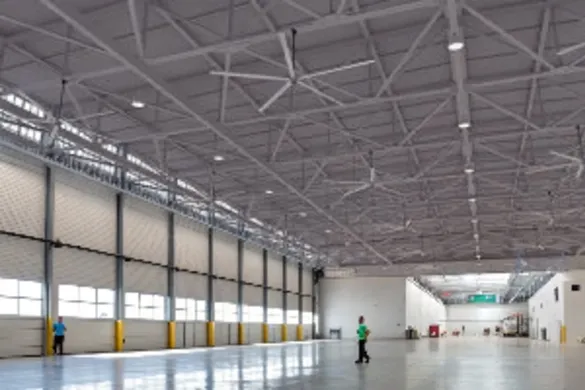
An HVLS fan (High-Volume, Low-Speed) is a large-diameter ceiling fan built for large facilities like modern warehouses, factories, gyms, and sports centers. Unlike fast “blast” fans, HVLS units move a large volume of air smoothly at low speed. That creates steady comfort across wide zones without the high noise and harsh drafts you get from many smaller fans.
From the manufacturer side, we design these systems for real industrial settings—high ceilings, long shifts, and busy workflows. The goal is simple: move large volumes of air where people actually work, not just near the roof.
Key takeaway :
An HVLS fan is a low-speed, large-diameter fan that circulates large volumes of air across big spaces to improve comfort, airflow, and temperature mixing.

What is an HVLS fan and why is it ideal for warehouses and industrial environments?
2) What problems does warehouse ventilation design need to solve first?
When buyers ask me for “ventilation,” they often mean four pain points:
- Uneven airflow: one aisle feels fine, another feels dead.
- Heat layering: warm air sits at the ceiling; the floor stays uncomfortable.
- Humidity and “sticky air” in summer, especially near docks and corners.
- Stagnant air pockets that make indoor air quality feel worse.
Here’s the truth: even with a working exhaust or fresh-air system, big buildings can still feel bad if air doesn’t mix. A warehouse is a giant box. If you don’t design air circulation on purpose, the building will “choose” a pattern for you—and it’s usually the wrong one.
A quick diagnosis table
| Symptom you notice |
Likely cause |
What to measure |
What an HVLS fan can do |
| Hot ceiling, cool floor |
Stratification |
Temp at roof vs. 1.5m height |
Mix layers gently |
| Stuffiness in aisles |
Weak circulation |
Smoke test / air speed |
Break dead zones |
| Wet floors near doors |
Moisture + poor mixing |
RH% + surface drying time |
Improve evaporation + air movement |
| High heating bills |
Heat trapped above |
Heater runtime + roof temps |
Push warm air down |
If you see these patterns, an HVLS fan plan is usually a strong first step in your ventilation solutions.
3) How does high volume low speed create better airflow and air movement?
People hear “fan” and think “wind.” But HVLS is different.
- High volume means the fan moves a huge amount of air.
- Low speed / low-speed means the blades rotate slowly, so the air feels smooth.
This matters because comfort in large spaces comes from stable air movement, not a sharp jet. HVLS fans rotate to create a wide, gentle column that spreads across the floor and returns upward along walls. That loop is what gives consistent air in a large warehouse.
Simple visual concept (not engineering scale):
Ceiling

   ↓↓↓  (wide, soft downwash)

 [HVLS]

   ↓↓↓↓↓↓↓↓↓↓↓↓↓

Floor →→→→→→→→→→ (spreads outward)

Walls ↑↑↑↑↑↑↑↑↑↑ (returns upward)
That’s why fans work so well in big rooms: they don’t “fight” the building; they guide the air into a predictable pattern and circulate large volumes of air without the high turbulence.
4) How do HVLS industrial fans improve air quality and reduce stagnant air?
Let’s keep it practical. In industrial spaces, “bad air quality” often feels like:
- air that sits still,
- dust that hangs,
- odors that don’t move,
- and heat that pools overhead.
An HVLS fan helps because it keeps air mixing and moving. That improves perceived freshness and can help distribution of filtered air from your hvac system. It’s not a replacement for outdoor air ventilation, but it’s a strong “air mixing engine” inside the room.
Where we see the biggest wins:
- Warehouse pick aisles where air tends to stall
- packing areas with people close together
- gyms and sports centers where sweat and moisture build up
- schools where comfort matters for focus and noise is sensitive
A peer-reviewed review of warehouse destratification research reports a 19.3% reduction in heating energy in a warehouse using destratification fans (results vary by building and controls).
Also, ASHRAE has published work showing HVLS fans can reduce excess heat at the ceiling and reduce HVAC system use by improving temperature mixing.
We often hear “HVLS fans offer comfort and better indoor air quality,” because they reduce dead zones and keep air mixed.
5) How to design HVLS fan placement for a warehouse ventilation system
This is where performance is won or lost.
Step-by-step layout method (how we do it in our factory projects)
- Map your workflow zones (racks, docks, packing, production).
- Identify obstructions (lights, sprinklers, beams, crane paths).
- Find heat and moisture sources (doors, ovens, charging areas, wash zones).
- Set the goal: cooling large areas, destratification, drying, or all three.
- Place fans to create continuous circulation loops, not isolated “islands.”
A practical placement checklist (copy/paste)
- Keep blades clear of racking and overhead equipment.
- Avoid “shadow zones” behind tall stacks or mezzanines.
- Use controls so air at low speeds stays comfortable for workers.
- Coordinate with the ventilation system (supply/exhaust positions).
- Plan for maintenance access and safety signage.
Decision tip: In large warehouse spaces, one well-placed single hvls fan can cover a wide zone, but layout still depends on height, obstructions, and the air path you want.
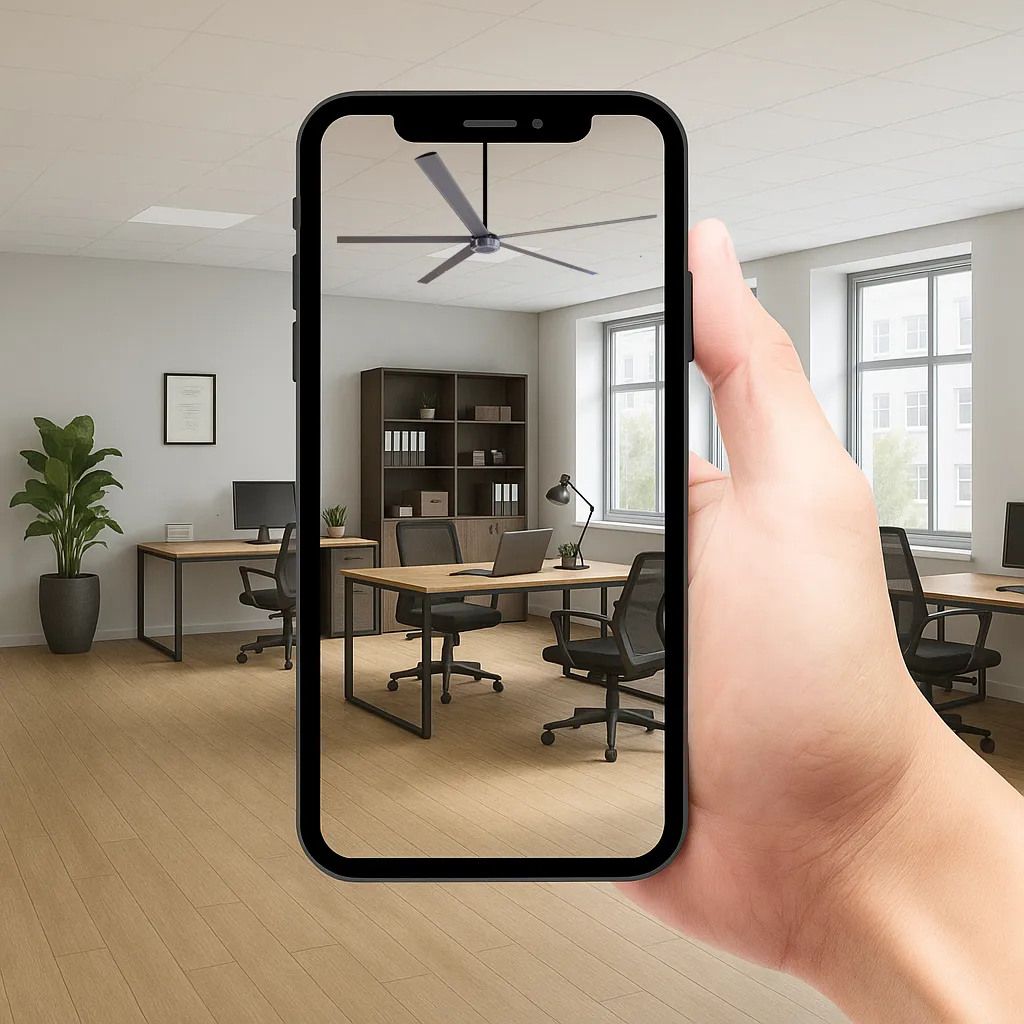
How to design HVLS fan placement for a warehouse ventilation system
6) HVLS fan + HVAC system: how fans help reduce energy costs
A lot of buyers worry about electricity use. That’s fair. But the bigger picture is total building energy consumption.
Here’s the most honest way to say it: fans can help your HVAC do less work.
Key Takeaway (easy to quote):
- HVLS fans can reduce thermostat “over-correction” by mixing air evenly.
- They can reduce heating waste by bringing warm air down in winter.
- They can support higher cooling setpoints in summer by improving comfort.
ASHRAE’s discussion of destratification explains that reducing excess heat at the ceiling can reduce HVAC use.
Et research literature includes reported warehouse heating savings (e.g., the 19.3% figure mentioned earlier).
HVLS fans can reduce wasted heating and cooling when controls are set correctly.
7) Summer comfort: how ceiling fans lower the perceived temperature
HVLS fans don’t “make cold air.” They make people feel cooler by moving air across skin and helping sweat evaporate. Many building engineering sources explain this comfort mechanism: increased air speed improves perceived cooling even if air temperature stays similar.
A facility engineering article notes perceived cooling from air movement (comfort effect), which is why ceiling fans and HVLS are widely used in large spaces.
Practical result: With better air movement, you can often reduce the feeling of heat stress and improve productivity—especially in industrial environments where people stand, lift, and walk all day.
Fans help lower the perceived temperature, which can support higher thermostat settings and better comfort.
8) Winter performance: warm air destratification and condensation control
In winter, heat rises. In tall buildings, that means you pay to heat the roof. This is one reason destratification matters so much in large industrial settings.
When an HVLS fan runs in winter mode, it mixes that warm ceiling layer down to people level. That can reduce heater runtime and improve comfort at the floor. It can also help reduce condensation risk by smoothing temperature swings near doors and cold surfaces (results depend on humidity and building envelope).
A study summary on cold weather destratification reports that destratification fans reduced ceiling temperatures and increased floor temperatures, improving temperature uniformity.
This supports better heating and cooling strategy across seasons.
9) How to choose industrial ceiling fans: performance data, standards, and safety
If you’re a procurement manager, here’s my straight advice: don’t buy on diameter alone. Buy on verified performance and safety documentation.
What credible suppliers should provide
- Airflow and efficiency test method references
- Motor + controller specs (and protection features)
- Structural mounting plan and safety retention
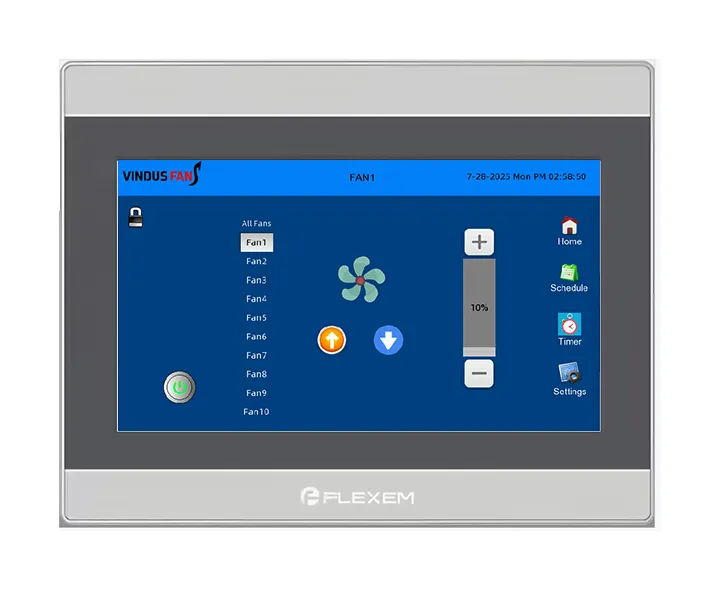
- Controls: scheduling, speed limits, seasonal modes
- Service plan: spares, warranty terms, lead time
About AMCA testing (simple explanation)
ANSI/AMCA Standard 230 is a recognized method for testing air circulating fans. If a supplier claims performance, ask how it was measured.
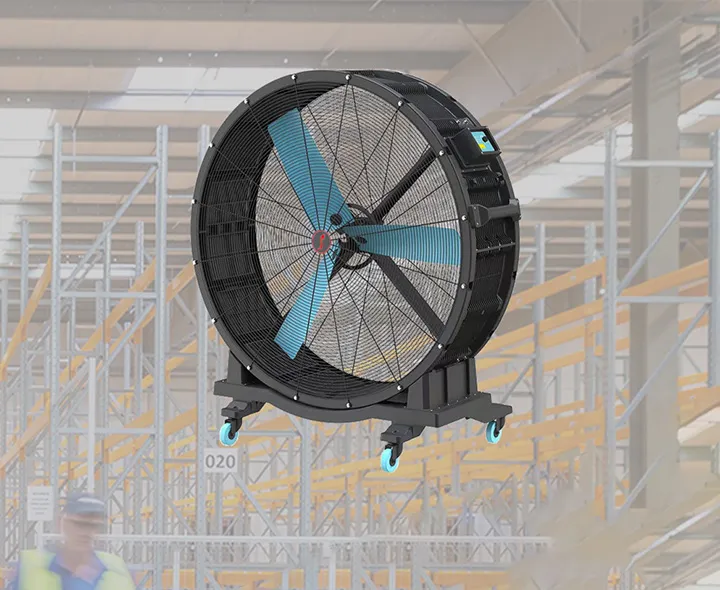
- We build hvls industrial fans for large facilities with stable controls and project-ready mounting.
- Industrial ceiling fans should be selected like equipment, not décor.
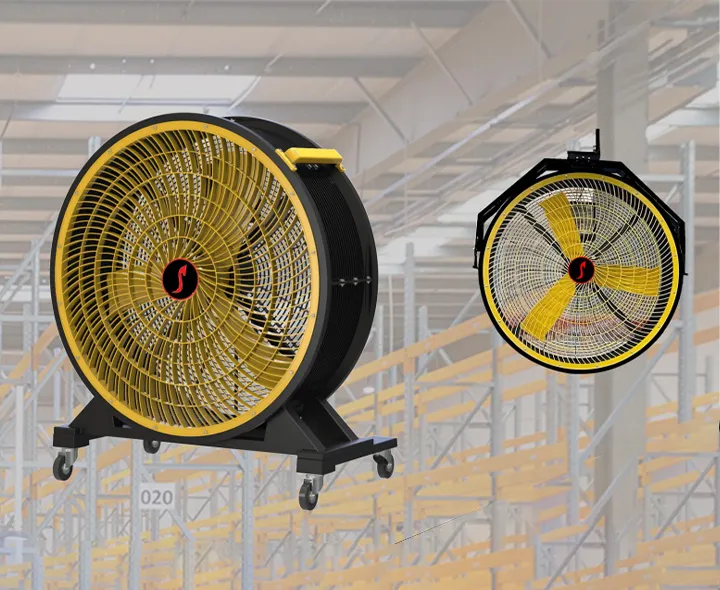
- Compared with traditional fans and smaller fans, HVLS designs focus on moving large air smoothly without the high energy use you’d expect from many high-speed units (always confirm with actual power data).
- Ask for proof that fans consume power within your expected range, and that the supplier can support your safety requirements.
10) Case study + ROI checklist + FAQs: what to do next (Action)
Mini case study (typical “before/after” pattern we see)
Site: large warehouse with docks opening all day
Problem: poor ventilation, hot/cold zones, humidity pockets, complaints
Solution: adding HVLS units to create continuous air loops; coordinating with existing cooling systems and exhaust
Outcome: more consistent air distribution, better comfort, improved productivity, and reduced wasted heating hours in winter (your savings depend on controls and building height)
Research literature supports the idea that destratification can reduce heating energy in large buildings, with reported savings such as ~19.3% in a warehouse case.
A quick ROI “driver chart” (simple view)
Typical cost drivers in large facilities
Heating/Cooling ████████████████
Lighting ███████
Process Loads ███████████
Fans (HVLS) ██
Free layout brief (what we ask for to quote correctly)
- Building size + ceiling height
- Rack height + obstructions
- Existing HVAC type (unit heaters, RTUs, air conditioning systems)
- Problem zones map (hot, cold, humid areas)
- Operating hours and target comfort level
- Safety constraints and preferred installation schedule
If you share those details, our engineering team can draft a layout and speed strategy—so you get a solution for many warehouse layouts, not a generic estimate.
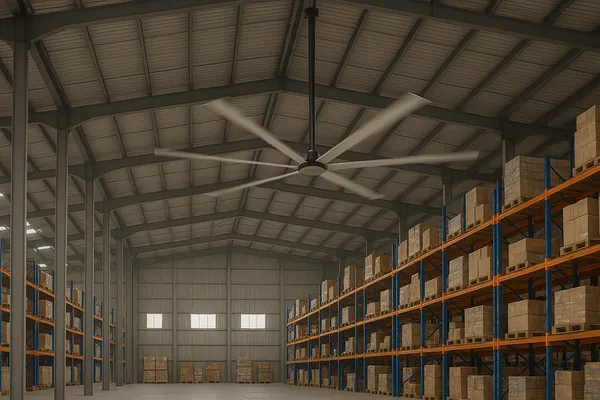
ventilateur hvls dans un grand entrepôt
FAQ
Are HVLS fans perfect for every warehouse?
Fans are perfect for wide-open areas where you need stable airflow across big zones. If your site has many partitions or very tall rack canyons, you may need more zones or a mixed plan.
Can an HVLS fan replace my ventilation system?
No. An HVLS fan mixes and distributes air, but it does not replace outdoor-air ventilation. Use it as part of a complete ventilation approach.
How many fans do I need in large spaces?
It depends on ceiling height, obstructions, and your goals. For large spaces, we design coverage based on how much amount of air you need moving at worker level—not just floor area.
Will HVLS fans work with air conditioning systems?
Yes. HVLS fans can support comfort so you can run air conditioning more efficiently. Many sites use fans with air conditioning systems to improve comfort and avoid overcooling.
Do HVLS fans help in humid areas?
They can. By increasing air movement, they help moisture evaporate faster and can reduce the “sticky” feel. This is especially useful near dock doors or wash zones where humidity is higher.
Is a low-speed fan safer and more comfortable than speed fans?
In most big rooms, yes. Low-speed fans create smoother airflow, while speed fans can create sharp drafts and narrow coverage.
Summary: the most important things to remember
- An HVLS fan moves a large volume of air smoothly across big buildings at low speed.
- In a warehouse, the main goal is steady airflow, fewer dead zones, and better comfort where people work.
- HVLS supports the hvac system by improving mixing, which can help reduce energy costs when controls are tuned correctly.
- Design matters: placement, obstructions, and control strategy decide whether fans work well.
- For procurement, ask for verified test references (like ANSI/AMCA 230) and project-ready safety documentation.
- The fastest path to results is a layout brief + a manufacturer-backed fan plan.