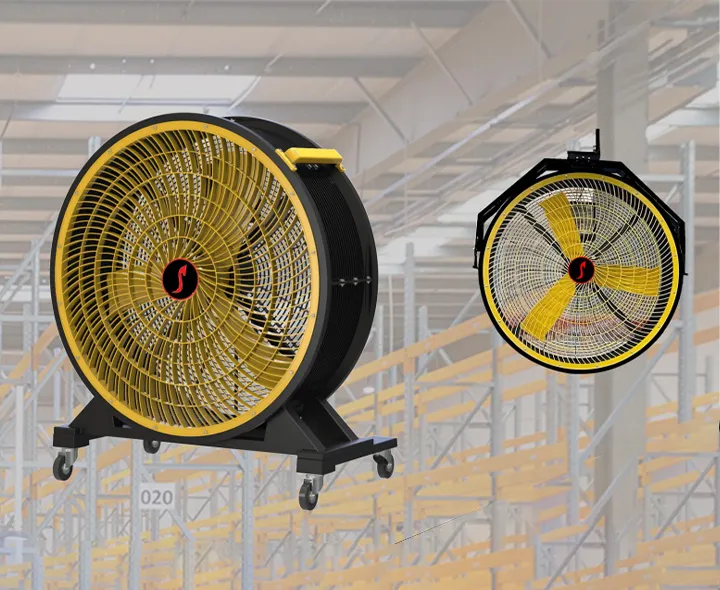
Do you own a big building? Is your power bill very high? It costs a lot to keep large spaces warm in the winter and cool in the summer. This is a big problem for many business owners. The cost to run the heat and the air conditioner keeps going up. It feels like you are just throwing money away.
This article will show you how to fix this problem. We will talk about special big fans. They are called Ventilateurs à haut volume et basse vitesse (HVLS). These are not like small fans. They are very big and turn slowly. These large diameter ceiling fans work with your heat and air conditioning (HVAC) system. They make your building feel better and save you a lot of money. We will show you how HVLS fans improve HVAC efficiency in large buildings. This guide will give you a clear plan for HVAC optimization.
What is Thermal Stratification and Why Is It Costing You Money?
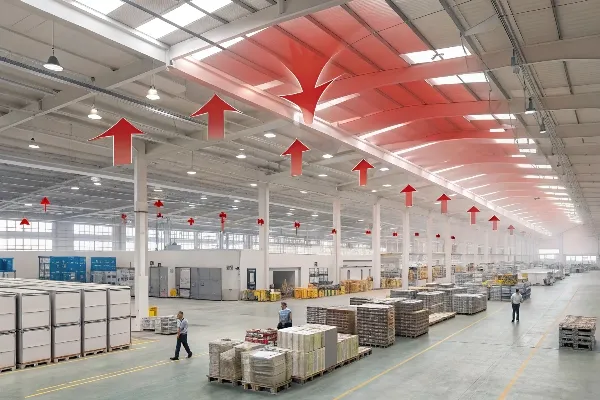
The air in your big building is not all the same. Warm air is light, so it goes up to the ceiling. Cool air is heavy, so it stays on the floor. This is called thermal stratification.
Think about your warehouse or your factory. All the warm air from your heater is stuck up at the ceiling. Down on the floor, where people work, it is still cold. So, your heater has to work extra hard. It runs all day just to keep the floor warm. This wastes so much heat and money. It creates hot spots and cold spots. In the summer, the cool air from your air conditioner can get trapped. This makes your HVAC system integration poor and leads to inefficient heating and cooling. Your high energy bills are a direct result of this air stagnant.
What is Thermal Stratification and Why Is It Costing You Money?
The Science of Stratified Air in High-Ceiling Facilities
Air in a room with a high ceiling separates into layers. This is a big problem in high-ceiling spaces. The temperature near the roof can be 20 degrees warmer than the temperature on the floor. Your thermostat is on the wall, close to the people. It feels the cold air and tells the heater to keep running. The heater is trying to warm the whole building, but the heat just goes up. This is a big waste. This process of convective heat loss is a major issue.
The Impact on Your HVAC System and Bottom Line
When your heater or air conditioner runs too much, it is bad for your wallet. It is also bad for the machine. Overworked HVAC systems break down more often. This means you have to pay for repairs. Your utility costs go up, but people in the building are still not comfortable. This is a sign of poor HVAC performance. You need a real air movement solution.
How HVLS Fans Work: The Principle of Destratification
The best way to fix this problem is to use Ventilateurs HVLS. Ces big commercial fans are the key to a better building. They are also called destratification fans.
More Than Just a Big Fan: The Mechanics of Air Movement
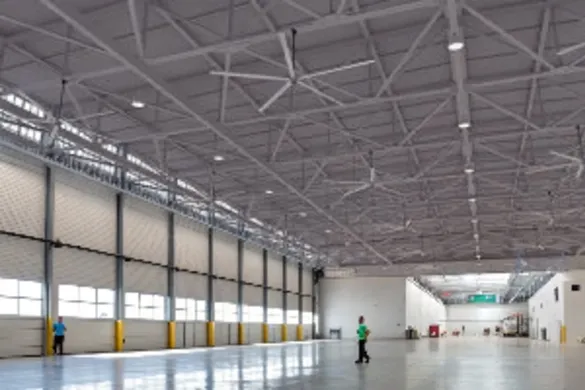
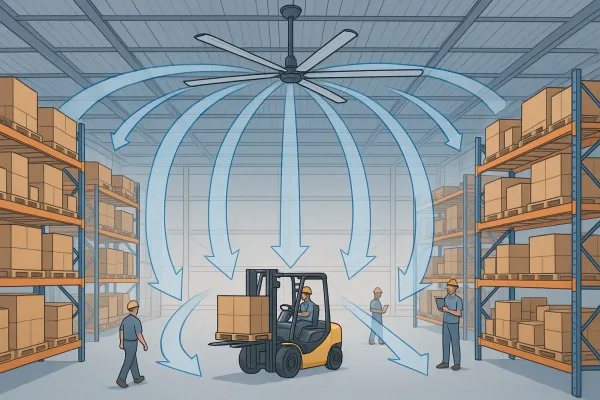
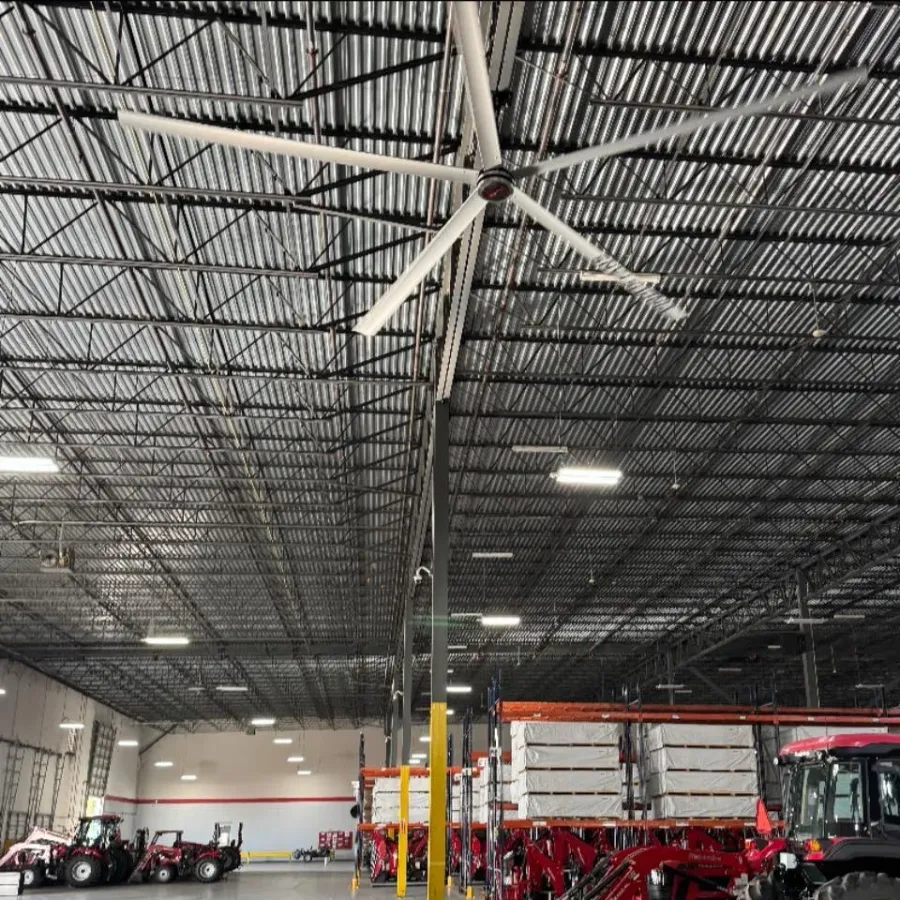
An HVLS fan is an ventilateur de plafond industriel with very long blades. These blades have a special shape called an airfoil blade design. This design allows the fan to move a lot of air. But it moves the air slowly. The fan pushes a giant column of air from the ceiling down to the floor. When the air hits the floor, it moves out in all directions.
This steady, gentle breeze mixes all the air in the room. This process is called air destratification ou air mixing. It breaks up the layers of hot and cold air. This technology is a focus for any good fabricant de ventilateurs hvls. Experts in the field like Emerson Electric Co., Greenheck Fan Corporation, et American Coolair Corporation all focus on this principle. So do newer, innovative companies. For instance, the company Les fans de Vindus, founded in Spain in 2019, uses its Swedish engineering team to create fans for this very purpose. Their expansion to Qingdao, China, in 2020 and the United States in 2021 shows the global need for this kind of sustainable architecture.
Creating Temperature Homogenization for Peak Efficiency
When the air is all mixed up, the temperature becomes the same everywhere. This is called temperature homogenization. Now, the thermostat on the wall feels the real temperature of the room. It will not make the heater run all the time. This uniform air distribution is the secret to HVAC efficiency. Your entire environmental control system works better. The fans create the ideal airflow patterns for a balanced room. This is the core of building science.
Year-Round HVAC Savings: How HVLS Fans Perform in Summer and Winter
These fans help you save money all year long. They offer year-round savings. Let’s look at how they work in the summer and winter.
Summer Cooling: Lowering the Perceived Temperature and Your AC Bill
In the summer, the air is hot. The mouvement de l'air from an HVLS fan makes you feel cooler. It is like a gentle breeze on a warm day. This is called the evaporative cooling effect. The breeze helps sweat dry faster, which cools you down. This breeze can make you feel up to 15 degrees cooler.
Because people feel cooler, you can turn up the air conditioner. You can make the room a little warmer. People will still feel comfortable. For every degree you raise the thermostat, you can save 3-5% on your cooling costs. This sustainable cooling approach leads to a big cost reduction and a smaller carbon footprint reduction. It’s a key part of green building design.
Winter Heating: Pushing Trapped Heat Back Down to the Floor
In the winter, you do not want a cool breeze. But you still need to mix the air. So, you run the fan at a very low speed. The fan will gently push the warm air from the ceiling down the walls and into the center of the room. This brings the heat back down to where the people are. This is a form of heat recovery.
Your heater will not have to work as hard. It will turn on less often. This can cut your heating bills by a lot. This simple process of circulation d'air makes a huge difference. You get big économies d'énergie with a much smaller reduced HVAC load.
How HVLS Fans Perform in Summer and Winter
The Tangible Benefits of Integrating HVLS Fans with Your HVAC System
The benefits of these fans are clear. They improve contrôle climatique and save you money. Let’s look at a table of the savings.
| Metric |
How Much You Can Save |
| Heating Energy Savings |
20% to 45% less money spent on heat. |
| Cooling Energy Savings |
15% to 49% less money spent on cooling. |
| Return on Investment (ROI) |
You get your money back in 6 months to 3 years. |
Drastic Energy Reduction and Lower Utility Costs
As the table shows, the lower energy consumption is huge. This is the main reason people buy ventilateurs économes en énergie. A fast ROI (Return on Investment) means the fans pay for themselves quickly. Your investment in better air circulation fans makes your business stronger.
Reduced HVAC Load and Maintenance
Your big HVAC machine is expensive. When it runs less, it lasts longer. You will spend less money on HVAC maintenance and repairs. This is a huge benefit for any facility management team. The synergistic effect with HVAC is clear. The fans help the HVAC system. This is a core idea in building climate resilience.
Improved Indoor Air Quality (IAQ) and Occupant Comfort
Moving air is healthy air. HVLS fans help with enhanced ventilation. They get rid of air stagnant. This helps reduce smells and dust. Good indoor air quality (IAQ) is important for everyone. It can help with occupant comfort et productivité des employés. Happy workers are good workers. This is important for occupational health and safety. The fans can also help with moisture control et condensation prevention. This stops floors from getting slippery, which is called “sweating slab syndrome.”
Ideal Applications: Which Buildings Benefit Most from HVLS Fans?
Many types of large buildings can use HVLS fans. They are perfect for any big, open space. The low-speed, high-volume technology is very flexible.
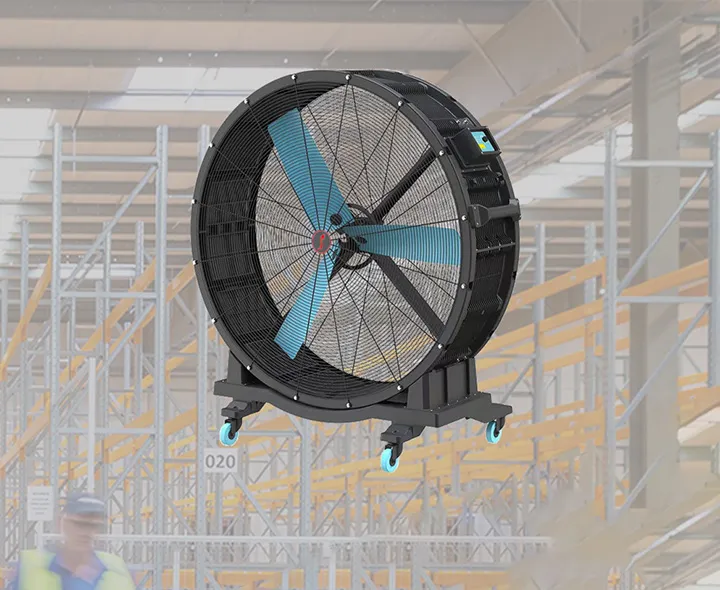
- Entrepôts et centres de distribution: Keep products safe and workers comfortable in a entrepôt.
- Manufacturing Plants & Industrial Facilities: Improve safety and clear the air in fabrication plants.
- Gymnasiums & Sports Arenas: Keep athletes and fans cool in a gymnasium ou sport-center.
- Hangars à avions: Mix the air in huge aircraft hangars.
- Bâtiments agricoles: Keep animals healthy in agricultural buildings like barns.
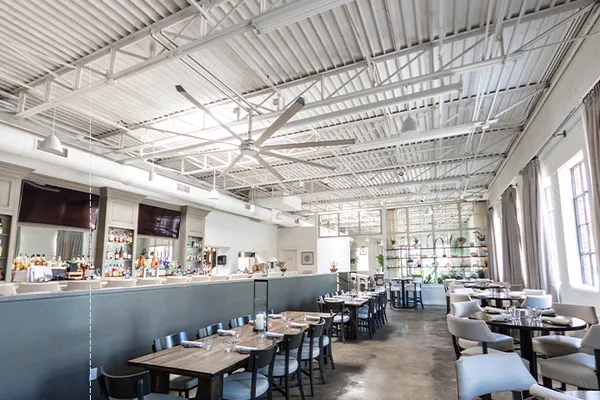
- Large Retail Stores & Exhibition Halls: Make shoppers comfortable in big stores.
- Ateliers automobiles: Clear fumes and cool workers in automobile shops.
- Logistique Facilities: Improve efficiency in busy logistique centers.
Here is a table from real studies showing how these fans help in different places.
| Type d'installation |
Real-World Results |
| Entrepôt |
Heating savings of 40-45%. Got money back in 18 months. |
| Manufacturing Plant |
Saved $63,000 a year. Got money back in about 2 years. |
| Airport Hangar |
Made the floor and ceiling almost the same temperature. |
hvls fans in warehouse
Choosing and Integrating Your HVLS Fan System
When you decide to buy Ventilateurs de plafond HVLS, you need to make good choices. You need to think about your building retrofitting project carefully.
Key Considerations Before You Buy
Think about the fan’s size, its motor, and its blades. Some fans use direct drive motors, which are very quiet. The blade design is very important. For example, some fans like those from Go Fan Yourself (GFY) use a special Z-Tech™ blade design. You should choose a good company. Look at fans from Hunter Industrial Fans, Fans de gros cul, Rite-Hite, MacroAir Technologies, et Envira-North Systems Ltd. Other great makers include Patterson Fan Company, SkyBlade Fans, KALE FANS, et Usha International. They all make great industrial overhead fans. For more specific needs, you might look at CoolBoss, LLC, Canarm Ltd., ou Remington Products, LLC.
A trusted manufacturer like Les fans de Vindus uses their deep knowledge to build strong, quiet, and efficient fans. Their M750 Series HVLS fans are perfect for tough installations industrielles. They also offer great ventilateurs de plafond commerciaux for stores and gyms.
Integrating with Your Building Management System (BMS)
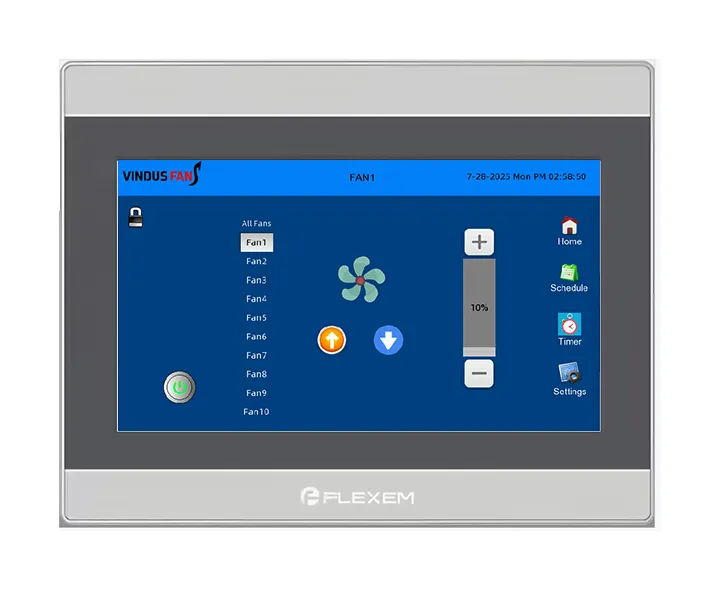
Modern buildings are smart. They use a Building Management System (BMS). This is like the building’s brain. You can connect your HVLS fans to the BMS. This is part of building automation. You can use smart fan controls to make the fans work with the HVAC system perfectly. Some fans use a Variable Frequency Drive (VFD) to change speed. This smart building technology gives you the best HVAC performance. You can even use it with natural ventilation systèmes.
Conclusion: The Smart Investment for Sustainable Facility Management
To sum up, HVLS fans are a very smart choice. They are not just fans. They are a tool for HVAC optimization. They solve the problem of thermal stratification. They make your building more comfortable and save you a lot of money.
By mixing the air, they reduce the work for your HVAC system. You will see big savings on your power bills. You will have better air. Your workers will be happier. And you will get your money back fast. This helps with things like LEED certification and getting a good Energy Star notation.
It is time to stop wasting money on energy. It is time to improve your building. An energy audit can show you how much you can save. Talk to an expert about how high volume low speed fans for commercial spaces can help you. An investment in air movement solutions is an investment in a better business.