Selecting an appropriate cooling and ventilation system is a critical decision for the operational efficiency and user experience of any large gymnasium or sports venue. Facility managers must balance occupant comfort, initial capital expenditure, long-term operating costs, and specific facility requirements.
This guide provides a neutral technical analysis of the three primary technologies used for cooling large, high-ceilinged spaces: High-Volume, Low-Speed (HVLS) fans, traditional central air conditioning (HVAC), and standard high-velocity industrial fans. The objective is not to declare a single “winner,” but to provide a decision-making framework based on engineering principles and common use cases, helping you determine which solution, or combination of solutions, is best suited for your specific environment.
Dimension 1: Analysis of Cooling Mechanisms and Comfort
The way a system creates comfort directly impacts athletes and spectators. Each technology achieves this through different physical principles.
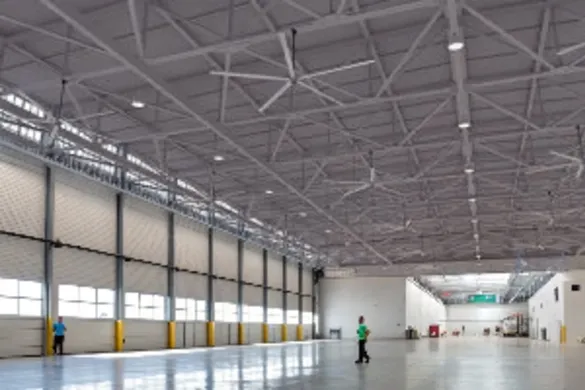
- HVLS Fans: These systems do not lower the air temperature. Instead, their effectiveness is based on how HVLS fans work by moving a massive column of air at a low, non-disruptive velocity. This large-scale air movement in gymnasiums creates a widespread, gentle breeze. The primary comfort mechanism is an evaporative cooling effect on human skin, which can create a perceived cooling effect of 4-7°C (7-11°F). This method of athletic facility air circulation is highly effective at mitigating stagnant air over large floor areas.
- Central Air Conditioning (HVAC): This is a thermodynamic system that actively removes heat and humidity from the air, thereby lowering the actual ambient temperature. It offers precise climate control. However, in large open venues, it can be challenging to achieve uniform temperature distribution, potentially creating cold spots near diffusers while other areas remain warm without supplemental air circulation.
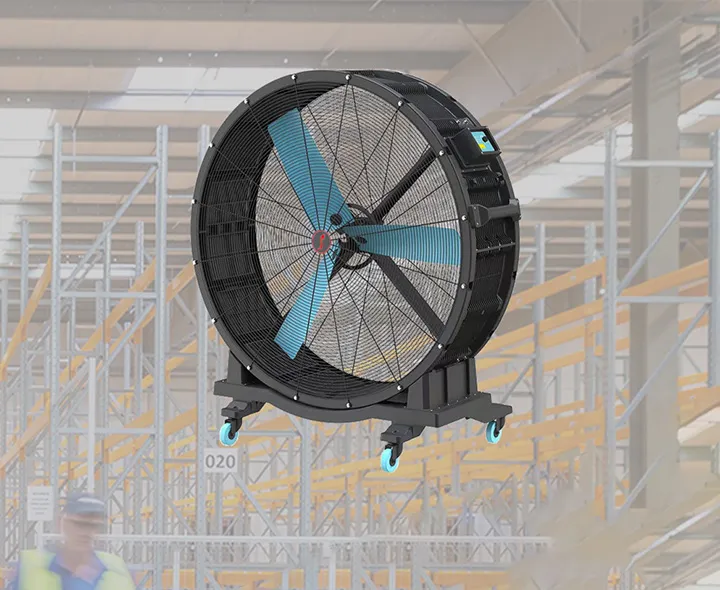
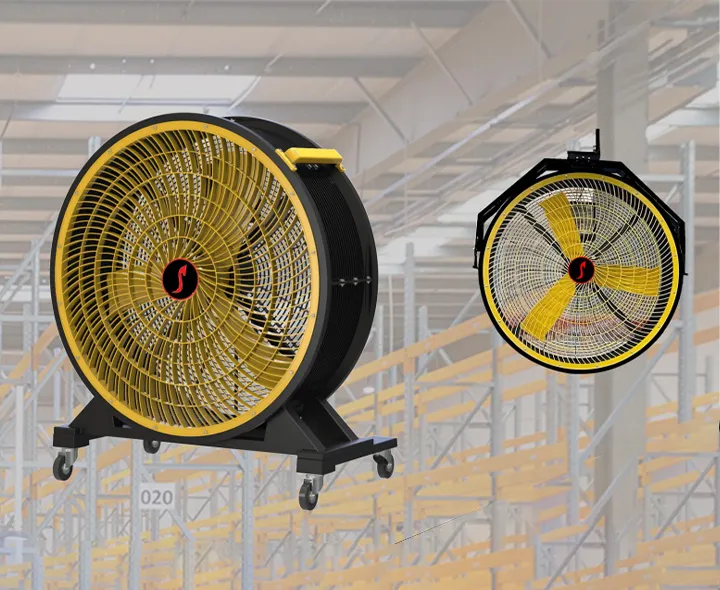
- Standard Industrial Fans: These fans operate on a high-velocity, low-volume principle. They move a fast, turbulent jet of air in a very localized area. While they provide intense spot cooling, the high velocity can be disruptive, noisy, and uncomfortable. Understanding the difference between an HVLS fan and a regular fan is crucial, as their impact on comfort is fundamentally different.
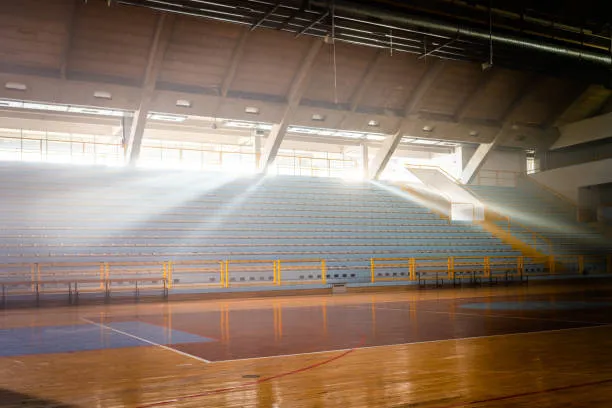
large sports venu
Dimension 2: Energy Consumption and Long-Term Operating Costs
Operating costs, primarily energy consumption, are a significant factor in the total cost of ownership.
The energy required by each system varies dramatically. An HVLS fan’s motor is designed for efficiency at low speeds, while an HVAC system’s compressor requires substantial energy. A deeper look into how much power an HVLS fan uses reveals just how significant these savings can be over the life of the equipment.
Illustrative Energy Consumption Comparison
Note: These are generalized estimates for a large open space and will vary significantly based on building size, insulation, climate, and specific equipment models. They are for comparative purposes only.
| Technology |
Typical Power Draw |
Fonction principale |
Long-Term Energy Profile |
| Ventilateur HVLS |
0.75 – 1.5 kW |
Circulation de l'air |
Très faible |
| Central AC |
30 – 100+ kW |
Air Refrigeration |
Very High |
| Ventilateur industriel |
1.0 – 2.0 kW |
High-Velocity Airflow |
Moderate (per fan) |
The key takeaway is that circulating air with an HVLS fan is fundamentally more energy-efficient than refrigerating it with an HVAC system. This makes energy efficient gym cooling a primary advantage of the HVLS approach.
Dimension 3: Initial Investment and Installation Considerations
The upfront capital cost is often a primary constraint.
- Central AC: Typically represents the highest initial investment. The cost includes the main chiller/rooftop units, extensive ductwork, air handlers, and complex installation, which often requires significant structural integration.
- Standard Industrial Fans: Have the lowest per-unit cost. However, effectively covering a large venue requires numerous fans, leading to increased costs for electrical wiring and installation points. The cumulative cost may be higher than anticipated.
- HVLS Fans: The initial cost falls between the other two options. A single HVLS fan can replace a significant number of smaller industrial fans, simplifying installation. The investment is substantial but is significantly less than a full-scale HVAC system for a comparable space.
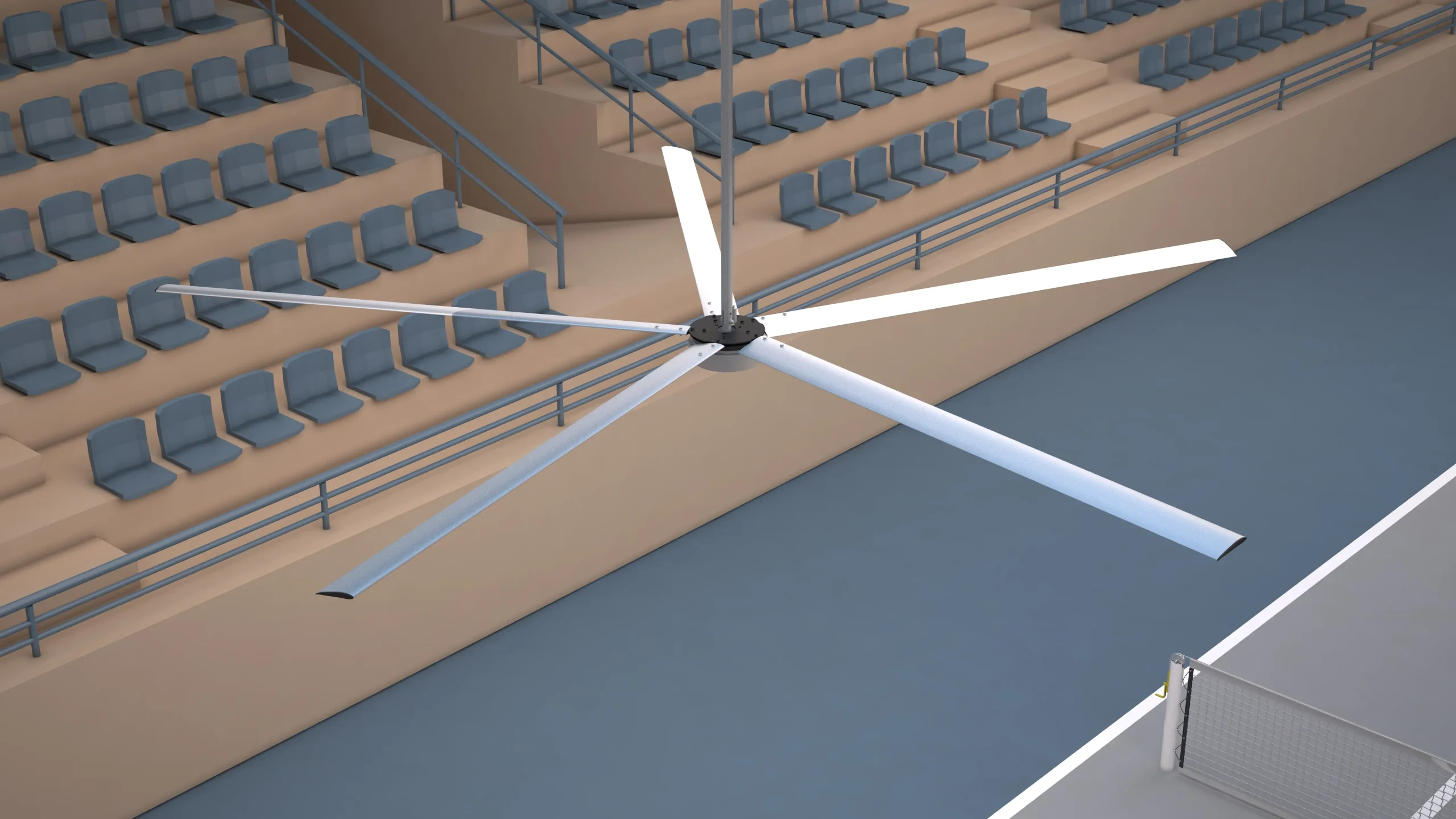
Distance entre les supporters du HVLS et le centre sportif
Dimension 4: Noise, Maintenance, and Environmental Factors
The operational environment of a sports facility demands low noise levels and reliable performance.
- Noise: HVLS fans are engineered for quiet operation fans, typically running below 45 dBA, which does not interfere with announcements or on-court communication. HVAC systems have noise from both the central plant and air rushing through diffusers. Industrial fans are the loudest, often exceeding 70 dBA, making them unsuitable for many spectator environments.
- Maintenance: Moderne direct drive motors in HVLS fans have few moving parts and require minimal periodic maintenance. HVAC systems require regular professional servicing, including filter replacement, coil cleaning, and refrigerant level checks.
- Moisture Control: In facilities like natatoriums or in humid climates, constant air circulation for indoor courts from HVLS fans is highly effective at accelerating evaporation from surfaces, reducing slip hazards and preventing condensation.
Comparative Analysis Summary
| Decision Factor |
Ventilateurs HVLS |
Central AC (HVAC) |
Ventilateurs industriels standard |
| Cas d'utilisation principal |
Large-scale air circulation, energy savings, humidity control |
Precise temperature & humidity reduction |
Localized, low-cost spot cooling |
| Comfort Profile |
Gentle, widespread, evaporative cooling |
Direct temperature reduction, can be uneven |
Harsh, localized, high-velocity airflow |
| Efficacité énergétique |
Excellent |
Faible |
Moderate to Poor |
| Operating Cost |
Très faible |
Very High |
Modéré |
| Investissement initial |
Modéré |
Very High |
Faible |
| Niveau de bruit |
Très faible |
Modéré |
Very High |
Decision Framework: Selecting the Appropriate System
The optimal choice depends entirely on your facility’s specific needs and priorities.
- When to Prioritize HVLS Fans:
HVLS fans are the most effective solution when the primary goals are improving occupant comfort over a large area, enhancing indoor air quality (IAQ) for gyms, and achieving significant energy savings. They are particularly well-suited for:
- Facilities with high ceilings (above 15 feet / 5 meters).
- Large, open-plan spaces like basketball courts, field houses, and indoor training facilities.
- Climates where extreme heat is seasonal, not constant.
- Supplementing existing HVAC systems to improve efficiency and air distribution. By circulating conditioned air, HVLS fans allow you to raise the thermostat setpoint, saving significant energy.
- Facilities where controlling humidity and floor condensation is a priority.
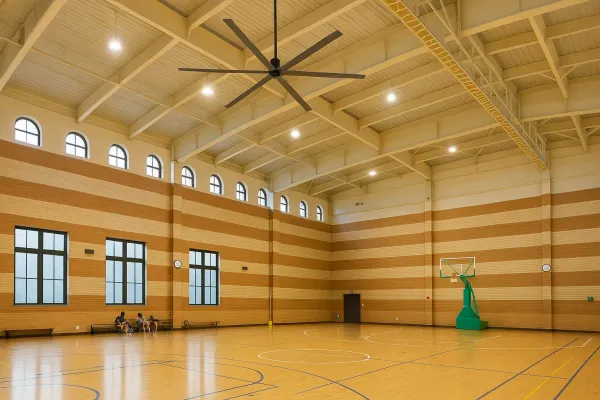
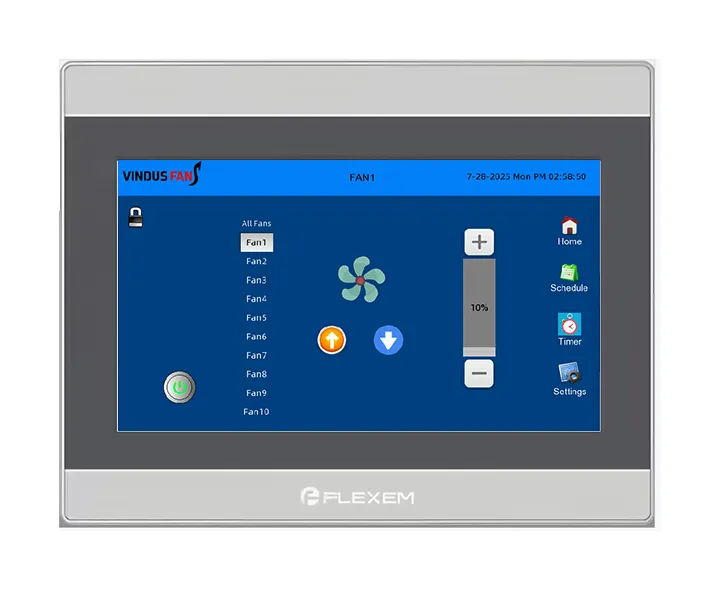
Paramètres des ventilateurs HVLS dans le centre sportif
- When Central Air Conditioning is Necessary:
Central AC is indispensable when precise temperature and humidity control are non-negotiable. Consider this the primary solution for:
- Facilities in consistently hot and humid climates where simple air movement is insufficient.
- High-revenue arenas where spectator comfort must be guaranteed to a specific temperature.
- Venues with significant fresh air and ventilation requirements mandated by building codes (e.g., ASHRAE standards), which HVAC systems are designed to handle.
- Spaces where sensitive equipment requires a controlled environment.
- When Industrial Fans Still Have a Role:
While less sophisticated, standard industrial fans can be a practical choice under specific, limited circumstances:
- For targeted “spot cooling” in specific zones, such as a weightlifting corner or a maintenance area.
- When the initial budget is the absolute primary constraint and any form of air movement is better than none.
- As a temporary or portable cooling solution.
Conclusion: An Integrated Approach
For many modern centres sportifs, the most effective strategy is not an “either/or” choice but an integrated system. Combining a foundational HVAC system for basic temperature and fresh air management with a network of HVLS fans for efficient air distribution often yields the best results in both comfort and operational cost.
By understanding the fundamental strengths and weaknesses of each technology, facility managers can make a strategic investment. The next logical step in this process is to consult a detailed guide on how to choose an HVLS fan for your specific venue dimensions and usage patterns.