Is your big building hot? Does the air feel thick and still? This is a big problem.
When a warehouse is hot, work is hard. People feel tired. They move slowly. The air can feel heavy. This makes everyone unhappy. It can even make people feel sick. Bad air can also hurt things you store. Moisture can build up. This can ruin boxes and products. This costs you money. High energy bills from air conditioners also cost a lot of money. You are losing money every minute the air is bad.
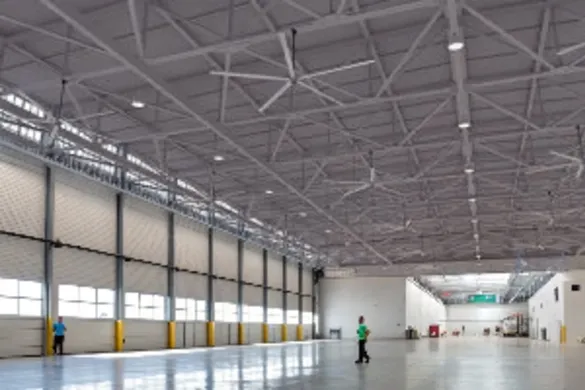
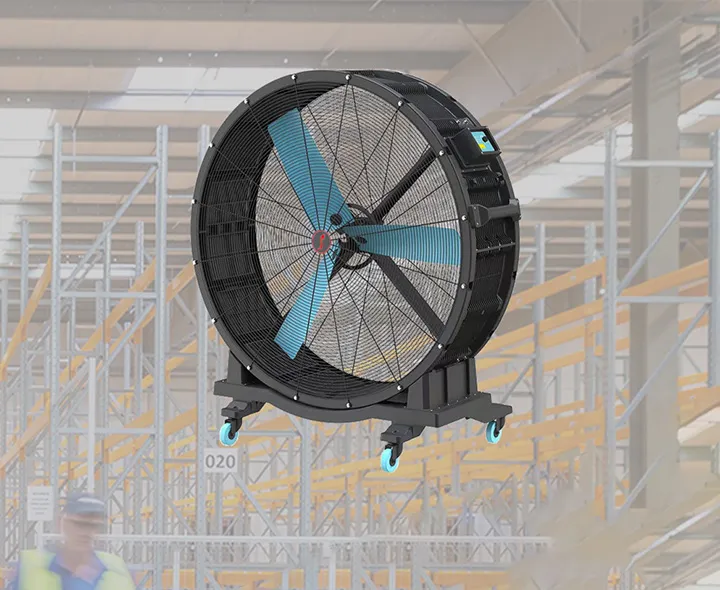
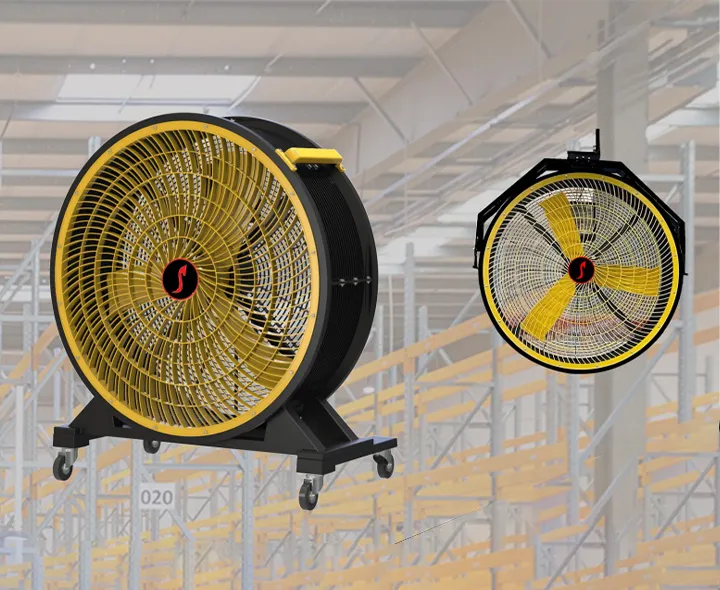
But there is a great solution. A big warehouse fan can fix this. These are not like small fans. They are very big and very smart. They are called High-Volume Low-Speed (HVLS) fans. This guide will show you how these amazing fans work. They will make your space better, save you money, and make your workers happy.
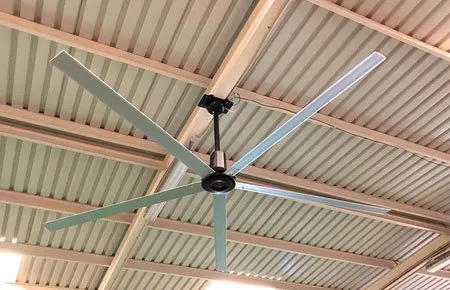
HVLS FAN
Why Your Facility Needs a Big Warehouse Fan: 5 Key Benefits
You may wonder if a big fan is worth it. Let’s look at the facts. The benefits are huge. They solve many problems in large spaces like a distribution center or a factory ventilation space.
Your energy bill is too high. Your heating and cooling systems run all the time.
This is like throwing money away. Every month, a huge bill comes. You know you need to keep people comfortable. But the cost is painful. In the winter, all your expensive heat rises to the ceiling. It sits up there, wasted. In the summer, your AC unit cannot keep up with the heat in a large space.
A big industrial fan is the answer. It is a piece of climate control solutions equipment that works smart, not hard.
These fans, often called HVLS ceiling fans, are masters of air circulation. By moving huge amounts of air, they change how the temperature feels. This helps your main HVAC system. It does not have to work as hard. This simple change leads to big savings. Companies all over the world are seeing this. A global vision for sustainable innovation is driving this change. For example, one top fabricante de ventiladores hvls, Vindus Fans, started in Spain in 2019. They saw this problem. They expanded to China in 2020 and the United States in 2021 to bring this solution to more people.
Here are five key ways an industrial ceiling fan helps.
1. Drastic Energy Savings
Big fans mean big savings. They use very little power. But they move a lot of air. This helps your main heating and cooling systems.
- In the summer, the moving air feels cool on your skin. This is called the evaporative cooling effect. You can turn your air conditioner up. You will not feel the difference. But your wallet will.
- In the winter, the fan performs a task called destratification. The fan, running in reverse, pushes the trapped warm air from the high ceiling application down to the floor. This keeps the ground level warm. Your heaters run less.
2. Improved Employee Comfort & Productivity
Your workers are hot and tired.
When people are too warm, they cannot do their best work. They get tired easily. They make more mistakes. This slows down everything. Heat stress is a real danger. It can lead to serious health problems. Happy workers are good for business. Unhappy workers are not.
A big fan creates a cool, gentle breeze. This breeze covers the whole shop floor. It is a type of zone cooling. It makes the perceived temperature much lower. People feel fresh and alert. They can focus on their jobs. They are safer and happier. A comfortable team is a productive team.
3. Enhanced Air Quality & Safety
The air in your building is still and wet.
Stagnant air is bad. It lets smells and fumes build up. In some places, like an auto shop ventilation area, this can be dangerous. Still air also leads to condensation. Water drips from the ceiling or walls. Floors get wet and slippery. This can cause accidents. It can also damage your products, leading to mold and rot.
A commercial ventilation fan keeps the air moving. This airflow management clears out bad smells. It stops condensation before it starts. This is a great tool for condensation control. Floors stay dry and safe. The indoor air quality gets much better. It even helps with bird and insect deterrence. Bugs and birds do not like moving air.
4. Quiet Operation
You might think a large diameter ceiling fan is loud. But it is not. Because they move at a low speed, they are very quiet. You can have a normal conversation right under one. This is perfect for places like a fitness center, an event venue, or even an open-plan office. A quiet fan for a sport-center is a must.
5. Protects Your Products
Moisture is the enemy of many goods. A heavy-duty warehouse fan protects your inventory. It keeps boxes from getting soft. It stops metal parts from rusting. It keeps food products fresh. This saves you a lot of money in damaged goods.
The proof is in the numbers. Look at what studies and real companies have found.
Proven Performance of Big Warehouse Fans
| Métrica |
Statistic / Finding |
Qué significa para usted |
| Ahorro de energía |
Reduces total energy use by 20% to 30%. |
Lower monthly bills and more profit. |
| Efecto de enfriamiento |
Makes the air feel 7-11°F (4-6°C) cooler. |
Happy workers and less need for expensive AC. |
| Heating Savings |
Saves up to 30% on heating costs in winter. |
A huge reduction in your winter heating bills. |
| Productividad |
Productivity can drop 2% for every 1.8°F (1°C) over the ideal temperature. |
A cooler space means more work gets done. |
| Retorno de la inversión |
You can get your money back in 6 months to 2 years. |
The fan pays for itself very quickly. |
How to Choose the Right Big Warehouse Fan
You know you need a big fan. But which one? There are many choices. It can be confusing.
If you choose the wrong fan, you waste money. It might be too big. Or too small. It might not move enough air. Or it might be the wrong type for your building. You need to get it right the first time. Making the wrong choice is a costly mistake.
We can help. Here is a simple guide to choosing the Los mejores ventiladores HVLS. We will look at size, power, motor, and blades. This is your ceiling fan sizing guide.
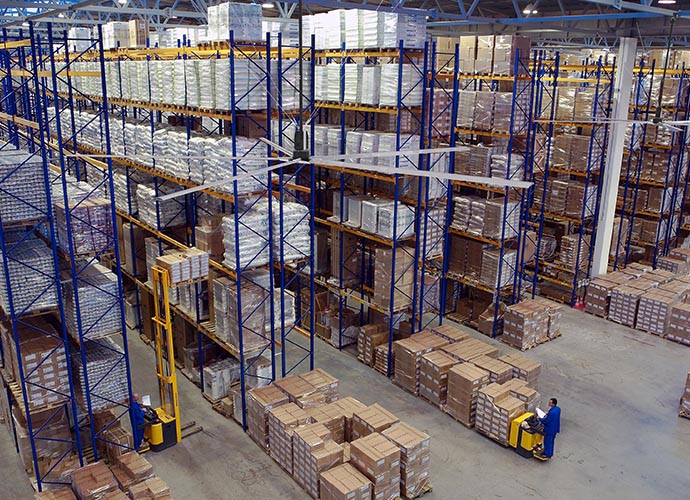
How to Choose the Right Big Warehouse Fan
Step 1: Determine the Right Fan Size (Diameter)
The size of the fan depends on the size of your space. The bigger the area and the higher the ceiling, the bigger the fan you need.
- Think about your space. Is it a small workshop? Or a giant WAREHOUSE HVLS FANS logistics center?
- Measure your area. Get the square footage.
- Check your ceiling height. This is very important.
Here is a simple chart to help.
| Diámetro del ventilador |
Best For Ceiling Height |
Area Covered (Approx.) |
| 8-12 feet |
15-25 feet |
Up to 6,000 sq. ft. |
| 14-18 feet |
20-35 feet |
Up to 15,000 sq. ft. |
| 20-24 feet |
25-50+ feet |
Up to 22,000 sq. ft. |
A large overhead fan is best for a large space. A smaller one is good for a smaller area, like in a barn or for high volume ceiling fans for agriculture.
Step 2: Understand CFM and Airflow
CFM means Cubic Feet per Minute. It tells you how much air a fan can move.
- More CFM is better. A higher CFM means more air movement.
- Look for the CFM number when you shop for a fan. A good air circulator will have a high CFM.
- The goal is to create a gentle but powerful flow of air across the entire space.
Step 3: Motor Type – Direct Drive vs. Gearbox
The motor is the heart of the fan. There are two main types.
- Direct Drive Motor: This is a modern motor. It is very quiet. It has fewer moving parts. This means less maintenance is needed. It is also very energy efficient. Many top fans from brands like MacroAir and Envira-North Systems use this technology.
- Gearbox Motor: This is an older style. It is powerful and reliable. It may need a bit more maintenance over its life. Brands like Rite-Hite and Kelley Industrial Fans have used this style for years.
The choice depends on your needs. Do you want the quietest, most efficient fan? Choose direct drive. The advanced technology in these motors is a result of tireless innovation from expert engineering teams, like the Swedish engineers who design for Vindus Fans.

Direct Drive Motor
Step 4: Blade Design & Material
Fan blades are not all the same. The shape and material matter a lot.
- Airfoil Blades: Most HVLS fan blades are shaped like airplane wings. This shape is called an airfoil. It is designed to move the most air with the least effort. This design makes the fan very efficient.
- Anodized Aluminum Blades: The blades are usually made of aluminum. It is strong but light. The aluminum is often anodized. This is a special coating that protects it from rust and damage.
- Winglets: Some fans have small wings at the tip of the blades. These are called winglets. They help the fan run more smoothly and efficiently.
Step 5: Controls & Integration
How you control the fan is important.
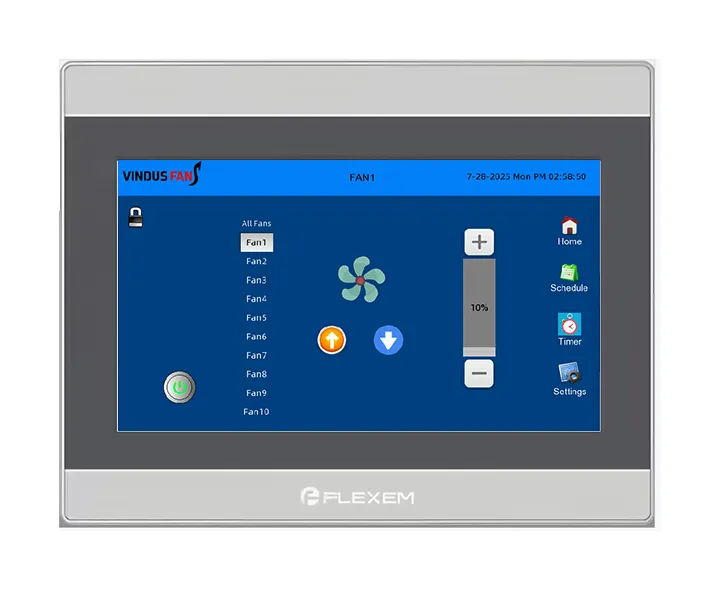
- Variable Frequency Drive (VFD): This is a smart fan speed controller. It lets you change the speed of the fan. You can make it faster on hot days. You can slow it down on cool days.
- Remote Control: Most fans come with a simple remote. This lets you control the fan from the ground.
- Smart Controls: Some fans can connect to your building’s main control system. This is great for big commercial ceiling fans for commercial-building automation.
What Do Big Warehouse Fans Cost?
You need a fan, but you are worried about the cost. Is it a good investment?
Making a big purchase is a big decision. You do not want to overspend. You need to know that your money is being used wisely. The price tag can seem big at first. This might make you pause.
Think of a big fan not as a cost, but as an investment. It is a tool that saves you money over time. The return on investment (ROI) is often very fast.
A big industrial fan for manufacturing can cost between $3,000 and $10,000. The price depends on several things:
- Size: Bigger fans cost more.
- Motor: A direct drive motor might cost more at first. But it saves more on energy and maintenance.
- Brand: Brands with a long history, like Hunter Industrial or Big Ass Fans, might have different prices. It is good to look at different options from companies like Serco, Patterson Fan Company, and Greenheck.
- Controls: Fancy controls can add to the price.
But remember the savings. The fan can lower your energy bill by up to 30%. For many businesses, the fan pays for itself in just a year or two. After that, it is pure savings. When you think about that, the cost seems very reasonable. This is why these fans are so popular in so many places, from an aviation hangar fan to a Galvanized Hanging Ceiling Fan in a barn.
Big Warehouse Fan FAQ
Here are some common questions about these fans.
- How big of a warehouse fan do I need?
Look at the size chart above. Measure your floor area and ceiling height. The bigger and taller the space, the bigger the fan.
- Are HVLS fans expensive to run?
No! They are very cheap to run. Most use about the same amount of power as a small appliance. They are a great example of sustainable innovation.
- Can you use big warehouse fans for heating in the winter?
Yes. This is called destratification. The fan pushes warm air from the ceiling back down to the floor. This saves a lot on heating costs.
- How difficult is installation?
Industrial fan installation should be done by a professional. They need to be mounted safely to the ceiling structure. The fan needs proper mounting hardware and safety cables.
Conclusion: The Clear Choice for a Better Warehouse Environment
Let’s go back to the start. The problem is a hot, stuffy, and expensive building. The agitation is knowing this costs you money and makes your people less productive every single day.
The solution is clear. It is a big warehouse fan.
These high volume low speed fans for commercial spaces are more than just fans. They are a powerful tool for your business.
- They save you money on energy bills.
- They make your workers more comfortable and productive.
- They improve air quality and safety.
- They protect your products.
From a huge logistics center to a small automotive shop, these fans are changing how businesses work. They are a key part of modern industrial ventilation systems. Investing in a high-quality commercial grade fan is one of the smartest decisions a facility manager can make. It is a choice for efficiency, comfort, and savings.
Ready to find the perfect hvls fans for your warehouse? A better environment is just a phone call away.