Installing more fans does not fix a bad airflow strategy. Many large buildings still feel hot, uneven, and stagnant because they rely on too many local fans and too little whole-space air planning.
For large facilities, the better heavy-duty industrial fan solution is usually an Ventilador HVLS: a nonportable overhead fan that moves a high volume of air at low speed across a wide area. Instead of treating airflow as a short-range cooling problem, HVLS systems are designed to improve coverage, consistency, and comfort across the entire occupied zone.
Why Many Large Facilities Still Get Industrial Airflow Wrong
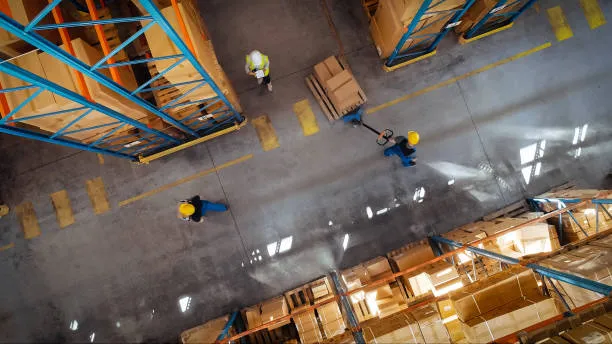
Many factories, warehouses, sports halls, and commercial buildings do not suffer from a lack of fan equipment. They suffer from the wrong airflow layout. Facility teams often install multiple local units because they seem cheaper and easier to deploy, but that approach frequently creates scattered air streams, dead zones, more noise, and poor thermal consistency at floor level.
This matters because in large spaces, a fan should not be judged only by how strong it feels when you stand directly in front of it. It should be judged by whether it improves usable conditions across the occupied zone. In real projects, the failure point is often not equipment quantity. It is the mismatch between the fan type and the building’s airflow logic.
That is why many sites invest in more air-moving products and still fail to achieve stable comfort or lower operating cost. A better approach is to start with whole-space airflow planning, which is exactly why more facility managers now study industrial ventilation systems with HVLS fans and look for broader, more efficient solutions.
Why Many Large Facilities Still Get Industrial Airflow Wrong
A Heavy-Duty Industrial Fan Is Not Defined by Size Alone
A true heavy-duty fan is not defined by blade diameter alone. In industrial procurement, “heavy-duty” should mean that the product can deliver stable performance under long operating hours, maintain usable flujo de aire across the intended zone, and do so with acceptable maintenance burden and operating economics.
This is important because many products are marketed as industrial simply because they are larger, louder, or more rugged-looking than standard commercial units. That is not enough. A real heavy-duty industrial fan should be evaluated by continuous-duty stability, coverage efficiency, control quality, mounting logic, and how effectively it delivers air where people actually work.
For buyers, the better question is not “How big is the fan?” but “How well does this product solve the building’s airflow problem over time?” That question leads to better specification decisions than simple size-based comparisons. If you are comparing real product options rather than generic fan categories, it makes more sense to start from an actual HVLS product range and then evaluate application fit from there.
Why HVLS Fans Succeed Where Pedestal and High-Velocity Fans Fail
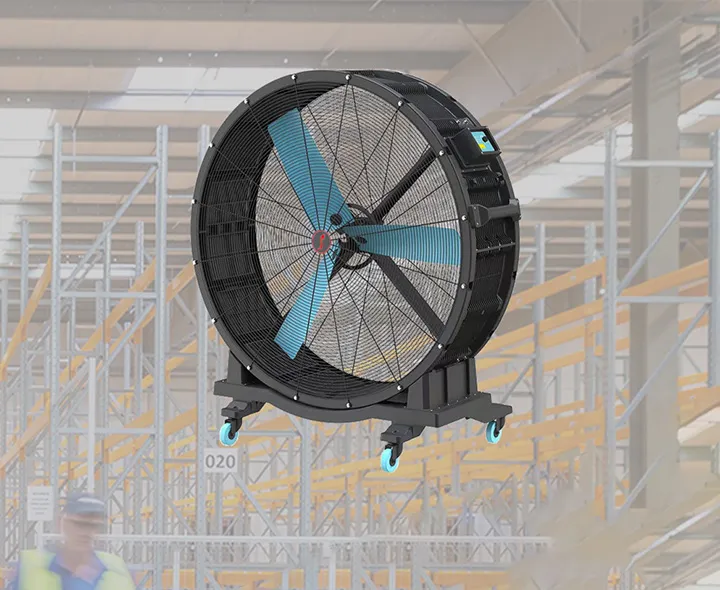
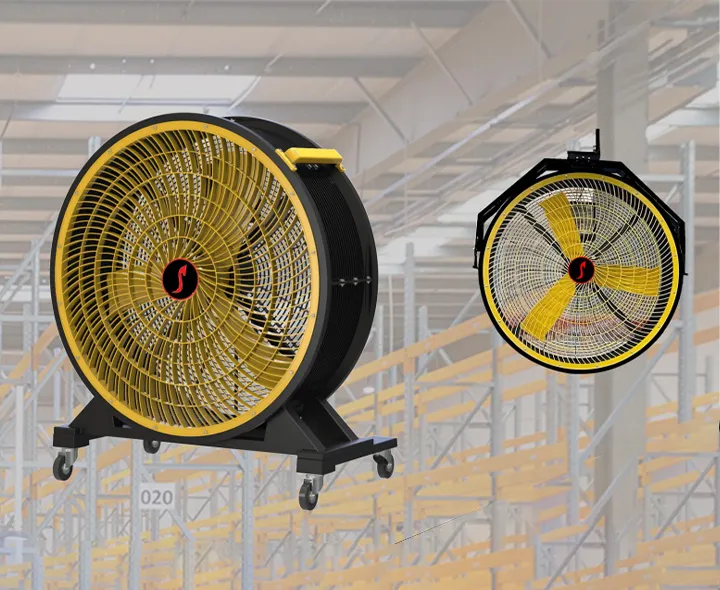
A pedestal unit or high-velocity local fan can work well in a limited area, but those products are usually designed for point cooling, not building-scale air management. Their airflow is concentrated, short-range, and highly dependent on exact placement. As the space gets wider, taller, or more crowded, that approach often requires too many units to create acceptable coverage.
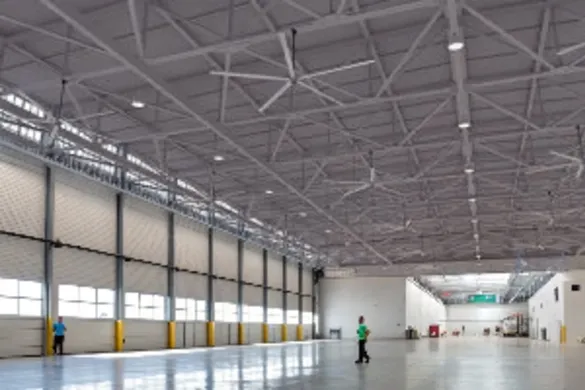
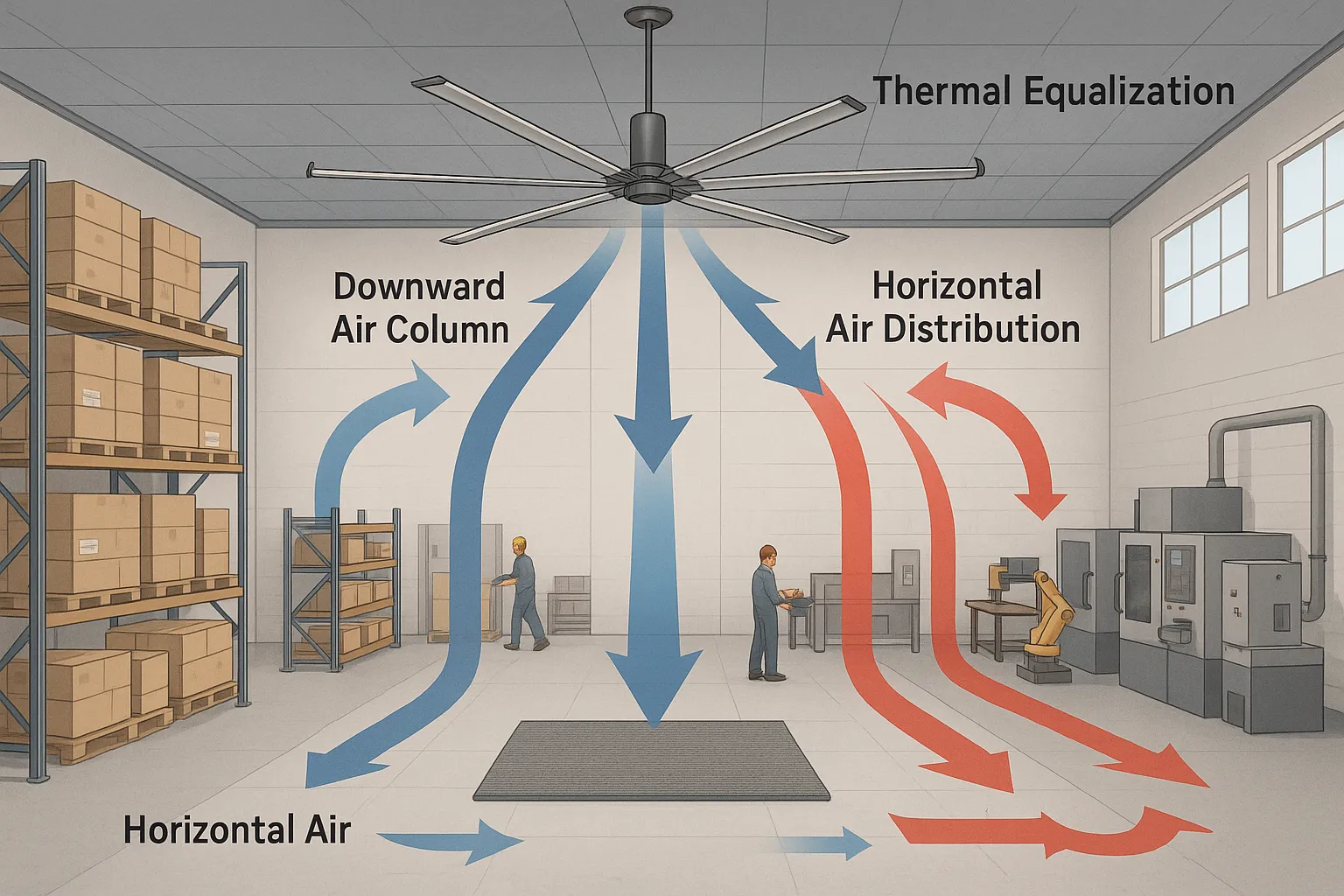
Un Ventilador HVLS solves a different problem. It does not rely on a narrow jet of fast air. It creates a large descending air column that spreads outward across the floor, which is why it can move big air and move large volumes of air across a broader footprint at low speed.
That is the deeper reason HVLS products outperform multiple local fans in large interiors. The difference is not just one of power. It is one of airflow architecture. A local fan cools points. An HVLS system manages space. Buyers who are still weighing this difference can also review how to choose the right industrial fan for your warehouse for a more direct fan-type comparison.
What Buyers Should Evaluate Before Specifying an HVLS Fan
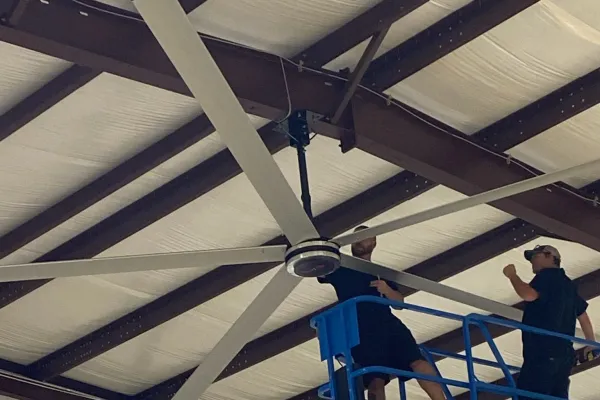
Serious buyers should begin with building conditions, not catalog photos. The first review should include ceiling height, obstruction layout, occupant pattern, process heat, open-door conditions, and whether the goal is comfort, destratification, or both.
The most important technical items to evaluate are:
- envergadura de la hoja
- Altura de montaje
- coverage radius
- control method, including velocidad variable
- motor and drive architecture
- sound profile and funcionamiento silencioso expectations
- verified performance data
- site-specific installation constraints
In professional projects, the quotation should come after the layout logic, not before it. That is why a detailed Guía de selección de ventiladores HVLS is far more useful than a simple product brochure, especially in the early planning stage.
What Buyers Should Evaluate Before Specifying an HVLS Fan
How HVLS Fans Create Better Air Coverage in Large Spaces
The core performance advantage of Alto voltaje is wide-area coverage. Instead of producing a sharp, localized stream, the fan creates a large air mass that moves downward and then outward across the occupied floor plate. This gives the building more even flujo de aire and a more usable comfort effect over distance.
This matters in a depósito, sports hall, school building, or factory because the problem is rarely confined to one work point. The issue is usually stagnant air, stratified heat, or poor temperature consistency across a large interior. One properly selected hvls industrial fan can often support a broader and more consistent airflow pattern than many separate local fans.
That is why HVLS should be understood as an airflow-system product, not just a larger ceiling fan. If you want to see this idea presented more clearly from a product perspective, the grandes ventiladores de techo industriales page is a strong supporting reference.
HVLS Fan vs Industrial Pedestal Fan: The Real Comparison
A heavy-duty industrial pedestal fan is valuable when one operator, one work cell, or one short-range area needs direct air. It is a local tool. It is useful where the layout changes often, where airflow needs to be repositioned quickly, or where overhead installation is not possible.
An HVLS system is different. It is best when the space is large and open, the ceiling height is appropriate, and the goal is broad air mixing rather than a single directional effect. For building-scale comfort and destratification, HVLS is usually the more professional answer. For narrow spot cooling, a pedestal unit remains useful.
| Factor |
Ventilador HVLS |
Industrial Pedestal Fan |
| Airflow logic |
Whole-space coverage |
Local directional cooling |
| Montaje |
Overhead |
Floor-based |
| Best use |
Open interiors |
Workstations and short-range relief |
| Fan count in large spaces |
Más bajo |
Often much higher |
| Floor obstruction |
Mínimo |
Occupies usable floor area |
| Destratification value |
Alto |
Limited |
That is why a pedestal product is usually a supplement to HVLS in large facilities, not a replacement. For a more conversion-focused comparison angle, you can also point readers to why HVLS fans are the game changer for factories, warehouses, and gyms.
Motor, Controls, and Continuous-Duty Performance
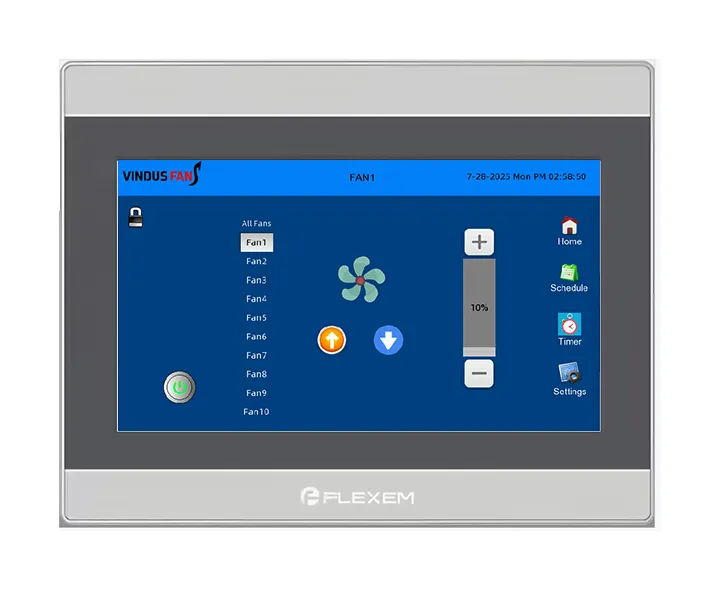
In industrial applications, the motor and controls matter because runtime matters. A fan that operates through long shifts must maintain stable performance, manageable service requirements, and predictable operating cost. That is why buyers should review drive design, control precision, and whether the system supports fine velocidad variable adjustment.
Many buyers also prefer direct drive architectures because they simplify the system and can reduce maintenance complexity. In real industrial selection, “heavy-duty” should translate into continuous-duty stability, reliable control behavior, and lower failure risk under actual operating conditions.
This is where serious specification work separates engineered HVLS solutions from generic fan sourcing. If readers want a more technical product example, linking to the Ventiladores HVLS serie M750 page or a technology article such as the PMSM HVLS fan overview works very well.
Energy Efficiency and Operating Cost Advantages of HVLS Fans
HVLS systems are strong not only because they provide wide-area cooling effect, but because they often do it with fewer units. If one or a few HVLS units can produce useful movimiento del aire across a broad floor area, the facility may avoid deploying many small fans with higher combined installation clutter and operating burden.
During warm conditions, increased air speed improves perceived comfort. During heating seasons, overhead circulation can also help bring trapped warm air back down. That is one reason why facility managers looking for lower operating cost often evaluate HVLS as part of a larger building comfort strategy rather than as a simple fan purchase.
For warehouse-oriented readers, this point is supported especially well by factory ventilation design with an HVLS fan for warehouse comfort and lower energy costs.
The real cost equation should include:
- Número de ventiladores necesarios
- installation and access cost
- annual power use
- floor-space interference
- maintenance labor
- impact on comfort complaints and operator acceptance
For many large facilities, HVLS wins this comparison over time.
Heat Stress, Comfort, and What HVLS Can Realistically Do
HVLS fans do not refrigerate the air. Their main value is that they improve the cooling effect people feel by increasing air speed around the body. That is why they are so useful in large spaces where full mechanical cooling is impractical, expensive, or inefficient.
For air quality, buyers should stay precise. HVLS improves mixing, not filtration. It reduces stagnant zones and supports better air distribution, but it does not replace exhaust design, source capture, or filtration strategy.
That distinction is important in professional facility planning. If you want to support this more system-level perspective with another internal page, the ultimate guide to HVLS fans for factory airflow optimization is a strong match.
What HVLS Can Realistically Do
Best Applications for Heavy-Duty HVLS Industrial Fans
HVLS performs best where the building is large enough for the airflow pattern to develop properly. That usually means open interiors with meaningful floor area and adequate mounting height.
Common applications include:
- fábricas
- warehouse buildings
- centros deportivos
- gym halls
- escuelas
- instalaciones comerciales
- agricultural buildings
- large industrial interiors needing broad air coverage
In these environments, the real target is even air distribution, better cooling effect, fewer stagnant areas, and improved employee comfort without covering the floor with local units. For this section, the strongest internal destinations are your HVLS fans product page, sports center solution page, y education solution page.
Common Mistakes When Choosing Industrial Fans for Large Buildings
The first mistake is assuming every industrial fan solves the same problem. A local air circulator, a portable fan, and an HVLS system serve very different roles. The second is overvaluing the dramatic feel of a high-velocity stream when the real need is even whole-space air distribution. The third is ignoring installation logic, clearance, and control planning for overhead fans.
Other common errors include:
- buying by diameter alone
- comparing unit count without comparing coverage
- treating local spot cooling as if it were whole-building airflow design
- assuming all commercial fans and industrial HVLS products perform the same way
- overlooking noise, controls, or service access in the early specification stage
Most underperforming projects do not fail because the fan is too small. They fail because the selection logic is too shallow. For readers still comparing categories, this warehouse industrial fan comparison guide is a very natural next click.
Why Manufacturers Prefer Customized HVLS Airflow Solutions
As an HVLS manufacturer, the process should not start with model size. It should start with building dimensions, mounting height, occupancy pattern, process heat, and whether the client needs cooling effect, destratification, or both.
In many projects, the correct answer is not simply “install the biggest fan.” It may be:
- one HVLS layout for full-space mixing
- HVLS plus a few local support units
- phased installation by area
- special controls for different operating periods
That is why factory-based engineering support matters. For serious B2B buyers, the value is not just the product. It is the ability to convert a building problem into a correct airflow solution. Your Sobre nosotros y ¿Por qué elegirnos? pages are ideal supporting links for this section.
Preguntas frecuentes
Is a heavy-duty industrial fan always an HVLS fan?
No. “Heavy-duty industrial fan” is the broader category. HVLS is one important type within it. But in large open facilities, HVLS is often the best heavy-duty solution because it provides wide coverage, air mixing, and destratification with fewer units.
Why is an HVLS fan better than a pedestal fan for large spaces?
Because it is designed for building-scale airflow. A pedestal unit provides local cooling, while an HVLS system spreads air across a much larger footprint and is better suited to broad comfort improvement in open interiors.
What should buyers check before selecting an HVLS fan?
Blade span, mounting height, coverage pattern, motor and drive design, control flexibility, installation layout, and application fit are the main points to review. A good starting point is this HVLS buying guide.
Are HVLS fans suitable for factories, gyms, and schools?
Yes, when the building size and installation conditions are appropriate. Your site already supports these applications well through the centros deportivos y educación solution pages.
Which Vindus page should readers visit next?
For general product browsing, direct them to the HVLS fans category page. For a specific model reference, direct them to the Ventiladores HVLS serie M750 página.
Puntos clave
- Large facilities often fail at airflow because they use the wrong airflow strategy, not because they lack fans.
- A true heavy-duty industrial fan should be judged by coverage, runtime, control quality, and operating value, not by size alone.
- HVLS fans outperform pedestal fans in large spaces because they solve whole-building airflow problems rather than local spot-cooling problems.
- For factories, warehouses, gyms, and other open interiors, HVLS is usually the more scalable and professional airflow solution.
- The best next-step internal links for conversion are the HVLS product page, M750 Series page, HVLS buying guide, y warehouse airflow article.