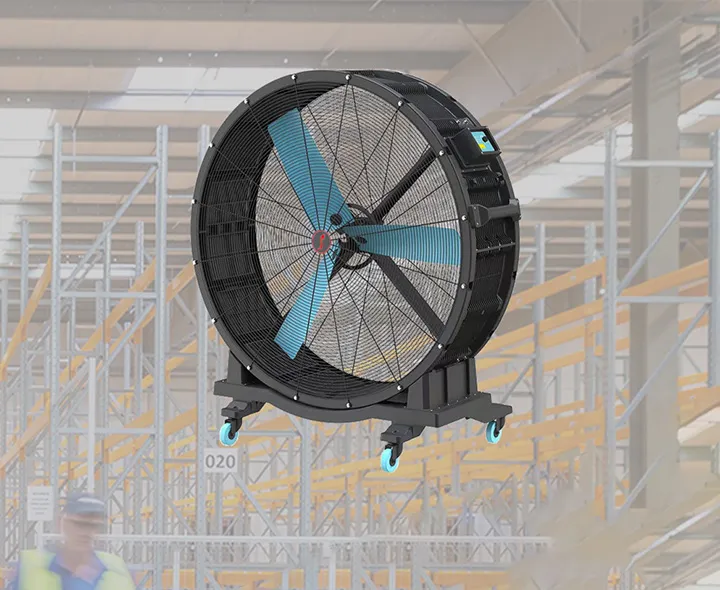
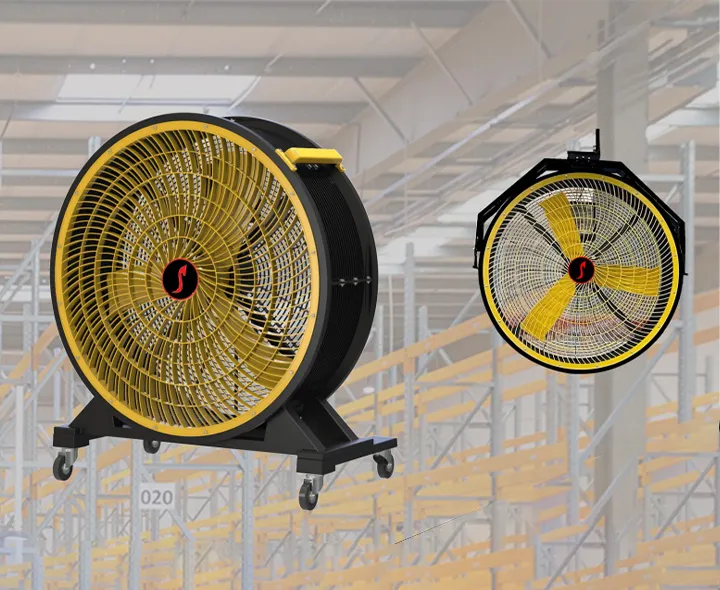
Stale, hot air slows people and machines; energy bills climb and odors linger. The answer is a right-sized sistema de ventilación that restores comfort, protects people, and cuts waste.
What is a factory ventilation system? It is the coordinated way a plant brings in outside air, mixes it, and removes pollutants so heat, moisture, and hazards don’t accumulate. A good system keeps production steady, safe, and energy-efficient.
We are an HVLS fans manufacturing plant. Every week we help factories, commercial buildings, sports centers, gyms, schools, warehouses, and other Instalaciones industriales get the most from their ventilación industrial by combining big-diameter, low-speed fans with targeted escape and controls. That hybrid approach improves comfort, stabilizes processes, and lowers operating costs.
What is a ventilation system, and why does it matter in busy factories?
A sistema de ventilación is the backbone of plant air. It moves heat away from people and equipment, brings in fresh air, and carries out pollutants. Do it right and you get steadier lines, fewer complaints, and fewer surprises at quality checks. Do it wrong and you see build-up of heat, odors, and dust.
In our projects, we start by mapping the entorno laboral, understanding shifts and machinery, then pairing HVLS mixing with the right exhaust system so the floor feels even from door to dock. That’s how you get improved air quality and happier teams.
How does an industrial ventilation system work?
A modern industrial ventilation system follows a simple loop:
- Supply: bring in outside air through inlets or an air supply system.
- Mix or capture: use HVLS fans for room-wide comfort or a hood para un specific area where pollutants start.
- Transport: carry contaminated air a través de ductwork with enough velocity to avoid deposits.
- Discharge: use an ventilador de escape and filtration or stack to send pollutants out safely.
Cuando ventilation systems are designed with clear goals—comfort, code, and process protection—results are repeatable, measurable, and easier to maintain.
We design around people and the industrial process, not just equipment lists. That’s how you get effective ventilation without overspending.
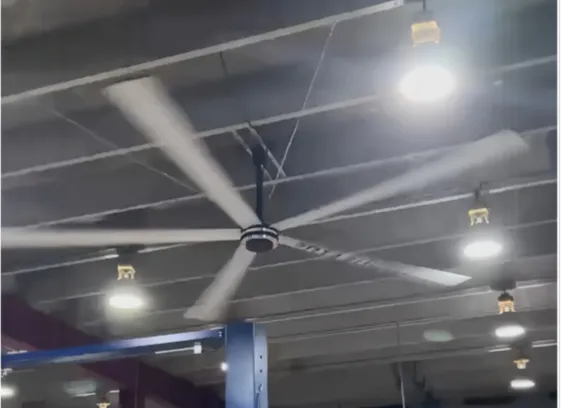
How does an industrial ventilation system work
Types of industrial ventilation systems: general ventilation vs. local capture
There are two types of industrial ventilation systems you’ll see most often—each has a job:
- General ventilation: room-wide mixing that spreads volúmenes de aire so heat, odor, and light dust dilute across the space.
- Local exhaust ventilation: capture at the task so you capture contaminants at their source before they spread.
Usar dilution ventilation for open floors (assembly, packaging, gyms). Use local capture where fume, vapor, smoke, or harmful air contaminants appear (weld, solder, paint, cutting, adhesives). This balanced strategy gives a safer working environment and keeps production steady.
Natural ventilation or mechanical? Where each fits in facility ventilation
Some sites lean on open doors, ridge vents, and sidewall louver systems—classic natural ventilation—during mild seasons. Mechanical designs add fans, ducts, and smart controls so you can meet targets year-round. Most plants use both: nature when the weather allows, mechanical when you need predictability.
HVLS fans gently move aire caliente off the roof in winter and improve perceived cooling in summer. Because they run slowly, niveles de ruido stay low and people feel the breeze, not a draft.
Designing an industrial ventilation system: basic principles for success
Designing an industrial ventilation system starts with three questions: What needs to be removed? Where is it created? How much air is truly required? From there, we align ventilation design con el facility layout, plan inlets, size ductwork, and place capture points.
Basic principles we follow:
- Keep intakes upwind and clean; avoid short-circuiting between intake and discharge.
- Separate comfort mixing from process capture so you don’t recirculate hazards.
- Mantener balanced airflow so offices don’t pressurize the plant (or vice versa).
- Use controls to match shifts and loads.
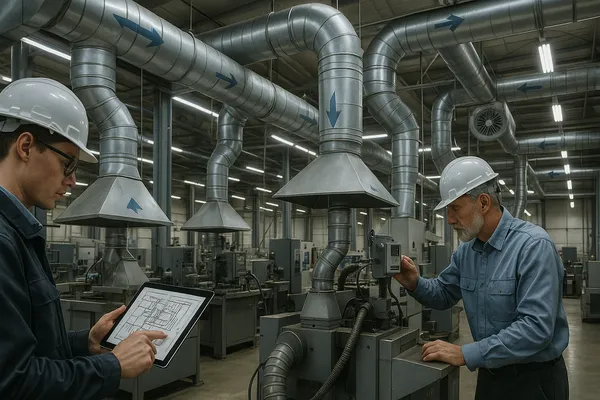
Designing an industrial ventilation system
Sizing airflow, air changes per hour, and temperature control
Right-sizing is everything. We target the cambios de aire por hora that support comfort, dry floors, and calidad del aire interior, then check seasonal control de temperatura needs. HVLS mixing reduces stratification so heating or cooling runs less to reach setpoints.
We evaluate humidity levels, door cycles, mezzanines, and corners so the system actually ventiles the hard spots. Sensors and variable speed drives keep flujo de aire steady during peak loads and dial it down when the floor is quiet.
Planning table (illustrative ranges for early discussion)
| Space type |
Typical ceiling height |
Helpful devices |
Planning focus |
| Warehouse / DC |
9–14 m |
HVLS + supply + staged discharge |
Even aisles, pick face comfort, dock strategy |
| Gym / sports center |
7–12 m |
HVLS + sidewall inlets |
Quiet, even courts, no fan shadowing |
| Factory floor |
6–12 m |
HVLS + capture + controls |
Separate comfort mixing and process capture |
| School hall / auditorium |
6–10 m |
HVLS + economizer |
Low noise, easy maintenance |
Consejo: Link fan speeds to temperature and CO₂. You’ll see energy ahorro de costes sin sacrificar la comodidad.
Where HVLS fans fit inside industrial ventilation solutions
Ventiladores HVLS are central to soluciones de ventilación industrial porque se mueven grandes volúmenes de aire slowly, removing hot/cold zones while avoiding draft complaints. They support air cleaning efficiency by improving mixing upstream of filters and lower stress on rooftop units, helping extend equipment esperanza de vida.
Pair HVLS mixing with a right-sized escape strategy and pollutants dilute faster. In docks, fans keep drivers alert; in gyms and schools they cut stuffiness; in plants they reduce hot-spot alarms and stabilize manufacturing processes.
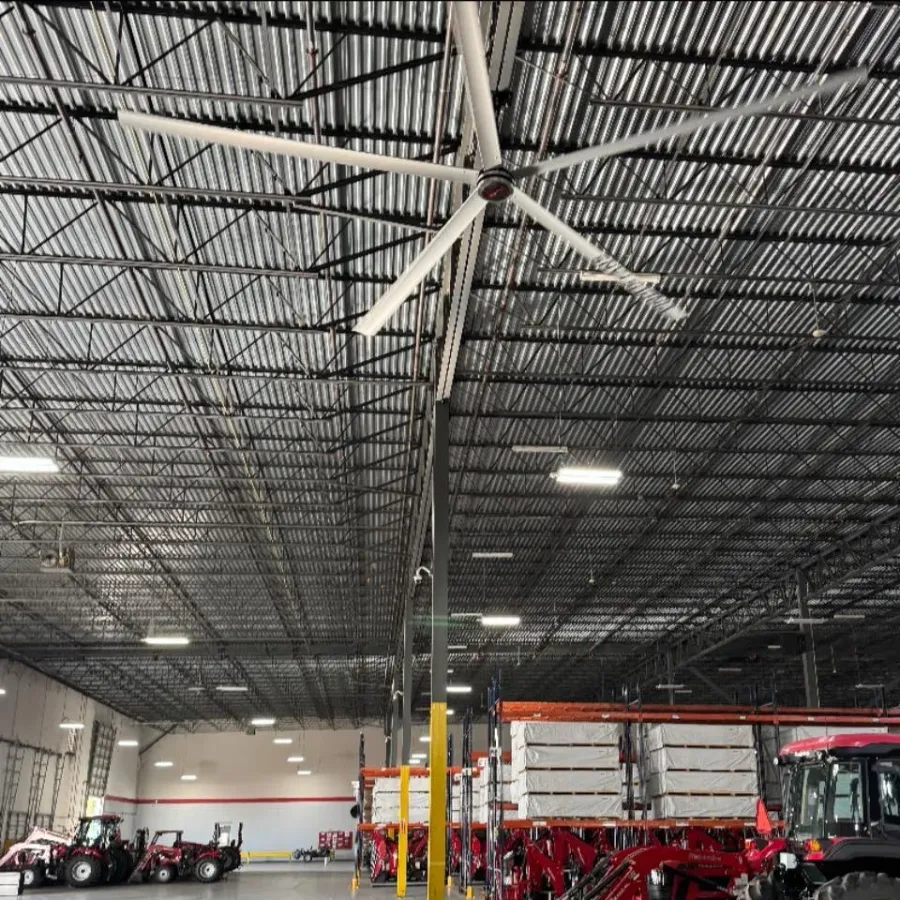
Where HVLS fans fit inside industrial ventilation solutions
Capture and convey: hood, ductwork, and exhaust essentials
If your process produces airborne contaminants, fume, vapor, or sticky particles, you need capture at the source. A well-placed hood pulls contaminated air into ductwork with enough transport velocity to keep particles moving to an escape point or filter. Good capture minimizes contaminant build-up and protects people and product.
We separate process capture from comfort mixing so you don’t recirculate hazards by mistake. For paint, solder, or cutting, interlocks keep the line from starting unless removal is active—simple and reliable.
Air cleaning and filtration—what to keep, what to remove
You don’t always want to dump conditioned air. With the right media, you can filter dust and some smoke and recirculate part of the stream safely. Always check rules for toxic contaminants y harmful substances first.
For odor control, use activated carbon; for sticky aerosols, use multi-stage filtration. Maintain minimum outside air to protect aire limpio targets and keep your espacio de trabajo pleasant.
Controls, safety, and noise control
Controls tie everything together: schedules match shifts; sensors keep flujo de aire within target bands; alarms flag issues before complaints. Because HVLS fans spin slowly, noise control is simpler and the line stays easy to hear. That’s a safe working environment and smoother shifts.
We design dashboards so managers see trends at a glance—temperatures, fan RPM, differential pressure—so fixes are quick and data-backed.
Case studies (summarized)
- Warehouse (summer peak): Five HVLS units plus modest escape raised picking comfort and trimmed energy spend. Forklift lanes felt even; floors dried faster after cleaning.
- Gym complex: HVLS mixing with staged inlets made courts calmer with fewer hot zones; spectators noticed right away.
- Metal shop: Adding local exhaust ventilation at weld bays plus HVLS mixing reduced haze and eye irritation; supervisors reported fewer complaints and more aire limpio días.
Compliance and credible standards (what we follow)
We align with OSHA/NIOSH guidance on capture and with ASHRAE best practice for ventilation and thermal comfort:
- OSHA – Ventilation (process capture and general concepts)
- NIOSH – Industrial Ventilation (engineering controls and examples)
- ASHRAE Standard 62.1 (minimum ventilation) and ASHRAE 55 (comfort)
These references explain ventilation techniques, verification, and why good plant air supports quality and safety.
Your upgrade plan
Comfort and energy issues are visible: hot corners, fogged lenses, lingering odour.
We walk the floor, log temps/CO₂, and show what better air can do.
We simulate flows and propose an HVLS-plus-capture design that’s custom-designed for your lines and shifts.
We build, commission, and support—globally.
Five simple steps
- Walkthrough & goals – note heat sources, people density, facility layout.
- Model & options – simulate movimiento del aire, select fan diameters and escape capacidad.
- Proposal – counts, controls, and commissioning steps, built around your budget.
- Install & verify – meter flow and pressure, tune for balanced airflow.
- Aftercare – training, spares, and routine visits that keep performance steady.
In plain terms: industrial ventilation systems are designed mover grandes volúmenes de aire, remove airborne hazards, and keep optimal airflow across racks and lines—without wasting energy.
Preguntas frecuentes
Do HVLS fans replace a ventilation system?
No. HVLS improves comfort mixing and destratification. You still need outdoor air and removal for hazards. Together they deliver the best results.
Will big fans spread pollutants?
Not when designed well. We keep fans away from hazard zones and rely on capture for dangerous sources. Controls adjust fan speeds during sensitive operations.
Can I reuse indoor air to save energy?
Often, yes—dust and smoke can be filtered and partially returned depending on codes. We always check rules before we recirculate anything back to the floor.
What about winter?
HVLS moves aire caliente off the roof, reducing heating demand and helping Calefacción y refrigeración equipment run less to reach setpoints.
How loud are HVLS fans?
They’re quiet by design. Large diameter and low RPM mean low niveles de ruido and happier crews.
How do you decide capture vs. general mixing?
Usar types of ventilation in tandem: local capture for air contaminants at the task; room-wide mixing for broad comfort. We size both so you don’t overspend.
A short glossary inside this guide
- Ventilation solutions: the full strategy—intake, mixing, capture, discharge, and control.
- Facility ventilation: all of the above applied to your plant as a whole.
- Escape: the removal side—fans, stacks, and filters that carry hazards outdoors.
- Air cleaning: filtration techniques used before discharge or to allow limited return air.
Sources & further reading
Bullet-point summary (remember these)
- A sistema de ventilación keeps people safe, protects products, and saves energy.
- Combine HVLS comfort mixing with targeted escape for hazards.
- Use local capture for fume, vapor, and dust; use general mixing for floor-wide comfort.
- Design around the facility layout, shifts, and processes—not just equipment lists.
- Size to the right cambios de aire por hora; verify with sensors and controls.
- HVLS reduces stratification and lowers load on HVAC, aiding control de temperatura.
- Keep maintenance simple (filters, belts, bearings) to extend esperanza de vida.
- Follow OSHA/NIOSH/ASHRAE guidance for a reliable, code-ready outcome.
We’re an Alto voltaje fabricación partner—global delivery, engineering support, and a clear path from audit to commissioning.

 Spanish
  English
  German
  French
  Italian
  Portuguese
  Hindi
Hindi  Chinese