Is your big room hot and stuffy? Does the air just sit there? In the winter, is the ceiling warm but the floor is cold? These problems cost you money. They make workers unhappy and less productive. Customers may not want to stay long. Your heating and cooling bills are too high. This is a big problem for any edificio comercial. You need a real factory cooling solution.
There is a better way. You can move a lot of air without spending a lot of money. The answer is a big commercial ceiling fan. These are not like the fans in your house. They are much bigger and work in a special way to provide year-round comfort and big savings. This guide will show you how they work and how to pick the right one for your space, from a small shop to a huge warehouse.
What Are Big Commercial Ceiling Fans? (HVLS Fans Explained)
Most big fans you see in large spaces are a special type. They are called Ventiladores de alto volumen y baja velocidad (HVLS). They are the key to an efficient indoor climate control.
Defining High-Volume, Low-Speed (HVLS) Technology
What does HVLS mean? It is simple.
- Alto volumen: The fan moves a very large amount of air.
- Baja velocidad: The blades turn very slowly.
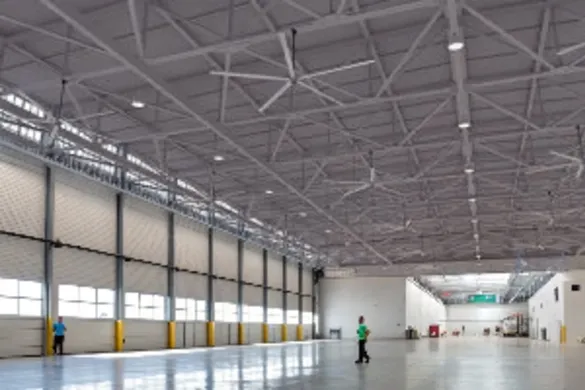
Think of a boat oar. If you splash it fast, you make a lot of spray but do not move much water. If you push it through the water slowly and steadily, you move the whole boat. An HVLS fan works like that. It pushes a huge column of air down to the floor and out to the walls. This gentle movimiento del aire cools the whole room. This is different from a small, fast fan that just blows air in one spot. This smart design offers great eficiencia del flujo de aire. To learn more, you can read about Todo lo que necesita saber sobre ventiladores de gran volumen y baja velocidad.
What Are Big Commercial Ceiling Fans?
Key Types of Commercial Ceiling Fans
There are different types of these big fans for different jobs.
- Industrial ceiling fans: These are heavy-duty ceiling fans built for tough places. They are perfect for almacén ventiladores de techo, places for FABRICACIÓN, and big logística centers. They have an industrial grade build.
- Ventiladores comerciales: These fans look good and work well. You see them in retail stores, gyms, and big office spaces. They are perfect for a edificio comercial.
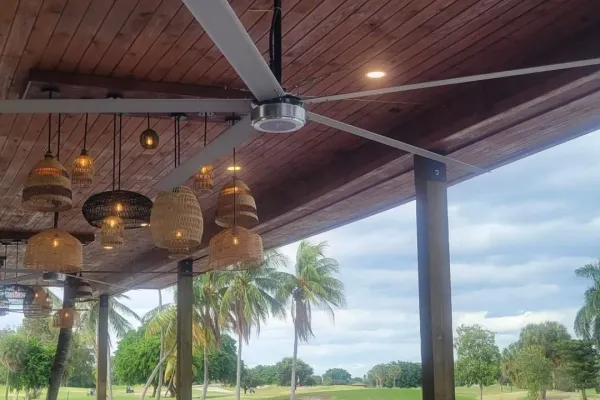
- Large outdoor ceiling fans: These are special fans for outside spaces. They can be damp rated ceiling fans o wet rated ceiling fans. This means they can handle moisture. They are great for a restaurant patio fan.
The Core Benefits: Why Invest in a Big Commercial Ceiling Fan?
Why should you get a big fan? The reasons are simple: they save you money and make people feel better. The investment is worth it. Many ask, Are HVLS Fans Worth It? The data says yes.
Massive Energy Savings & Reduced HVAC Costs
This is the biggest benefit. Big fans save a lot of money on power. They achieve real ahorro de energía.
In winter, warm air from your heater rises to the ceiling. This is a waste. An HVLS fan pushes that warm air back down. This is called desestratificación o thermal destratification. It creates an even temperature distribution. Your heater works less.
In summer, the fan’s breeze creates a efecto refrescante. This is an evaporative cooling effect on your skin. It can make you feel much cooler. You can turn your air conditioner up, or even off. This will reduce HVAC costs.
| Métrica |
Documented Impact |
Source Type |
| Winter Heating Costs |
Up to 30% reduction. |
Energy savings figures are based on industry case studies, utility programs, and documented HVLS fan installations. |
| Summer Cooling Costs |
Up to 30% reduction. Can cut AC costs by up to 20%. |
Return on investment data is compiled from field performance reports, energy audits, and facility cost analyses. |
| Overall Energy Use |
Up to 30% reduction. |
|
| Payback Period |
Often between 6 months and 2 years. |
|
Improved Air Circulation and Quality
Stale air is bad. It can have smells and dust. Good circulación de aire fixes this. A big fan keeps the air moving all the time. This helps get rid of fumes from places like an automotor shop. It helps with condensation control. It gives you improved air quality. Good air distribution is important for health. This is a key part of ventilación industrial y occupational safety and health.
Enhanced Employee and Customer Comfort
When people are comfortable, they are happier. A happy worker is a better worker. Studies show a link between confort térmico y increased productivity. A hot customer will not stay in your store very long. A big fan creates a gentle breeze that makes everyone feel better. This is a big plus for comodidad de los empleados.
| Comfort Metric |
Documented Impact |
Source Type |
| Perceived Temperature |
Can feel 7-11°F cooler. |
Data is based on thermal comfort research, ASHRAE (American Society of Heating, Refrigerating and Air-Conditioning Engineers) studies, and building science reports. |
| Productividad |
Can drop 2% for every degree above 77°F. |
|
Quiet Operation for Undisturbed Environments
You might think a huge fan would be loud. But they are not. Because the blades move slowly, they make very little noise. This funcionamiento silencioso makes them perfect for places like church ceiling fans, schools, or an office. They will not bother anyone.

Quiet HVLS fan for commercial use
How to Choose the Right Big Commercial Ceiling Fan: Key Factors
Picking the right fan is important. You need to think about your space and your needs. Here are the key things to look at when you Cómo elegir un ventilador HVLS.
Sizing and Diameter: Matching the Fan to Your Space
The size of the fan must match the size of the room. A large diameter ceiling fan is for a large space. You need to know your room’s square feet and ceiling height requirements. A ceiling fan sizing calculator can help. A bigger fan can move more air. This means you may need fewer fans. Look for large blade ceiling fans.
CFM (Cubic Feet Per Minute): Understanding Airflow
CFM tells you how much air a fan moves. The CFM nominal is very important. A higher CFM means more air is moving. This is its airflow capacity. You want a Ventilador de techo de alto CFM for a big space to get the best efecto refrescante.
Motor Type: AC vs. DC Motors
The motor is the heart of the fan.
- AC Motor: An older type of motor. It is strong but uses more power.
- DC motor ceiling fans: A newer type of motor. It is more efficient and quieter.
Many of the best fans, like the Ventiladores HVLS serie M650 y Ventiladores HVLS serie M750, use advanced motors like a gearless direct drive motor. These are very reliable and ventiladores de techo energéticamente eficientes.
Blade Design and Material
The blades are also very important. The shape and number of blades change how the fan works. Look for blades with an superficie sustentadora shape. This shape is like an airplane wing. It moves air very well. Anodized aluminum blades are strong and light. Some fans are multi-blade ceiling fans or look like propeller ceiling fans. Even a cool turbine-style ceiling fan design is available. The fan blade pitch also matters.
Control Options and Smart Features
How do you control the fan? You have choices.
- Wall controls: A simple box on the wall.
- Ceiling fan with remote: Control the fan from anywhere in the room. You may need help with remote control programming.
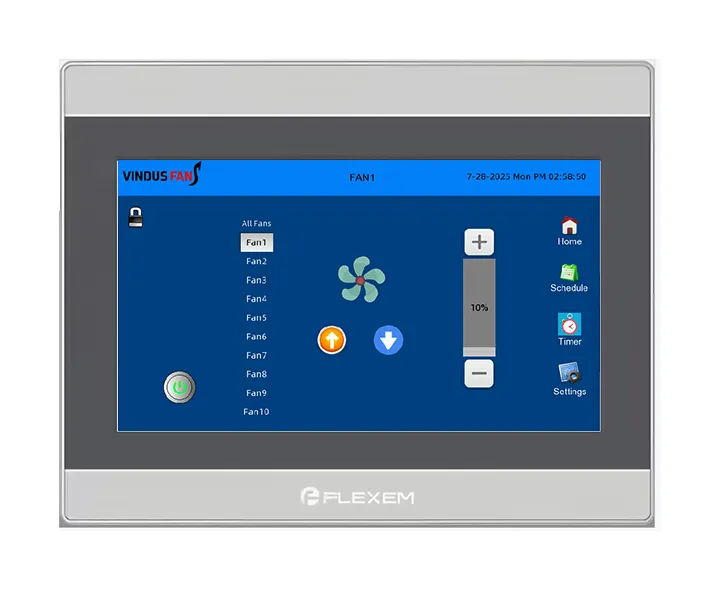
- Smart ceiling fans: These can connect to your building’s computer system. They can use a variable frequency drive (VFD) to change speed. They can be part of a building management system using protocols like BACnet o Modbus. This allows for integration with building automation.
What to Look for in a Quality Manufacturer
Choosing the right fan also means choosing the right company. A reputable manufacturer is a sign of a quality product. Look for companies dedicated to HVLS technology, backed by expert engineering teams focused on creating the most efficient and sustainable designs. A global presence and a commitment to innovation are also hallmarks of a top-tier provider.
Vindus Fans, for example, began in Spain in 2019 and quickly expanded, opening a hub in Qingdao, China in 2020 and establishing a presence in the United States in 2021. With the expertise of our Swedish engineering team, we’ve developed a wide range of HVLS fans that are both robust and environmentally conscious. This kind of experience ensures you get a product born from tireless innovation, created to maximize efficiency while minimizing energy use.
When you look for a fan, check for a good commercial fan warranty. Always plan for instalación profesional and know the electrical requirements. El motor size y downrod length are also important. Good companies will help you with all of this and may even offer rebates and incentives o financing options.
Common Applications: Where Are These Fans Used?
You can use these fans in almost any large space. They are a key part of commercial HVAC y sistemas de ventilación. They help meet energy efficiency standards. Here are some common places you will see them:
- Warehouses & Distribution Centers: A warehouse HVLS fan is perfect for large open space cooling. They aid in warehouse cooling systems y distribution center ventilation.
- Manufacturing Facilities: Keeps workers cool in a Planta de fabricación. Good for workshop ventilation.
- Gymnasiums & Fitness Centers: A must-have for gymnasium fans o CENTROS DEPORTIVOS.
- Auto Shops & Garages: Shop ceiling fans y garage ceiling fans clear the air.
- Agricultural Barns: Ideal para AGRICULTURA. You can use agricultural ceiling fans, barn fans, for dairy barn ventilation, in an equestrian facility, or for greenhouse air circulation. They can also act as a bird deterrent.
- Retail Stores & Showrooms: Retail store ceiling fans keep customers comfortable.
- Restaurants & Breweries: A brewery ceiling fan adds comfort and style.
- EDUCATION: Good for large rooms in schools.
- Other Venues: Perfect for an event venue, airport terminal, or even a commercial kitchen.
This guide is based on commercial HVAC projects, field installations, and real-world performance data from large-space facilities.

Where Are These Fans Used?
Conclusion: Making the Right Choice for Your Commercial Space
The problem is clear. Hot, cold, and stuffy air costs you money and makes people unhappy. Letting the problem go on only makes it worse. Your bills stay high, and your people are not at their best.
The solution is simple and powerful. A big commercial ceiling fan, or HVLS fan, can change your space. It provides summer cooling and helps with winter heating. It gives you better air and saves a lot of money on energy. A fan like the Ventilador de techo colgante galvanizado is a great choice. You need to look at your commercial ceiling fan cost o HVLS fan price not as an expense, but as an investment that will pay you back. Be sure to plan for ceiling fan maintenance.
Choosing the right fan is the most important step. Think about the size of your space, how you use it, and how much air you need to move. The right HVLS fan is a smart investment in a better, more comfortable, and less expensive building.