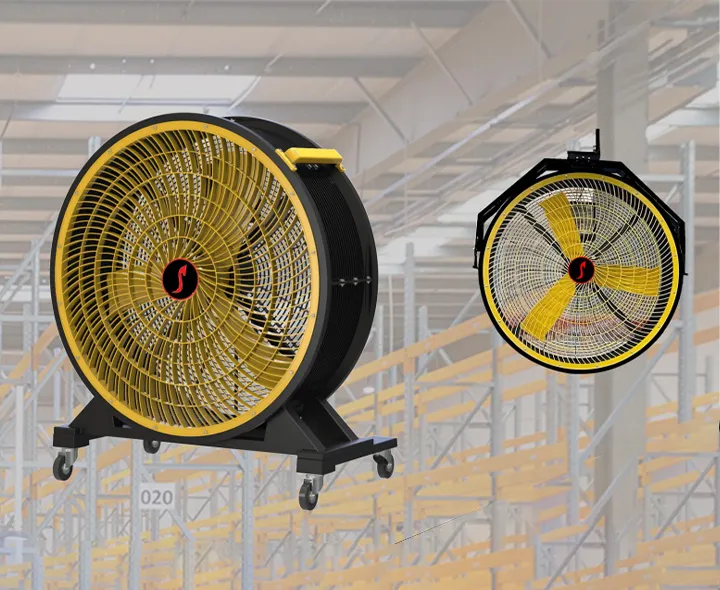
Feeling your Lager turn into an oven in summer and an icebox in winter? That hurts your team, your products, and your energy bills. Smart warehouse temperature control turns chaos into calm, cuts waste, and creates a safer, more productive space.
Gut warehouse temperature control means keeping the warehouse environment within a safe, stable temperature range for your people and your products. It uses fans, HLK-Systeme, insulation, and temperature monitoring systems reduzieren temperature fluctuations, protect goods, and lower Energieverbrauch while keeping operations smooth and reliable.
As an HVLS fans manufacturing plant, we work every day with factories, commercial buildings, sports centers, gyms, schools, warehouses, and manufacturing facilities that struggle with hot and cold spots, high Luftfeuchtigkeit, and rising energy bills. In this guide, I’ll walk you through how to design an optimal temperature control strategy and how large HVLS fans fit into a modern, temperature-controlled warehouse.
What is warehouse temperature control and why does it matter?
At its core, warehouse temperature control means keeping the temperature inside the building within a desired temperature range that is safe for workers and suitable for product storage. It’s not only about comfort; it is about accurate product control, safety, and cost.
Most warehouse operations fall into four different temperature ranges:
| Temperature Band |
Typical °F (°C) |
Example Use Cases |
| Ambient |
59–86°F (15–30°C) |
General goods, packaging, dry items |
| Cool |
50–59°F (10–15°C) |
Some food ingredients, beverages |
| Refrigerated |
32–50°F (0–10°C) |
Dairy, fresh produce, pharma |
| Frozen / Freezer |
Below 32°F (0°C) |
Frozen meat, ice cream, vaccines |
Wenn Ihr warehouse storage is too warm, perishable or temperature-sensitive products can spoil. If it’s too cold, workers slow down, equipment strains, and some goods crack or fail. When your warehouse to ensure safe goods also pays too much for power, your margins shrink.
For us as an HVLS fan manufacturer, our goal is simple: help you maintain temperature across your warehouse space with even airflow so your products are stored in safer, more optimal storage conditions at lower cost.
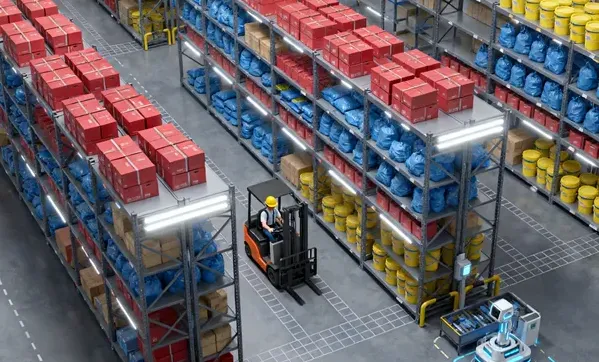
What is warehouse temperature control
What is an ambient warehouse and when is it enough?
Ein ambient warehouse is a building where goods are stored at room temperature, usually between about 59–86°F (15–30°C). This kind of ambient storage is common for toys, electronics, paper, clothing, and other non-perishable goods that do not need cooling or heating.
In einem ambient warehouse, you may still use simple Heizungs-/Lüftungs-/Klimaanlagen or fans to keep a consistent temperature and control basic humidity levels, but you do not run full cold storage equipment. For many dry goods, keeping the warehouse temperature in that comfortable band is enough to prevent damage like warping, mold, or packaging failure.
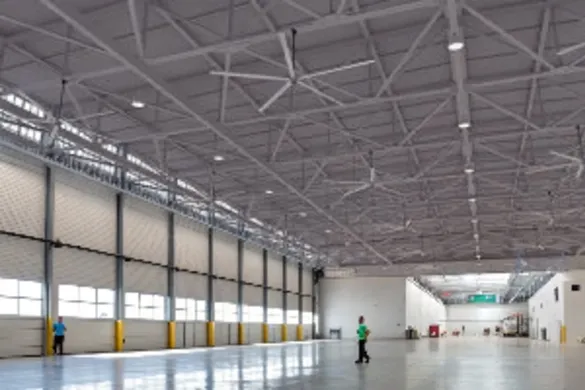
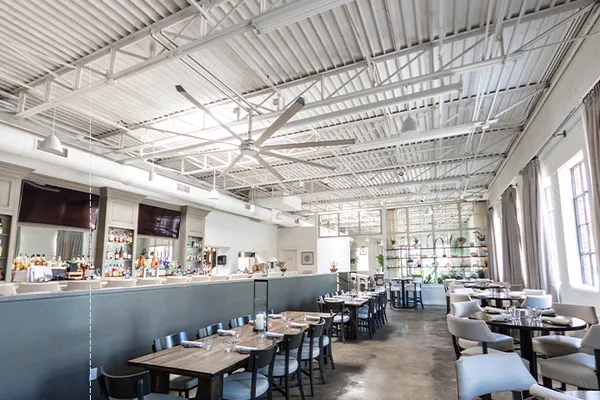
This is where HVLS fans shine. By moving a huge volume of air slowly, our fans spread the air throughout the warehouse, reduce hot and cold zones, and support the control system behind your basic HVAC. That means better warehouse environment comfort, fewer changes in temperature, and real Kosteneinsparungen without building a full temperature control warehouse oder cold storage facilities.
What is a temperature-controlled warehouse and who really needs one?
A temperature-controlled warehouse goes a step beyond ambient. Here, the warehouse at a controlled temperature is actively heated or cooled to a specific temperature range using hvac and refrigeration systems, insulated doors, and more advanced Klimatisierung.
Diese controlled environments are critical when you deal with:
- Food and beverages that must stay in a strict temperature range
- Pharmaceuticals that need cold chain safety
- Chemicals or raw materials with tight temperature and humidity levels
- High-value electronics that suffer from temperature excursions
In einem climate-controlled warehouse, we often see temperature-controlled storage zones with different temperature bands in one building. Some goods are stored at room temperature, others in cool or frozen zones. Smart storage systems Und pallet racking storage help separate each area while keeping storage needs Und storage conditions clear for the warehouse manager.
As a fan manufacturer, we help design airflow for each zone so a temp-controlled warehouse can hold a reliable temperature while keeping energy use under control.
How does climate control work in a temperature control warehouse?
In einem temperature and climate controlled building, Klimatisierung is built on three pillars:
- Heating and cooling equipment – boilers, chillers, AC, and cold storage Einheiten
- Luftbewegung – HVLS fans and ductwork
- Controls and feedback – temperature sensors, Sensor networks, and a monitoring system
Temperature-controlled spaces may hold four different temperature ranges in one facility, from ambient to frozen. The temperature control system muss control the temperature closely to avoid sudden temperature fluctuations that can damage product storage or create safety risks for workers.
Our HVLS fans are designed to work with your existing HLK-Systeme, not replace them. Studies show that adding HVLS fans can cut Energieverbrauch for heating and cooling by 20–30%, depending on the building and equipment. For warehouse owners, that means real Kosteneinsparungen on top of a more stable climate.
What temperature ranges are best for warehouse storage?
There is no one ideal temperature for every Lager. Instead, you pick a desired temperature range based on what you store:
- Ambient warehouse: 59–86°F for dry, stable items
- Air-conditioned, temperature and humidity controlled: around 64–75°F for more sensitive goods
- Refrigerated or freezer warehouse: 32°F down to -22°F for deeper cold storage warehouses
Der temperature outside and your building design will affect how hard your systems must work to keep the internal temperature stable. Our role as an HVLS fan manufacturer is to help you move air so the temperature conditions stay even within the warehouse space, avoiding hot ceilings, cold floors, and pockets where materials see temperature excursions.
When we design a fan layout, we look at storage and transportation needs, product types, and conditions for storage. From there, we size the fans to support optimal temperature control across your warehouse storage areas.
How do monitoring systems, sensors, and temperature mapping work?
Gut temperature monitoring starts with temperature sensors and humidity probes strategically placed throughout the warehouse. They track temperature Und humidity control in key locations: high shelves, loading docks, aisles, and inside special rooms.
A temperature mapping study (also called temperature mapping) checks how the temperature inside changes over time and within the warehouse. For pharmaceuticals and food, this is often required to prove your Lager can stay in a controlled temperature band under real conditions.
Modern temperature monitoring systems give remote monitoring, alarms, and reports. When the monitoring temperature shows a drift, your monitoring system can alert the warehouse management team so they can adjust fans, vents, or the control system before any temperature excursions damage goods.
Why are HVLS fans essential for optimal temperature control in warehouses?
Im Großen Lager buildings, air naturally stratifies: warm air rises, cool air sinks. Without big fans, you get hot, stuffy air near the roof and cold spots on the floor. Workers feel uncomfortable, and your Heizungs-/Lüftungs-/Klimaanlagen equipment works harder to push heat or cooling into the warehouse environment.
High Volume, Low Speed (HVLS) fans create a slow, gentle breeze that mixes air throughout the warehouse. This helps:
- Spread conditioned air from hvac and refrigeration systems
- Keep a more consistent temperature across aisles and racks
- Reduce stress on AC in summer and heating in winter
Industry data shows that HVLS fans can cut HVAC Energieverbrauch by up to 20–30% while improving comfort. For a Lager where energy is about 15% of the operating budget, this is a big win.
As an HVLS fans manufacturing plant, we design fans for warehouse solutions that match your ceiling height, storage space, Und warehouse operations, so you can get optimal temperature control with fewer units and lower running costs.
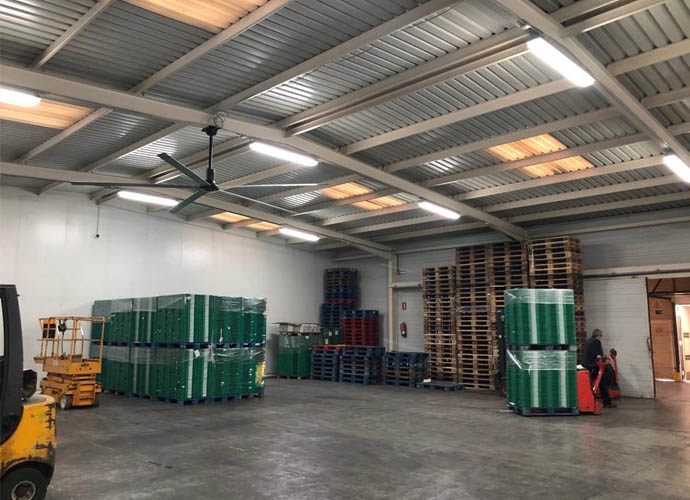
hvls fan in warehouse
How do humidity, airflow, and controlled environments work together?
Während temperature and humidity are different, they always work together. In many Lager use cases, especially food and pharma, the wrong humidity levels can damage packaging, labels, or the product itself.
By moving air evenly, HVLS fans help prevent moisture pockets and condensation on racks and floors. In some temperature-controlled areas, this supports humidity control and keeps conditions for storage safer. For very tight temperature and humidity levels, you still need dehumidifiers, but airflow makes them work better.
In einem climate-controlled warehouse, good airflow also helps:
- Keep workers safer in both hot and cold zones
- Reduce frost build-up near doors in cold storage areas
- Smooth out warehouse environment comfort so staff stay productive and alert
When we plan fans for a controlled warehouse, we discuss your storage solution, goods, and long-term storage needs so the airflow supports your temperature-controlled warehousing needs, not just comfort.
How does temperature control connect to the supply chain and cold chain?
If you ship perishable goods, your temperature-controlled Lager is part of a larger supply chain and often part of the cold chain. Wenn die Lager fails to keep a reliable temperature, the damage will move downstream: rejected pallets, returns, or even safety recalls.
For global brands, a temperature-controlled warehouse is not only a building. It is a promise to customers. That promise depends on:
- Keeping the warehouse at a controlled temperature
- Preventing temperature excursions during storage and transportation
- Verwenden temperature monitoring with alerts and remote monitoring
- Designing warehouse services that support quick inbound and outbound flows
When we install HVLS fans in these spaces, we know we are supporting warehouse solutions that keep the supply chain strong and protect brand reputation. That is why we pay so much attention to temperature conditions, airflow paths, and the way products are stored on racks or in rooms.
How should you design storage systems and warehouse space around temperature?
Gut warehouse management means planning storage systems Und warehouse space with temperature in mind, not as an afterthought. For example:
- Ort pallet racking storage away from doors that open to outdoor heat or cold
- Keep very sensitive zones away from busy docks
- Use aisles and fan locations so air can move easily within the warehouse
For many clients, we map where products are stored, then design fan layouts that keep each area in a more precise temperature band. In some projects, we separate zones by different temperature bands and use fans to gently move air without mixing hot and cold zones too much.
By pairing good layout with HVLS fans and hvac systems, you can build controlled environments that support optimal storage, safer product storage, and smoother warehouse operations.
Case study: how HVLS fans cut costs and improved a temperature-controlled warehouse
Let’s look at a simple example based on real projects we’ve completed as an HVLS fan manufacturer.
A 10,000 m² temperature-controlled Lager handled beverages and snacks. Their warehouse temperature in the summer showed strong temperature fluctuations: 25°C (77°F) near the floor and over 32°C (90°F) near the roof. Workers complained about heat. Cooling costs were high.
We installed six large HVLS fans as part of a temperature control system upgrade:
- Before: high AC load, uneven temperature inside
- Nach: more consistent temperature, improved comfort, and about 25% reduction in HVAC Energieverbrauch (based on meter data over a season, in line with industry findings).
The customer reported:
“With the new fans, our staff feels cooler, and our chillers cycle less. We finally have a Lager climate that supports both people and products.”
This is the kind of result we aim for every time we help design airflow for a temperature-controlled warehouse.
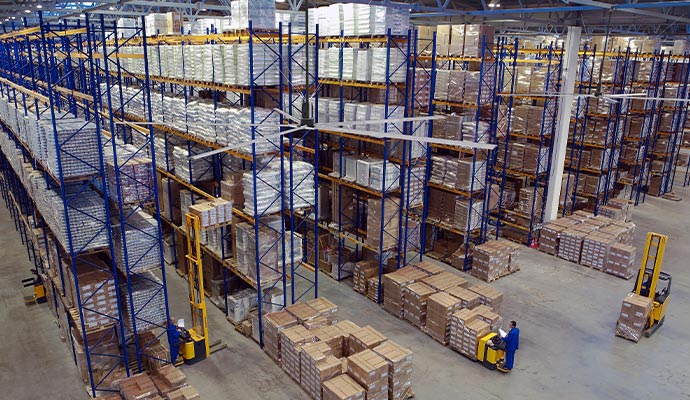
how HVLS fans cut costs and improved a temperature-controlled warehouse
How to choose the right temperature-controlled warehouse services and partners
If you outsource to a temperature control warehouse provider or run warehouse services for others, choosing the right partner and equipment is vital. Look for:
- Clear definitions of temperature range Und temperature conditions for every zone
- Documented temperature mapping study Und temperature monitoring systems
- Proven storage systems Und storage solution designs that match your goods
- A plan for monitoring temperature and alarms, including remote monitoring
Ask directly how they maintain temperature during peak seasons and how they handle temperature excursions or power failures. Also, ask what equipment they use to move air—this is where HVLS fans often make a big difference in a climate-controlled warehouse.
As a manufacturer, we often support 3PLs and logistics providers who want to upgrade their warehouse solutions to win more temperature-controlled storage contracts with better reliability and lower running costs.
How can an HVLS fan manufacturer help plan your warehouse temperature strategy?
Designing warehouse temperature control is not just buying a fan or a chiller. It is a system project. As an HVLS fans manufacturing plant, we usually follow this simple path with clients:
- Understand your storage needs
- Products, storage conditions, Und warehouse storage layout
- Whether you need ambient, cool, or frozen zones
- Review your current systems
- Existing hvac systems, insulation, and monitoring system
- Current warehouse management practices
- Plan airflow and controls
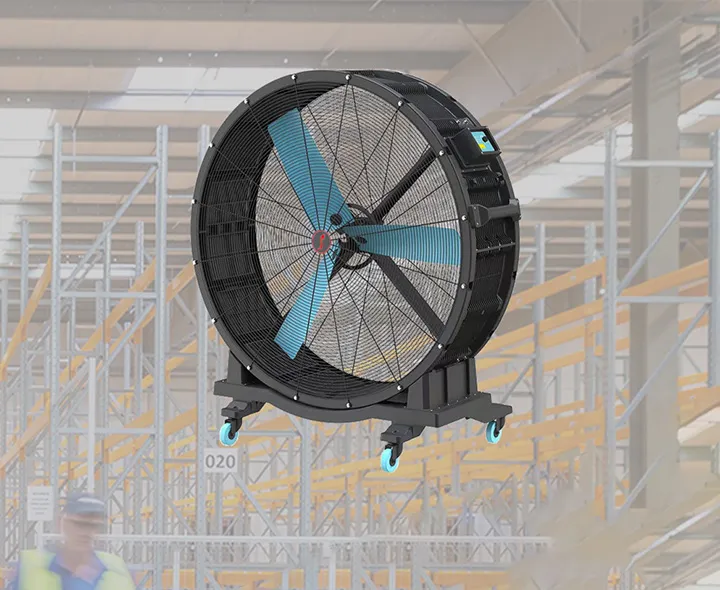
- Fan models, locations, and speeds
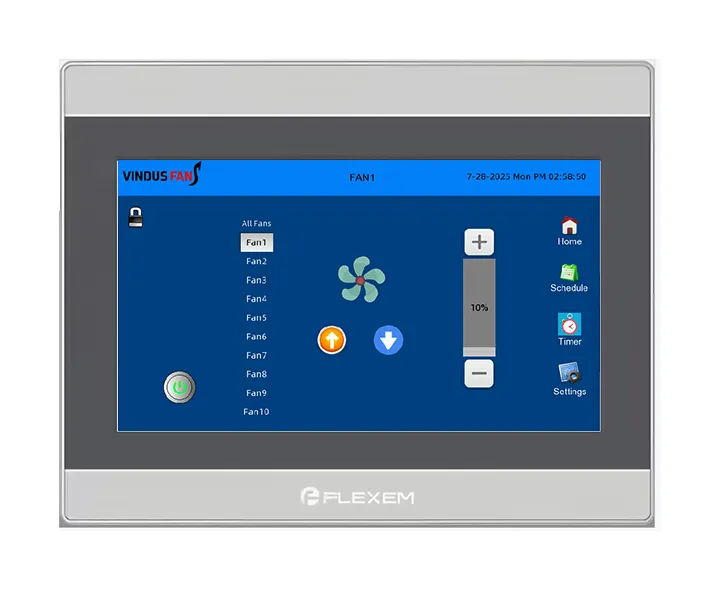
- Integration with your temperature monitoring Und control system
We then propose a package that helps you maintain temperature more easily, reduce Energieverbrauch, and support accurate product control across your Lager. Our aim is to keep your warehouse environment safe and efficient so you can focus on business, not fighting the heat or cold every day.
FAQs about warehouse temperature control
What is the best temperature for an ambient warehouse?
For most goods in an ambient warehouse, a band between about 59–77°F (15–25°C) works well. It keeps people comfortable and protects common products like clothing, packaging, and electronics without heavy cooling.
Do I always need a temperature-controlled warehouse for perishable goods?
Not always. Some perishable products only need cool storage, while others require deep cold storage oder freezer warehouse conditions. It depends on product rules and shelf life. A good provider will define specific temperature bands and match them to your goods.
How do HVLS fans work with HVAC in a warehouse?
HVLS fans do not replace your hvac and refrigeration systems. They support them by mixing air, reducing hot and cold spots, and helping you control the temperature more evenly. This can cut HVAC Energieverbrauch and extend equipment life.
How can I monitor temperature and humidity in my warehouse?
You can use temperature sensors and humidity probes connected to temperature monitoring systems. These systems track temperature Und temperature and humidity trends, send alarms, and support remote monitoring so you can act quickly if conditions drift.
What should I ask a warehouse services provider about temperature control?
Ask about their temperature range, how they handle temperature and humidity levels, what monitoring system they use, and how they respond to changes in temperature or power issues. Also, ask if they have done a temperature mapping study and how they use airflow equipment like HVLS fans.
Key takeaways: building better warehouse temperature control
- Understand your type of warehouse
Decide if you need ambient warehouse, temperature-controlled warehouse, or full cold storage facilities.
- Define clear temperature ranges
Set optimal temperature bands and temperature conditions for each product group and zone.
- Use sensors and monitoring
Installieren temperature sensors and a strong monitoring system to keep a continuous temperature record and catch temperature excursions early.
- Design airflow, not just HVAC
Combine hvac systems with HVLS fans for better temperature and humidity balance and optimal temperature control.
- Plan storage systems around climate
Align storage systems, storage space, Und warehouse operations with your temperature-controlled warehousing needs.
- Work with experienced partners
Wählen warehouse services and equipment providers who understand warehouse management, warehouse solutions, Und storage needs In temperature and climate controlled Umgebungen.
If you’re ready to upgrade your Lager comfort, cut energy bills, and build a safer, more controlled temperature environment, reach out to our HVLS fan team. Together we can design a smart, efficient temperature-controlled Lager that supports your people, your products, and your profits.