Hot spots, weak air movement, and rising energy bills are common in big buildings. When normal fans cannot cover the floor evenly, comfort drops and costs climb. The right HVLS fan blade design solves that by moving more air gently, farther, and more efficiently.
Ein HVLS-Ventilator uses large, carefully engineered Lüfterflügel to move a wide column of air at niedrige Geschwindigkeit. That is the core difference between HVLS and smaller, high-speed fans: HVLS systems deliver broad, even Luftstrom, better comfort, and support lower HVAC demand in large buildings. Authoritative industry guidance also notes that large-diameter ceiling fans are used for thermal comfort and destratification in high-bay spaces.
As a manufacturer working with buyers in factories, warehouses, schools, sports venues, and other demanding sites, I have seen one truth again and again: buyers do not only want a big fan. They want reliable comfort, measurable performance, and a design that makes business sense over time. That is why Klingenentwurf deserves close attention.
Artikelübersicht
- What is an HVLS-Ventilator, and why is blade design so important?
- How does hvls fan blade design differ from normal fans?
- Why do larger Lüfterflügel create better Luftstrom in big buildings?
- What blade features improve Lüfterleistung Und Energieeffizienz?
- How does an HVLS-Ventilator Unterstützung HLK-Systeme In große Räume?
- What is the right Lüftergröße for a warehouse, gym, or school?
- How do ceiling height and layout affect hvls lüfter installation?
- Which materials and blade construction choices matter most?
- Where do high-performance hvls fans work best in industrial and commercial spaces?
- What should buyers compare when choosing the best hvls solution?
- Frequently asked questions
What Is an HVLS Fan, and Why Is Blade Design So Important?
Ein HVLS-Ventilator ist ein hohe Lautstärke niedrige Geschwindigkeit ceiling-mounted air mover designed for large buildings. Unlike a small Deckenventilator or wall fan, it uses a much larger diameter to move a broad sheet of air. In simple terms, the fan is not trying to blast air. It is trying to move a large Luftvolumen gently and evenly across a wide floor area.
This is where the Klinge becomes the star of the system. The fan blades plays a crucial part in how the air spreads, how quietly the unit runs, and how much power it needs. Good fan blade design helps the fan create stable downward air, broad floor coverage, and less turbulence. Poor design can waste energy, create dead zones, and reduce comfort.
In practical projects, I explain it this way: the motor matters, but the hvls fan blade tells the air what to do. If the geometry is right, the fan can große Luftmengen bewegen while staying smooth and efficient. If the geometry is wrong, the fan may look large but still perform like an oversized propeller.
A useful way to think about it: in large spaces, comfort comes from controlled air distribution, not just motor power.
How Does HVLS Fan Blade Design Differ From Normal Fans?
The biggest difference between hvls systems and normal fans is not only size. It is the way the blades are shaped to manage the air. Normal fans often rely on short, steep blades and faster rotation to throw air in a narrower pattern. An HVLS-Ventilator uses longer blades, wider sweep, and slower rotation to create a more even air blanket.
That means Ventilatoren arbeiten differently. Smaller fans and Hochgeschwindigkeitslüfter often produce strong local air velocity but limited coverage. In contrast, HVLS-Ventilatoren operate at lower rotational speeds and use blade profile, angle, and diameter to generate long-reaching, floor-level Luftbewegung. This matters in buildings where one Einzellüfter may cover a large working area better than many small units.
Here is a quick comparison:
| Besonderheit |
HVLS-Lüfter |
Normale Ventilatoren |
| Typical purpose |
Broad comfort and destratification |
Spot cooling |
| Geschwindigkeit |
Niedrige Geschwindigkeit Drehung |
Faster rotation |
| Abdeckung |
Wide floor coverage |
Localized zones |
| Air pattern |
Smooth, downward, outward |
Narrow, direct stream |
| Best fit |
Lagerhäuser, Turnhallen, Fabriken |
Small rooms or specific stations |
| Energy strategy |
Fewer large units, lower overall resistance |
Often needs mehrere Lüfter |
AMCA guidance explains that large-diameter ceiling fans are used for both comfort and destratification, while modern performance ratings focus on airflow and power in a more standardized way. It also warns buyers to check how performance is rated, because not all published numbers are directly comparable.
Why Do Larger Fan Blades Create Better Airflow in Big Buildings?
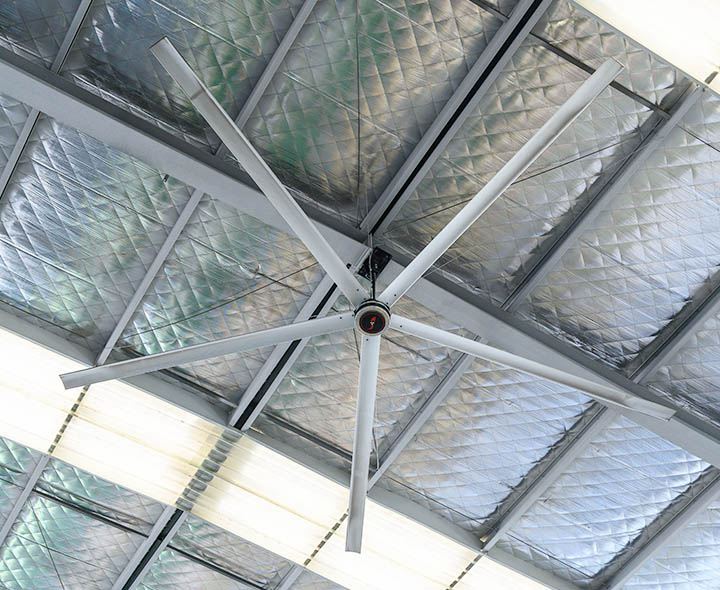
In einem HVLS-Ventilator, the larger diameter is not about appearance. It is about leverage and coverage. The blade span gives the fan the ability to move a large air mass across a wide footprint. That is why hvls fans move air differently from smaller fans. They push air down and outward, allowing the flow to travel across the floor, then rise back upward along walls and across open zones.
This is why hvls fans create strong comfort in a Lager, sports hall, or assembly area without feeling harsh. A large, well-shaped blade can move high Luftmengen bei air at low speeds, which feels more natural for people below. In real sites, that often means fewer complaints about drafts while still improving thermal comfort.
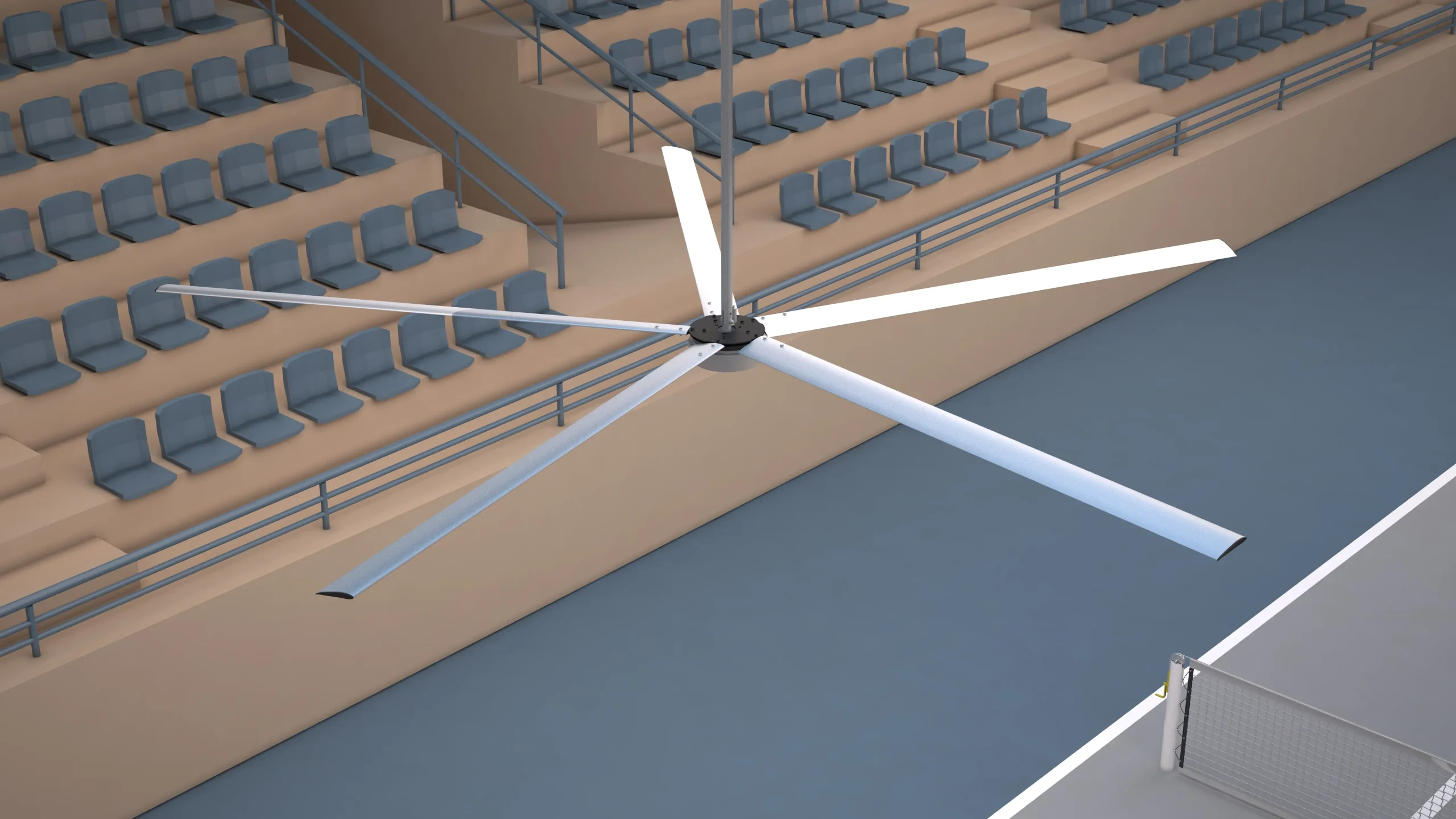
Many products on the market range from 7 Zu 24 Fuß im Durchmesser. A fan with 24 Fuß of diameter can cover a major open zone if the building height and layout support it. The right Lüfterdurchmesser can help the system Luft zirkulieren farther and maintain konstanter Luftstrom across workstations and walkways.
What Blade Features Improve Fan Performance and Energy Efficiency?
Not every large fan performs well. Blade design plays a direct role in efficiency, noise, and coverage. A good Klingenentwurf balances pitch, width, taper, stiffness, and aerodynamic section. The goal is to move large amounts of air with less drag and less wasted motion.
Several details shape Lüfterleistung:
- Blade shapes affect how air attaches and flows off the surface.
- Blade construction affects stiffness and vibration control.
- Aerodynamic taper helps the fan maintain more balanced output across the full span.
- Proper pitch improves floor-level Luftstrom without overloading the motor.
- Good end treatment or refined geometry can reduce tip losses.
A strong blade design reduces turbulence and helps the fan move air with minimal wasted energy. In other words, blade design reduces power loss while keeping broad coverage. This matters for Energieeffizienz and long-hour operation in plants and public facilities.
Here is a simple buyer view:
| Blade Design Factor |
Warum es wichtig ist |
Buyer Benefit |
| Aerodynamic profile |
Smoother air separation |
Besser Luftstrom |
| Balanced pitch |
Stable air delivery |
Better comfort |
| Strong material |
Less flex, longer life |
Lower maintenance |
| Reduced drag design |
Lower motor load |
Untere Energieverbrauch |
| Optimized span |
Wider air coverage |
Fewer units needed |
For engineers and buyers, standardized testing matters too. AMCA materials note that Luftstrom should be verified under recognized standards, and that older or inconsistent rating practices may overstate performance.
How Does an HVLS Fan Support HVAC Systems in Large Spaces?
In tall buildings, warm air often rises and stays near the roof. That creates stratification. People below feel too warm in summer, too cold in winter, and the Heizungs-/Lüftungs-/Klimaanlagen system works harder than needed. An HVLS-Ventilator helps mix those layers and return useful air back into the occupied zone.
This is one reason Hilfe für HVLS-Fans reduce operating pressure on hvac systems. In cooling mode, better Luftzirkulation improves comfort so thermostats may be set more efficiently. In heating mode, destratification reduces excess heat trapped near the ceiling. ASHRAE has highlighted that large fans can lower average space temperature at the ceiling level by minimizing excess heat buildup, helping reduce HVAC use in hangars and similar high-bay facilities.
In practical terms, buyers in industrial and commercial buildings like this because it links comfort to cost. Better mixing can support Energieeinsparungen, improve floor-level conditions, and create a more stable environment for work, storage, and movement. This is especially useful in a Lager, factory, logistics hub, or gym with hohe Decken.
Typical comfort and system benefits
- Better perceived cooling from gentle Luftbewegung
- Better winter destratification in tall spaces
- Lower strain on heating and cooling distribution
- Improved comfort in open zones where ducting is limited
- Possible long-term Kosteneinsparungen when fans and HVAC are planned together
AMCA and DOE materials both discuss thermal mixing and destratification as important use cases, and older DOE guidance has cited significant heating savings in some destratified spaces, although actual results depend on building type and operation.
What Is the Right Fan Size for a Warehouse, Gym, or School?
Auswählen Lüftergröße is not guesswork. The right answer depends on floor area, ceiling height, occupancy, process heat, rack layout, and how much Luftzirkulation the site needs. A small packing area may need a different solution than a basketball court, metal shop, or food warehouse.
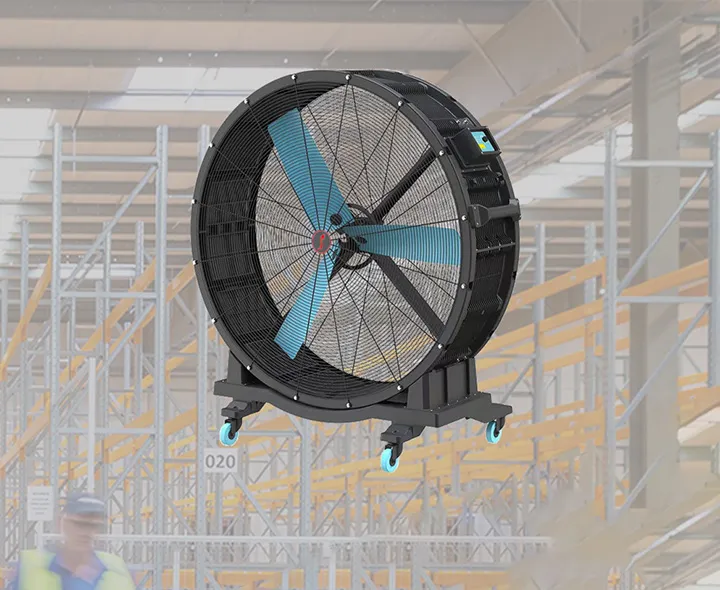
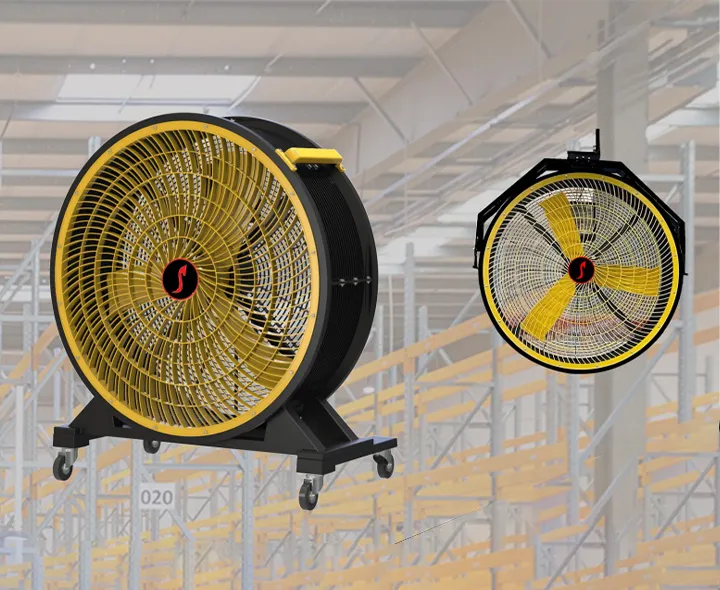
As a rule, hvls fans are designed for broad, open coverage. That is why they work so well in große Räume. In many projects, buyers compare one large fan against several kleinere Fans oder Trommelfans. The right option depends on obstructions and use pattern, but many open buildings benefit when one or a few well-placed fans replace a patchwork of smaller units.
Simple sizing view
| Building Type |
Common Need |
Fan Approach |
| Lager |
Aisle comfort and destratification |
Larger diameter, fewer units |
| Fitnessstudio |
Occupant comfort, lower noise feel |
Even coverage over activity zones |
| School hall |
Quiet comfort, broad coverage |
Moderate-to-large diameter |
| Manufacturing facility |
Worker comfort and heat relief |
Strategic zoning by process |
| Large commercial area |
Guest comfort and air mixing |
Match fan to ceiling height |
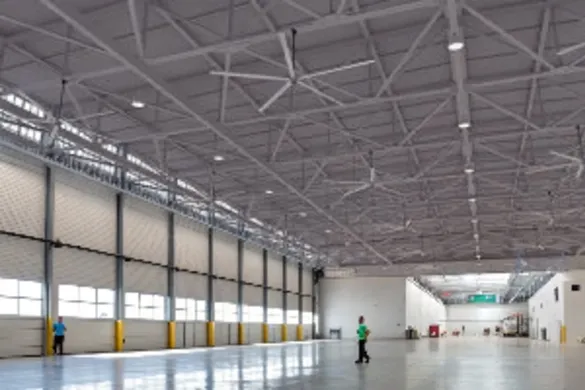
When I guide buyers, I focus on application first. Makes hvls fans ideal for big buildings is not just their size. It is the way the system matches the site. The wrong diameter can underperform. The right one can transform the whole room.
How Do Ceiling Height and Layout Affect HVLS Fan Installation?
Gut hvls lüfter installation begins with the building, not the catalog. Ceiling height, structure type, roof slope, sprinkler layout, lighting, crane paths, and racking all affect final placement. Even a powerful product can disappoint if it is mounted in the wrong location.
Ein hvls lüfter installation should support the fan’s natural air pattern. The fan needs room to throw air downward and outward. It also needs safe clearance from beams, ducts, and fire systems. AMCA guidance discussing environmental and code issues notes specific clearance and interlock considerations where sprinklers apply, and references shutdown requirements upon waterflow signals in certain applications.
This is also where application knowledge matters. In Industrie- und Gewerbeflächen, airflow rarely moves through an empty box. There are shelves, machines, partitions, scoreboards, and service routes. That is why a professional layout study is just as important as the fan itself.
Installation points buyers should check
- Clear mounting structure
- Ceiling height and open throw zone
- Lighting and sprinkler coordination
- Rack and machinery interference
- Electrical supply and controller location
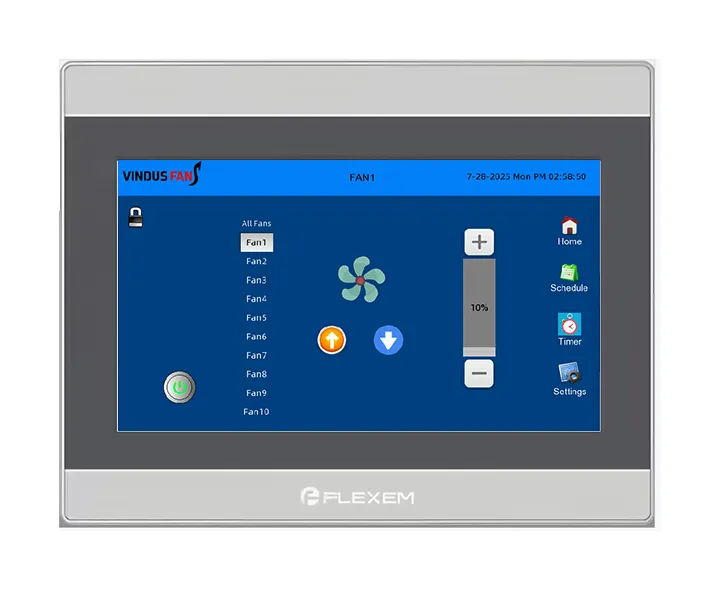
- Need for variable Geschwindigkeit Kontrolle
Which Materials and Blade Construction Choices Matter Most?
Buyers often ask whether material alone decides quality. My answer is no. Material matters, but design integration matters more. The best systems combine strong blade material, secure hub connection, proper balance, and refined aerodynamic shape.
For long-term use, blades are designed to resist fatigue, sagging, and vibration. Good blade construction keeps the profile stable over years of use. In demanding climates, corrosion resistance and finish quality are also important, especially in high humidity environments or sites with dust, washdown, or chemical exposure.
A well-made hvls fan blade should support optimale Leistung with minimal deformation. That matters because even slight shape changes can affect pitch, noise, and output. Buyers who run fans for long hours want durability, safe operation, and predictable performance.
What to look for
- Structural stiffness across the full span
- Reliable hub and mounting hardware
- Corrosion-resistant finish
- Quality balancing
- Clean manufacturing tolerance
- Support for service and spare parts
Where Do High-Performance HVLS Fans Work Best?
High-performance hvls fans are built for places where comfort and efficiency have direct business value. That includes factories, Gewerbeflächen, sports centers, gyms, schools, logistics buildings, and Produktionsanlagen. In these sites, comfort is not a luxury. It affects concentration, safety, worker satisfaction, and sometimes even process stability.
I often divide applications into two groups. First, there are people-focused environments such as gyms, schools, and event halls. Second, there are process-focused environments such as a Lager, assembly workshop, or storage center. In both cases, the goal is to verbessern die Luftzirkulation and maintain broad comfort without needing a forest of small units.
Dies ist der Ort, an dem performance of hvls fans becomes easy to see. They can help cool perceived conditions in summer, improve heating balance in winter, and reduce the feeling of stale air in open buildings. When buyers say they want a more comfortable and efficient building, they are really asking for better airflow in industrial and commercial Operationen.
Common applications
- Factories with open production lines
- Warehouses with tall bays
- Sports centers and gyms
- Schools and multi-use halls
- Large commercial showrooms
- Distribution and logistics buildings
What Should Buyers Compare When Choosing the Best HVLS Solution?
Der best hvls option is not always the biggest unit or the cheapest quote. Buyers should compare real performance, application fit, controls, safety features, and supplier support. A fan is part of a building strategy, not just a box item.
Start with tested data. Look for transparent ratings for Luftstrom, input power, and control range. Then review how the supplier supports layout, mounting, and service. A strong manufacturer does more than sell hardware. It helps you build the right Lüftersystem for your site.
As a manufacturing partner, I believe this is where supplier value shows. The company that makes hvls fans should understand industrial use, long operating cycles, and installation reality. That matters in Industrie und Gewerbe projects where uptime, reliability, and support are critical.
Buyer checklist
- Verified Luftstrom and power data
- Suitable Lüftergröße and diameter
- Blade quality and aerodynamic design
- Smart controller and variable Geschwindigkeit
- Clear installation guidance
- Safety and code compatibility
- Service response and spare parts
- Long-term operating value, not just purchase price
A Practical Case Example: One Large Fan vs Multiple Smaller Fans
A mid-sized production site came to us with a common problem. Workers near the doors felt drafts. Workers deeper inside felt heat build-up. The building already had several wall and pedestal units, but comfort was uneven and the floor still felt stale.
Instead of adding more traditionelle Fans, the site switched to a better-planned overhead solution. The result was broader Luftzirkulation, less clutter, and more stable comfort across the work area. This kind of shift works because hvls fans move air across the whole zone rather than forcing short bursts of air into isolated spots.
That does not mean small fans never help. In narrow process cells, they can still have a role. But for open floors, a well-designed HVLS-Ventilator often does more with less. The real gain is not only comfort. It is cleaner layout, better Energieverbrauch planning, and easier building-wide control.
Häufig gestellte Fragen
How is an hvls fan different from a normal ceiling fan?
Ein HVLS-Ventilator is much larger and rotates more slowly. It is built to move a broad mass of air across open floors, while a normal Deckenventilator usually serves a smaller room with more local air movement.
Why does blade design matter so much in hvls fans?
Because the Klingenentwurf determines how efficiently the fan can move air, how evenly it spreads the flow, and how much power it uses. Better geometry usually means better comfort and lower wasted energy.
Do hvls fans work in a warehouse with high ceilings?
Yes. In fact, hvls fans are designed for tall and open buildings. They are especially useful in a Lager because they help destratify warm air and improve floor-level comfort.
Can hvls fans reduce HVAC costs?
They can support lower HVAC demand by improving air mixing and thermal comfort. Actual savings depend on building use, climate, and control strategy, but destratification and better perceived cooling are well-established benefits.
Do hvls fans typically require minimal maintenance?
Ja. Hvls fans typically require minimal routine service when they are properly installed and selected for the environment. In plain words, fans typically require minimal maintenance compared with many smaller, distributed fan setups, though inspections and standard checks are still important.
What fan diameter should I choose?
That depends on ceiling height, floor area, obstructions, and how much Luftstrom you need. Many products Fans kommen in sizes that can serve medium to very large buildings, so selection should be based on layout, not guesswork.
Are hvls fans safe near sprinklers?
They can be, but the layout must follow applicable safety guidance and clearance rules. In some installations, interlock and shutdown requirements apply. That is why code-aware placement is essential.
Final Thoughts
A smart hvls fan blade design is not a cosmetic detail. It is the reason the fan can zirkulieren air smoothly, reduce hot and cold zones, and support more efficient buildings. The right fan helps people feel better, work better, and stay more comfortable in spaces that smaller fans struggle to serve.
For factories, sports centers, schools, warehouses, and other open buildings, the best choice is often the system that combines tested performance, durable blade construction, and application-based support. That is how high-volume low-speed fans deliver real value in modern buildings.
Key Things to Remember
- Ein HVLS-Ventilator works by moving a wide mass of air at niedrige Geschwindigkeit, not by blasting narrow streams.
- Gut fan blade design is central to comfort, coverage, and efficiency.
- The main difference between hvls Und normal fans is how air is distributed across large floor areas.
- Larger diameter fans can move large amounts of air more evenly in open buildings.
- Besser Luftstrom can improve comfort and support lower strain on Heizungs-/Lüftungs-/Klimaanlagen Und hvac systems.
- Das Recht hvls lüfter installation depends on ceiling height, layout, obstructions, and safety coordination.
- Buyers should compare real performance data, not just size or marketing claims.
- In vielen Industrie- und Gewerbeflächen, one well-chosen HVLS solution can outperform several smaller units.
- For long-term value, focus on blade quality, controls, support, and total operating cost.
- Hvls fans today are not just air movers. They are part of a building comfort and efficiency strategy.