Hot spots, stale air, and high bills slow teams down. In big rooms, poor ventilation feels worse as seasons swing. A well-planned hvls fan setup steadies comfort, cuts waste, and keeps people focused.
An industrial ventilation system using a hvls fan mixes layers gently over large spaces, improving air movement, air quality, and temperature control while easing the load on your hvac system. You get steadier comfort, cleaner air, and real energy savings without major rebuilds.
What is an HVLS fan in an industrial context—and why does size matter?
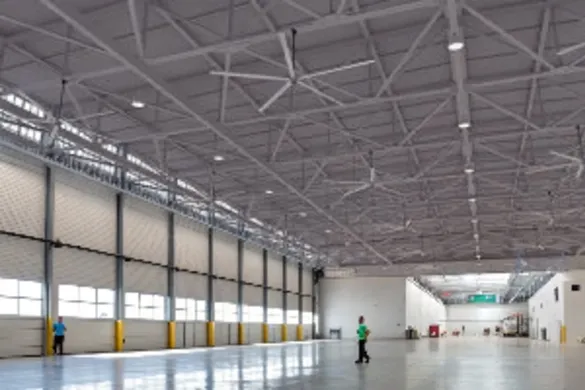
An hvls fan (high volume, low speed) is a wide-diameter ceiling unit that pushes a slow, broad column of air from the ceiling to the floor level, then out and up the walls in a loop. That pattern creates smooth air circulation across large facilities and industrial settings, not the narrow jet you get from small spinners. The high volume plume is comfortable, quiet, and predictable.
Because one hvls fan covers a huge footprint, you can often replace clusters of small ceiling fans with fewer units. That means less wiring, fewer controls, and simpler upkeep. In many layouts—factory lines, a warehouse, a sports court—the right diameter reduces dead zones and brings a more consistent temperature to every shift.
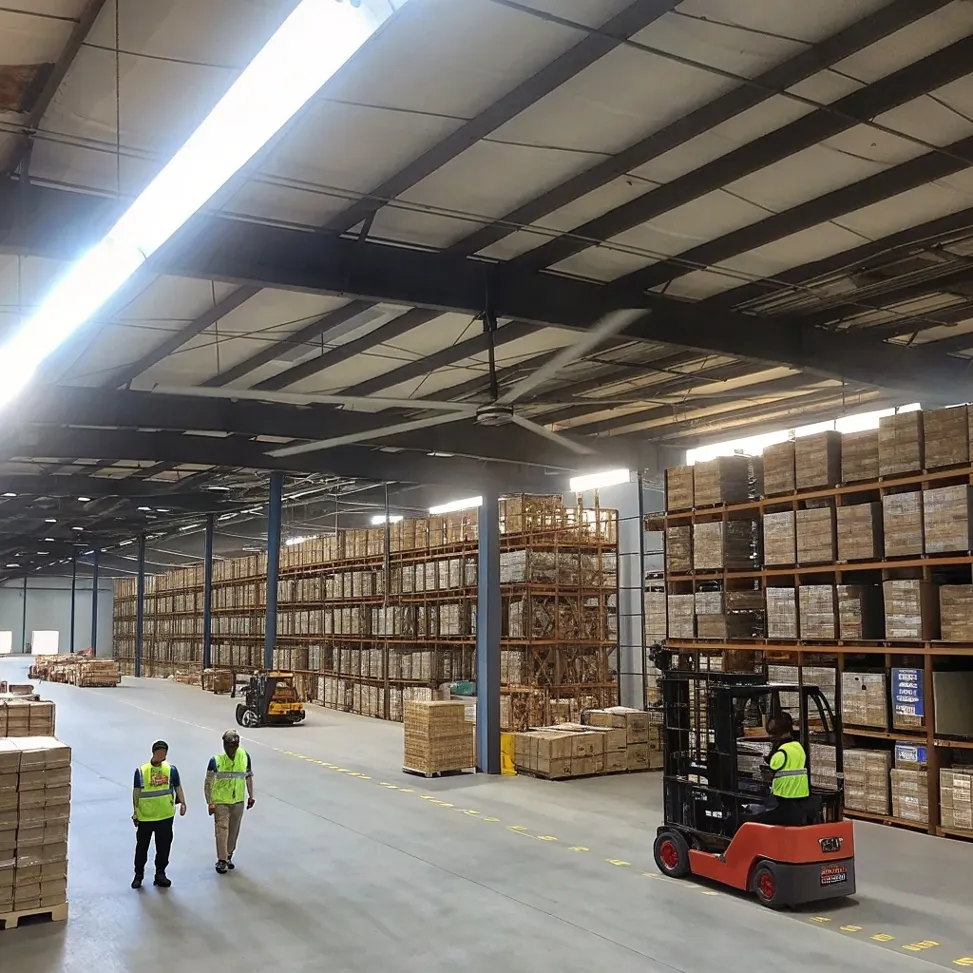
HVLS fan in an industrial context
How do HVLS fans work to improve air movement and airflow?
Hvls fans work by moving a broad, slow stream that spreads laterally once it meets the floor. The returning loop keeps air distribution even from corner to corner. In practice, fans move air gently enough to avoid papers flying while still replacing stagnant air with fresh flow. That’s how fans move a high volume without drafty blasts.
When layers mix, the space feels cooler in summer and more even in winter. People notice the cooling effect on skin right away—lower perceived temperature means fewer complaints and less fatigue. That stability raises morale and supports productivity during long shifts.
Temperature control, energy savings, and the role of your HVAC system
Thermal layers form fast under high ceilings. Warm layers drift up while cooler layers sink, leaving poor air pockets near mezzanines and racks. By blending warm air with cooler air, a properly sized hvls fan eases the burden on the hvac system and air conditioning during hot months, then reduces heat loss aloft in winter. Sites often see lower energy consumption and measurable energy efficiency gains.
Because compressors and burners cycle less, parts last longer and bills fall; the drop in energy costs improves payback on the initial cost. Over a year, the combined effect—destratification plus smarter control—delivers durable energy savings without sacrificing comfort.
Air quality, indoor air quality, and why mixing beats chasing symptoms
Complaints about “heavy air” usually point to mixing, not just filtration. A steady, laminar plume improves air quality by diluting heat, odors, and light fume at the source. That’s different from spot fans that only push problems around. Good mixing can improve airflow through filters and hoods because the supply to them is smoother and more predictable, strengthening indoor air quality.
With better mixing, you also reduce surface moisture and condensation risk. That helps keep floors dry around docks and chill doors. In humid seasons or regions with high humidity, even a small reduction in dampness improves traction and employee safety and comfort.
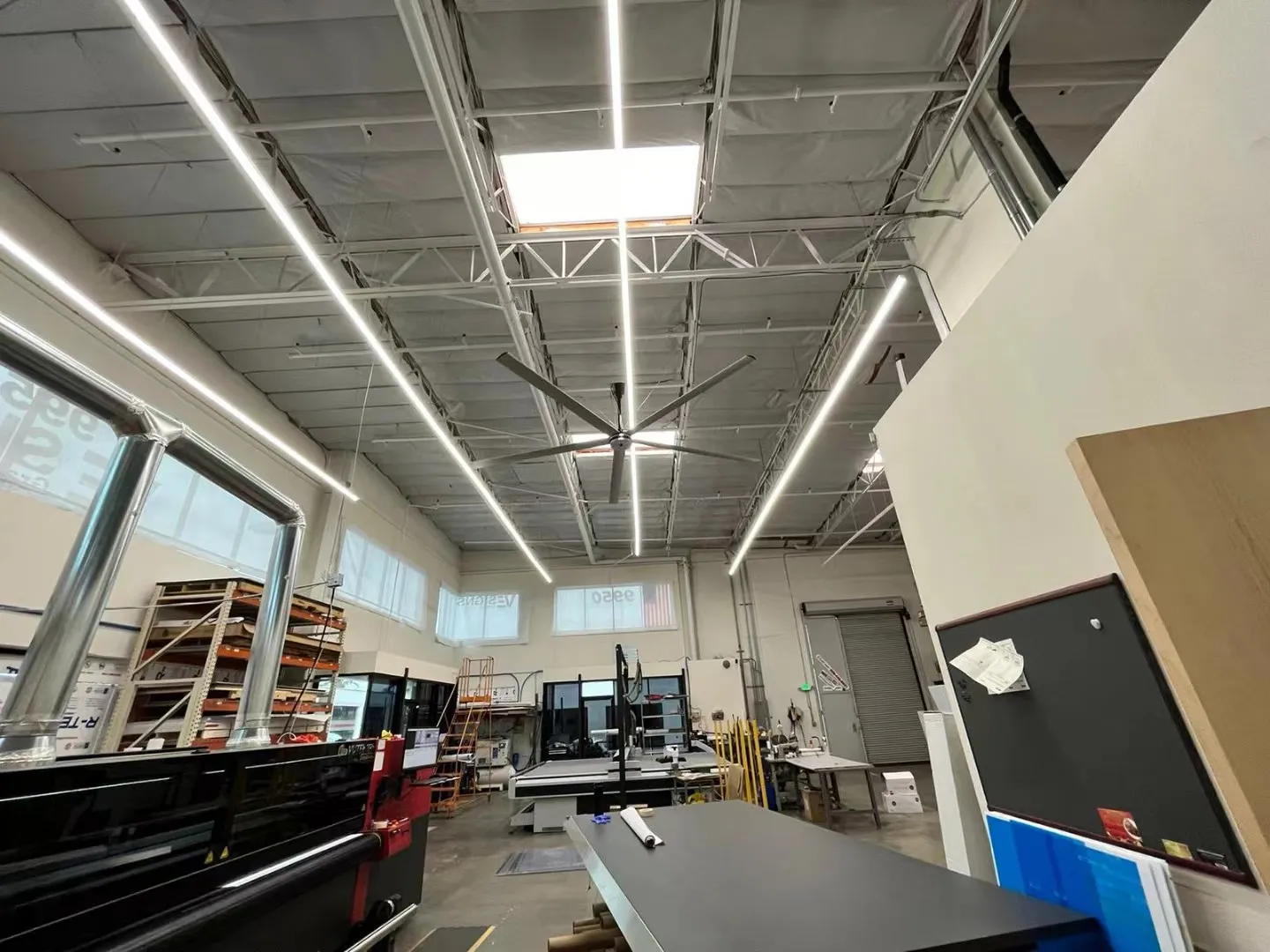
HVLS Fans in an Industrial Setting
Sizing for coverage: diameter, throw, and the volume of air effectively delivered
In open spans, larger diameters push a broader, slower plume; in tight mezzanines, smaller units thread between obstructions. A thoughtful survey maps clearance, sprinklers, and lights so the volume of air effectively reaches people and processes. Use diameter to shape reach, then tune speed to keep comfort steady.
Two practical reminders: pick the “fewest fans that cover” approach, and verify throw at the task zone, not only on drawings. That way, each fan can move the needed volume of air without over-stirring sensitive work cells.
Rule of thumb: large rotors at low speed cover more with less noise. This is the heart of high volume low speed design.
Installation and integration: where fans can be installed and how controls work
Most buildings allow fans can be installed under trusses or purlins, offset from cranes, signs, and luminaires. Coordinate with fire protection to maintain sprinkler patterns, verify sway bracing, and confirm rigging points. In retrofits, fans can also complement traditional ceiling units by mixing air in the zones small spinners miss.
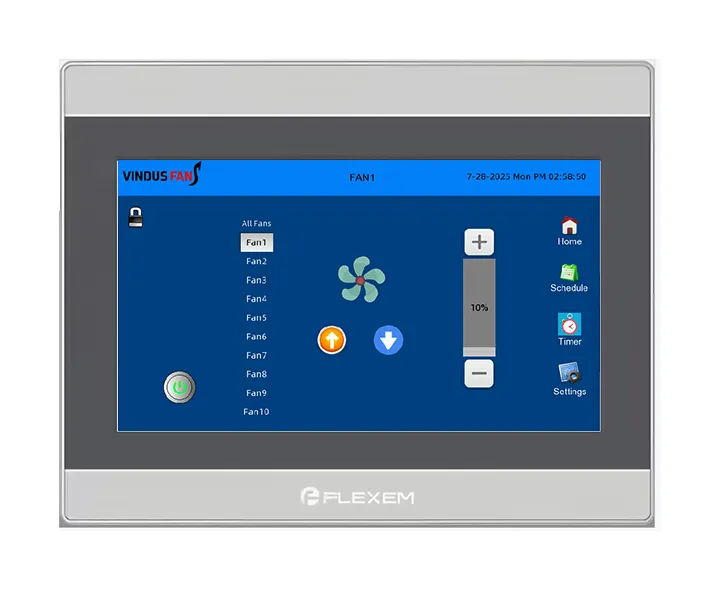
Controls range from simple potentiometers to VFD wall stations and BMS gateways. Tie setpoints to seasons, doors, or production states so hvls fans also hold comfort while squeezing waste. Smart ramping keeps the plume stable when the line ramps up—or when doors open on a windy day.
Moisture, odors, and problem corners: humidity, poor air quality, and large volumes of air
Corners become smelly or damp when mixing fails. A tuned hvls fan reduces poor air quality by diluting and sweeping light odors and fume toward capture. Better mixing lowers localized humidity spikes that cause slippery patches and labels lifting on cartons.
The effect is especially clear in coolers and docks where outdoor air meets chilled surfaces. Even gentle circulation can curb condensation and keep visibility sharp—fewer foggy zones, more stable read rates for scanners, safer traffic near forklifts.
Safety and comfort: floor level experience and “big fans” done right
People feel breeze, not blast. At floor level, big fans deliver even flow that supports a comfortable work environment—less heat stress at high temperatures, fewer cold shoulders near dock doors. That steadiness helps with productivity and keeps communication clear because noise stays low.
For dusty or delicate tasks, plan angles carefully so you don’t disturb work shields. In many cases, low-speed fans allow better control at benches and inspection tables without the chaos of box fans.
Costs, maintenance, and practical payback in large industrial facilities
One well-placed industrial hvls fan can cover the footprint of many small spinners. Fewer units save wiring and service hours, and modern drivetrains are quiet, efficient, and durable. With periodic checks and cleaning, life is long and low maintenance.
Over time, the value stacks: quieter floors, fewer complaints, steadier picks, and a stronger safety culture. In a large industrial site, that’s not just comfort—it’s quality and throughput. When you install an hvls fan with BMS integration, you’ll see where runtime trims and where the model earns back its cost.
Environmental benefits of HVLS fans—and how they fit sustainability goals
The environmental benefits of hvls fans show up in lower peaks and gentler cycles for mechanical equipment. Less over-conditioning supports ESG targets and certifications, especially when coupled with demand-based control and leak fixes. Energy-efficient motors and tuned foils make these systems low draw, hour after hour.
Because energy-efficient fans support mixing instead of brute cooling, they help reduce loads that don’t directly add value. Pairing hvls fan control with door sensors and seasonal presets turns simple mixing into measurable outcomes.
HVLS vs traditional fans: when to choose which fan solution
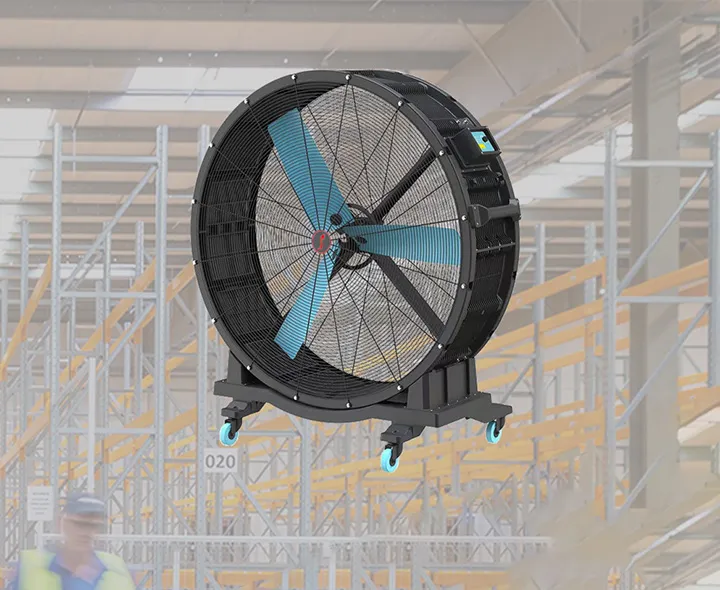
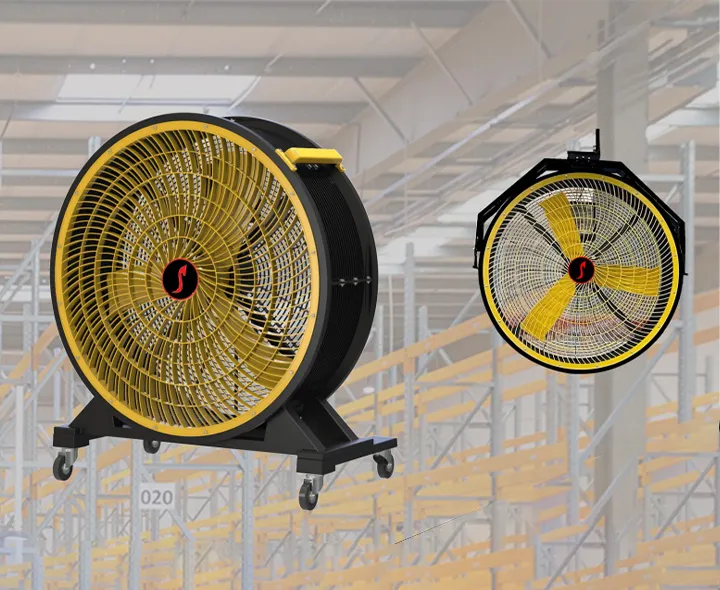
Traditional fans have their place—spot cooling, booths, or very short-term tasks. But when the problem is building-wide mixing, a fan solution based on industrial ceiling fans with large rotors is far more effective. A single hvls fan can out-cover a cluster of small fans while using less power and creating less turbulence.

Different types of fans
In climates with long summers, adding hvls fan coverage ahead of upsizing air conditioning systems is often the smarter first step. You may find the smaller mechanical plant you already have performs better once the air actually moves as intended.
Quick reference: coverage and control ranges (illustrative)
| Spec |
Typical Range |
Practical Note |
| Diameter (m) |
3.0 – 7.3 |
Larger spans cover more with gentler throw (diameter hvls) |
| Speed (RPM) |
20 – 60 |
Set the lowest speed that maintains comfort |
| Power (kW) |
0.4 – 1.5 |
Depends on drive and rotor width |
| Coverage radius (m) |
12 – 28 |
Verify with obstacles and racking |
| Control |
Local / BMS |
BACnet/Modbus gateways common |
“After commissioning, lines felt even within a week. Picker complaints dropped, and scanners read better at docks.” — operations note, mixed-use facility
A short case walk-through: gym + warehouse combo
A regional sports center and adjacent warehouse shared one steel frame. Summer was muggy; winter had cold corners and overheated mezzanines. Engineers mapped throw paths and placed three units aligned with trusses. Results: steadier locker room comfort, fewer slip reports at the rink doors, and a quieter building. The team reported that hvls fans provide smoother training zones and less odor drift, while storage staff noticed labels sticking better and fewer packaging defects.
FAQs
Do HVLS fans replace air conditioning systems?
No. They complement air conditioning systems by mixing layers so the plant can run less often. Many sites maintain setpoints but see lower compressor hours.
Can HVLS fans move large volumes of air without drafts?
Yes—hvls fans can move large plumes gently. Proper sizing means fans can move large volumes with comfort, not chaos.
Will the fans help with odors and moisture?
Yes. Fans help dilute light odors, while mixing reduces moisture spikes and condensation around doors and coolers.
Are HVLS fans loud?
They’re designed to run low-speed, so they’re quiet. Fans also play nicely with paging, radios, and conversation.
What about installation in older buildings?
Most structures allow rigging; just verify points and clearances. With planning, hvls fans in your facility can go in quickly.
What are the main benefits of hvls fans?
In brief: steady comfort, safer floors, better mixing, and lower run hours for mechanical equipment—these are the real benefits of hvls fans across process and people.
Sources and helpful references
Essential takeaways
- A well-sized hvls fan evens layers, boosts airflow, and steadies comfort in industrial space.
- Blending warm air and cooler air relieves your hvac system and supports energy savings through better energy efficiency.
- Better mixing raises air quality, reduces humidity, and helps with odors and fume.
- Choose diameter for reach; tune speed for feel so the fan can move the right plume quietly.
- Integrate controls so hvls fans move only as needed and waste less power.
- With fewer units and simple service, ongoing costs stay low and uptime stays high.