Your workshop feels hot, noisy, and stale; workers slow down and energy bills keep climbing. Every summer it gets worse. A modern HVLS industrial ceiling fan can turn that harsh space into a cooler, safer, more productive shop while easing the load on your HVAC system.
The best industrial ceiling fan for heavy-duty workshops is a large-diameter HVLS ceiling fan, correctly sized to your ceiling height and floor area, with a high-efficiency motor, smart controls, and strong safety design. It should deliver maximum airflow with low noise, integrate with HVAC systems, and help reduce energy costs in large spaces.
As an experienced HVLS fans manufacturing plant, we work daily with factories, warehouses, gyms, schools, sports centers, and other industrial facilities. In this guide, I’ll walk you through choosing a fan that truly fits your heavy-duty workshop, not just looks good on paper.
We’ll move step by step: what makes a ceiling fan “best industrial,” how HVLS technology works, how to size a system, and why many buyers now prefer manufacturers like Vindus Fan over purely “famous name” brands.
What makes an industrial ceiling fan the best choice for heavy-duty workshops?
When people ask about the best industrial solution, they usually care about three things: comfort, safety, and long-term cost. A serious industrial ceiling fan has to survive long hours in dusty, hot, sometimes corrosive environments and still protect tools and people. Cheap models or home-grade units fail quickly in real industrial applications.
Industrial ceiling fans are designed to cover a large volume of air with as few units as possible. Modern designs use wide blades and direct-drive motors to create powerful air circulation without harsh noise or vibration. A single unit on the ceiling can replace a whole cluster of floor blowers and wall units, keeping aisles clear and wiring simple.
From a cost view, well-designed industrial HVLS fans are not just about comfort; they are tools to help lower energy usage. By mixing hot and cold layers of air and supporting your HVAC, they can lower energy costs over time. For many projects, the payback comes from energy savings and less downtime, not just “cooler air.”
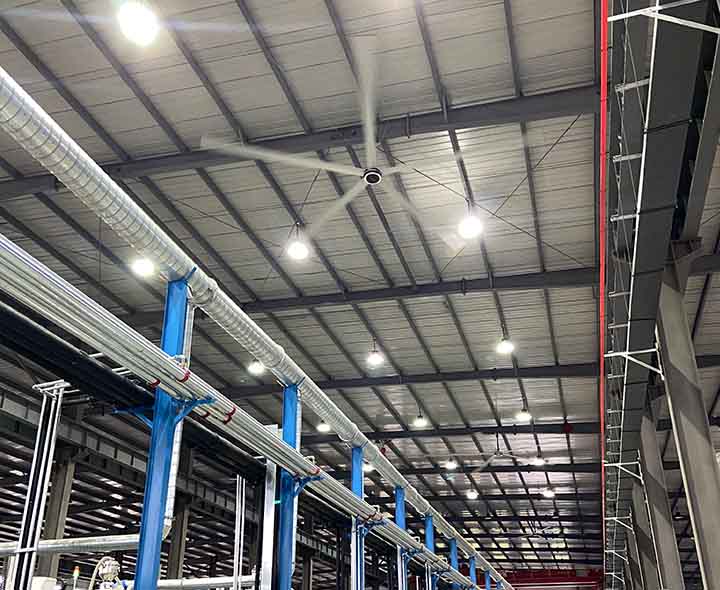
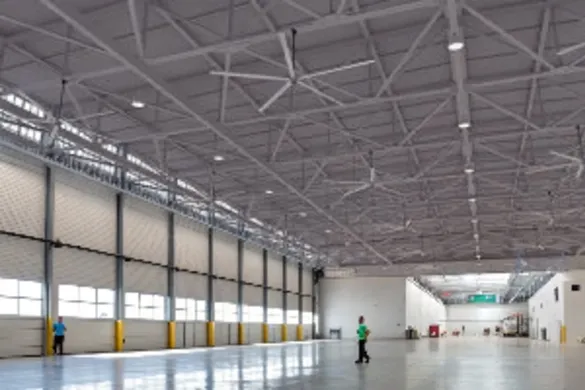
HVLS Fan in industrial sites
HVLS ceiling fans vs standard ceiling fans: what’s the real difference?
HVLS means high-volume, low-speed. An HVLS ceiling fan turns slowly but moves a huge volume of air with long blades, often 7–24 feet in diameter. It’s built for large open bays and tall roofs, not small rooms.
By contrast, standard ceiling fans and small directional fans spin fast and push air in narrow cones. In big workshops or open spaces, you’d need many of them to feel any effect, plus extra floor blowers that clutter walkways. They stir the air but don’t really circulate the air across the whole bay.
Here’s a simple comparison:
| Feature |
HVLS Ceiling Fan |
Standard Ceiling / Portable Fans |
| Blade size |
7–24 ft (larger fans) |
3–5 ft |
| Speed |
Low-speed, gentle air movement |
High speed, choppy jets |
| Coverage |
Large spaces, open spaces like workshops |
Only local spots |
| Air movement |
Broad, even air movement |
Narrow streams |
| Units needed |
1–4 per bay |
Dozens in big rooms |
| Energy use |
Often energy-efficient models |
Higher total power |
Vindus Fan takes HVLS principle and focuses it on practical, factory-direct projects, giving you similar airflow performance with more flexible engineering and pricing.
How HVLS industrial fans improve airflow and air circulation in large spaces
In heavy-duty workshops, poor air circulation is often the hidden enemy. Hot air rises and sits near the ceiling, while cooler, damp air stays low. Fumes linger in corners. Workers move through layers that feel different from spot to spot.
A well-designed industrial fan can improve airflow across the whole bay. The big blades move massive amounts of air gently, so people feel an even breeze without being blasted. That smooth flow helps circulate air from the roof down to the floor and back again, breaking up stagnant zones.
Because HVLS systems move massive amounts of air, they’re ideal for industrial spaces, gyms, sports halls, and even a large barn where animals or people occupy wide areas. In winter, reversing the rotation lets the fan designed for destratification push warm air down without drafts, making heaters more effective. In summer, forward mode supports your cooling so HVAC systems don’t have to work as hard.
Sizing an industrial fan for your needs: choosing a fan for your workshop
Correct sizing is where many projects succeed or fail. The ideal fan is not just “big”; it’s matched to your layout. A fan typically covers a floor circle about 2–3 times its diameter. So a 6 m unit can influence air conditions over most of a medium bay.
When you choose the right configuration, you look at:
- Net floor area and clear height
- Obstructions like cranes, beams, mezzanines
- Places where fans need to avoid dust, steam, or fumes
In spaces like factories, we often mix one or two HVLS units with smaller overhead fans or ducts to reach tight corners. For each fan for your needs, we check safety clearances to the ceiling and equipment, then set speed and direction so people feel a comfortable breeze, not a storm.
As a manufacturer, we help with choosing a fan by reviewing drawings or photos. You don’t have to guess which diameter, speed range, or mounting kit you need; we size the ideal fan for each bay so you’re not over-buying, or worse, under-sizing.
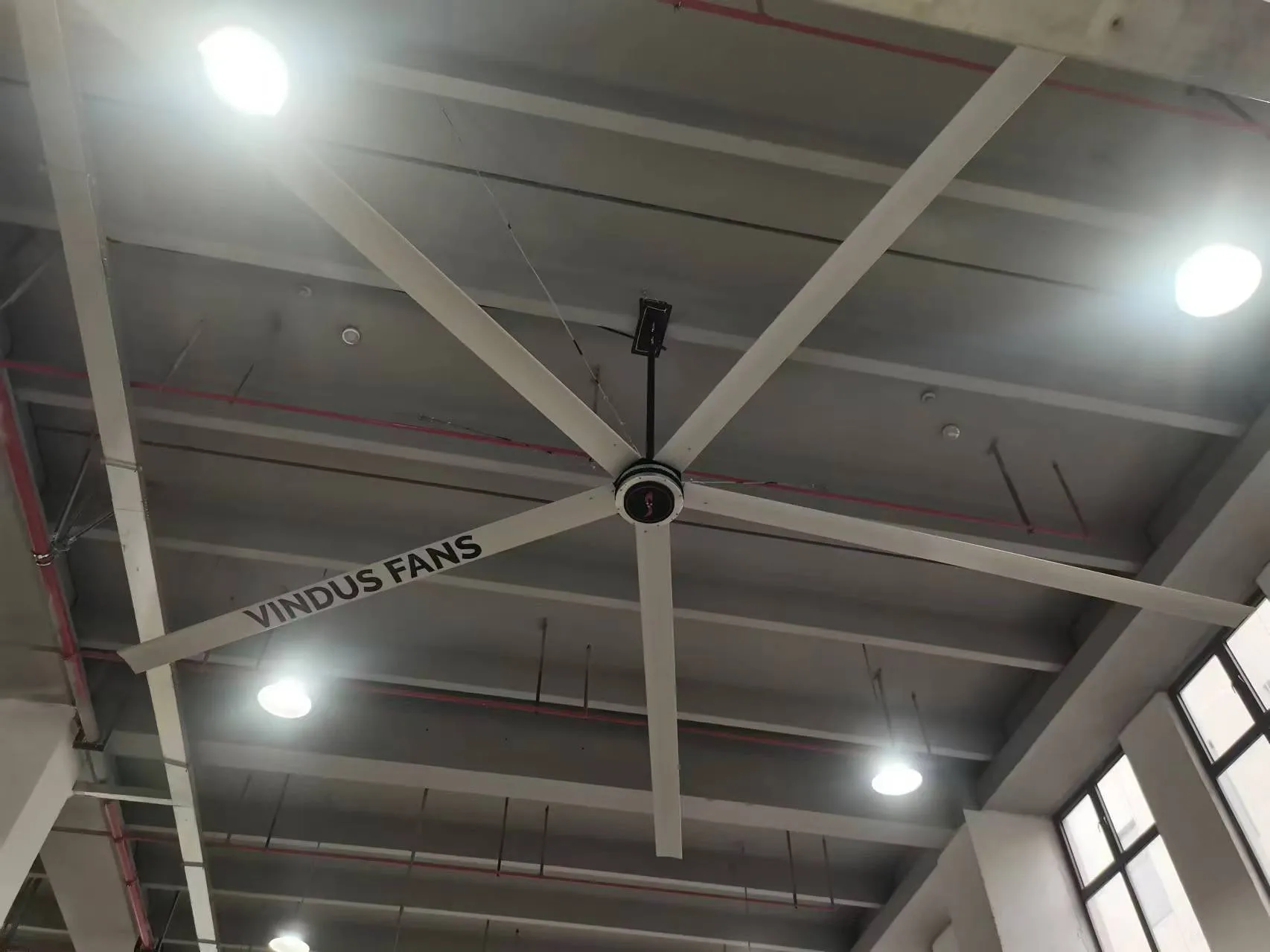
Sizing an industrial fan for your needs
Energy efficiency and HVAC: how HVLS ceiling fans reduce energy costs
Cooling or heating industrial facilities with only compressors and ducts is expensive. HVLS technology adds a smart, energy efficient layer of control. When you keep air well mixed, you can raise cooling setpoints a few degrees and still feel comfortable at working height. That alone can reduce energy costs in many buildings.
In winter, destratification eliminates the hot layer near the ceiling. Instead of paying to heat steel beams and roof panels, you keep the warmth where people actually work. This is why industrial ceiling fans are designed to run at low speed for long periods: they’re not spot coolers, they’re background air managers.
Because these industrial HVLS fans use efficient motors and optimized blades, fans are energy savers compared with throwing more compressors at the problem. Over years of operation, this strategy can help lower energy use and extend the life of existing HVAC equipment.
Key features to look for when selecting the best HVLS ceiling fan
When you’re selecting the best solution, it helps to break things into a simple checklist. Here are the features that matter most in a heavy-duty workshop or warehouse:
- Size and blade profile
- Large ceiling fans with longer blades cover more area at lower speed.
- Blade shape affects maximum airflow and how air efficiently spreads across the floor.
- Motor and structure
- A fan built with strong hubs, bearings, and support brackets will last longer in tough conditions.
- High-quality units are true high-performance machines but still quiet enough for a shop floor.
Controls and safety
- Look for fans that integrate with your HVAC or building management system.
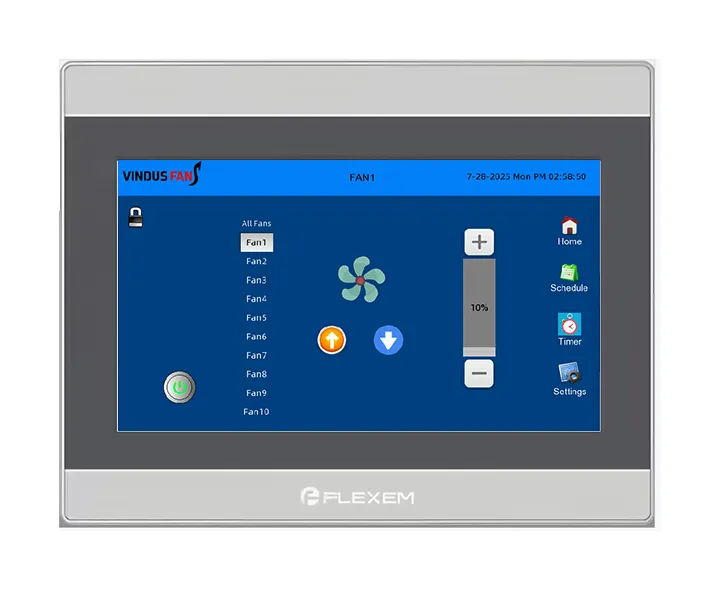
- A good fan offers soft-start, variable speed, error alarms, and full safety hardware.
Fans are designed differently from brand to brand. Some focus on showrooms and industrial style looks; others, like Vindus Fan, focus on stable operation in factories and warehouses with dust, heat, and long shifts. The right fan balances performance, reliability, and cost instead of chasing only one spec on a brochure.
Industrial and commercial applications: warehouses, factories, gyms and more
HVLS and large industrial ceiling fans are ideal for large and tall rooms where normal equipment struggles. Typical industrial applications include:
- Assembly lines and processing zones in a factory
- Storage racks and loading docks in a warehouse
- Mixed-use industrial spaces with both machines and people
- Sports centers and school gyms with bleachers
In warehouses and factories, the goal is simple: keep people comfortable, protect products, and avoid condensation on floors or equipment. HVLS systems are perfect for warehouses because they cover broad aisles evenly. In showrooms and other commercial spaces, a clean industrial style fan on the ceiling can quietly support AC and improve the visitor’s experience.
For semi-open docks or outdoor stands, rugged outdoor ceiling fans or HVLS units rated for weather can extend the same comfort to truck lanes and waiting areas.
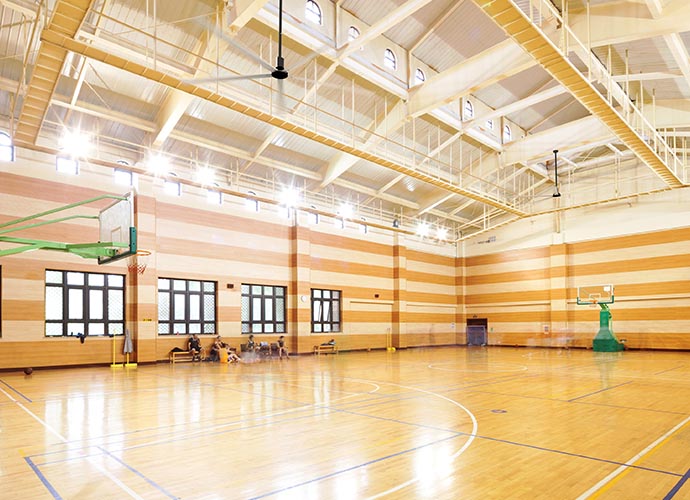
hvls fan in sport center
Case study: upgrading a heavy-duty workshop with HVLS overhead fans
Picture a metal fabrication shop: 12 m ceiling, multiple bays, welding, cutting, painting, and overhead cranes. The owner originally used small blowers and wall-mounted units. The floor was crowded, noise was high, and the work environment still felt hot and stuffy.
We replaced that mixture with a set of large industrial HVLS units. Each fan designed for the project used safety cables, robust hubs, and sealed bearings—truly heavy-duty industrial hardware. After startup, the operators noticed smoother air, less visible smoke buildup, and fewer complaints in summer.
A similar package from a big brand like Big Ass Fans or Hunter Industrial would have worked too. But in this project, choosing a manufacturer like Vindus Fan brought more flexibility on mounting, controls, and price, while still delivering the productive work environment the client wanted.
Why choose Vindus Fan as your HVLS industrial ceiling fan manufacturer
There are many options now: imported products, trading companies, and long-known labels. Here’s why a factory-direct brand like Vindus Fan is often the better choice:
- Real manufacturing strength
We are a true HVLS fans factory, not just a logo. That means direct control of design, metal parts, motors, and QC.
- Engineering for real projects
Our fans are engineered for spaces like factories, warehouses and factories, gyms, schools, and industrial facilities, not just showroom photos.
- Balanced performance and price
Our fans are built to offer strong coverage and long life without pushing you into unnecessary extras. These fans are known for stable performance and fans are good in ROI calculations.
- Global support for industrial and commercial users
From concept to commissioning, we support industrial and commercial buyers who need clear technical answers, drawings, and long-term spare parts.
This focus has made our systems one of the fans are widely used options in many regions where buyers want high quality but also need to keep budgets under control.
FAQs about industrial ceiling fans for heavy-duty workshops
Are HVLS ceiling fans only for very large buildings?
No. They are ideal for large bays, but even medium-sized workshops can benefit. One well-placed HVLS unit can circulate the air better than many small units, especially under a high ceiling.
Do HVLS fans replace air conditioning?
Usually they work together. HVLS systems support HVAC systems by mixing air, so compressors can run less while people still feel cool. Fans are energy helpers, not full replacements, especially in very hot climates.
Are these fans noisy or hard to maintain?
Quality models are high-performance machines, but run quietly at low speed. With simple inspections and cleaning, they stay reliable for years. Many plants find that a few HVLS units are easier to maintain than dozens of small fans would be.
Can I use HVLS in outdoor or semi-outdoor zones?
Yes, with the right rating. Weather-ready outdoor ceiling fans and HVLS models can handle wind, mist, and dust. For example, a loading dock or livestock barn can both benefit from large fans that move massive amounts of air gently.
How many fans do I need for my workshop?
That depends on area, ceiling height, and obstacles. Larger fans cover bigger zones, so we usually start with one fan per bay and adjust. Our engineers review drawings so individual fans need not be oversized, and the entire layout works as a system.
Ready to improve your workshop with HVLS ceiling fans?
If you manage industrial facilities, a warehouse, factory, gym, school, or any heavy-duty shop, a well-planned HVLS system can transform daily life on the floor. The fans also support safety and comfort while helping lower energy use.
With Vindus Fan you get:
- Industrial HVLS systems that move massive amounts of air in one smooth flow
- Fans are designed to work in real industrial spaces, not just showrooms
- Factory-direct engineering support to choose the right sizes and mounting
- Flexible options to fit budgets for large industrial and mid-sized projects
If you’d like help sizing large industrial ceiling fans or planning a layout, share your building dimensions and basic process information. We’ll recommend a configuration, explain how it can reduce energy costs, and show how HVLS technology can make your workshop feel cooler, safer, and more efficient—day after day.