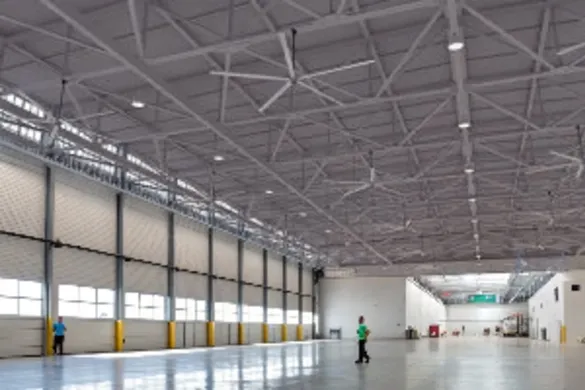
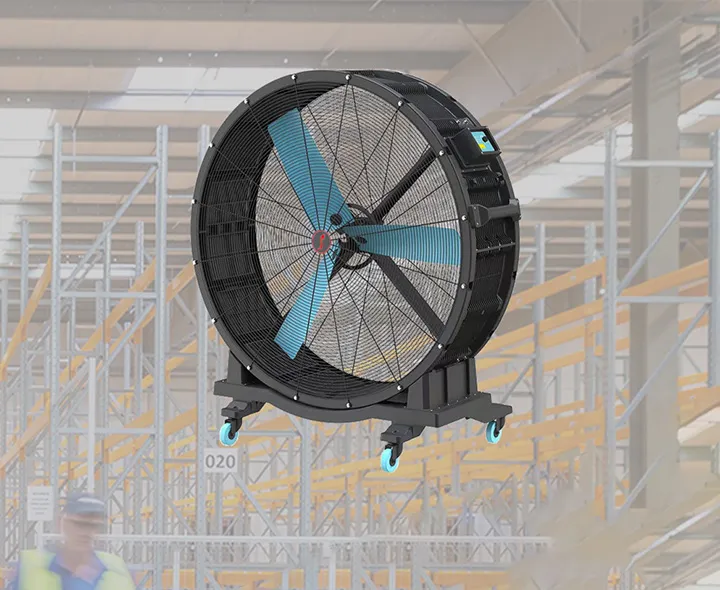
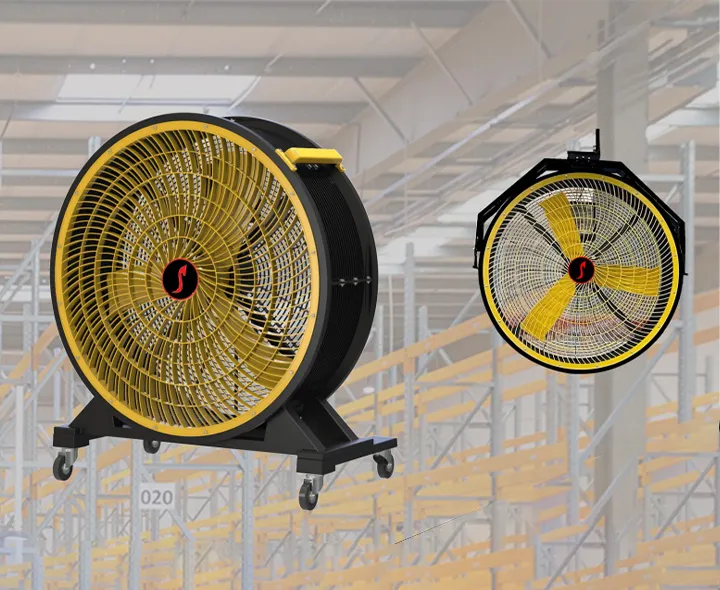
Stifling heat and stagnant air are dragging down productivity and driving up your energy bills. This isn’t just an inconvenience; it’s a critical issue for large spaces like warehouses, factories, and gyms, where comfort directly impacts performance and operational costs. The solution is powerful, cost-effective air circulation.
Large commercial and industrial ceiling fans, especially High-Volume, Low-Speed (HVLS) models, are engineered specifically to solve this problem. These aren’t your average residential fans; they are robust machines designed to move massive amounts of air efficiently across vast areas. By enhancing air circulation, they create a more comfortable, productive, and energy-efficient environment, whether you’re managing a bustling manufacturing facility, a sprawling commercial building, or a high-energy sports center.
What Makes an Industrial Ceiling Fan Different from a Residential One?
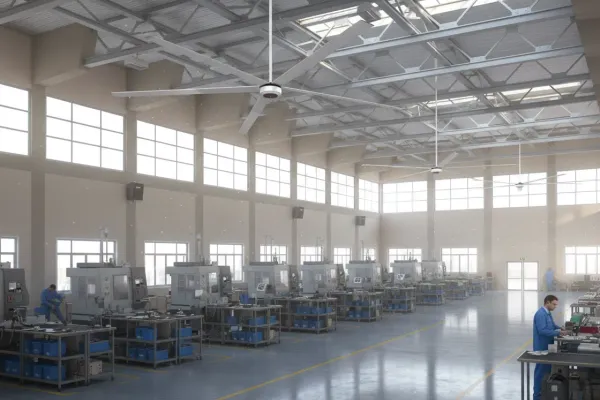
When you step into a large industrial or commercial space, the scale of everything is different, and that includes the air circulation needs. A standard residential ceiling fan, designed for a small room, simply can’t compete. Industrial ceiling fans are built on a completely different level, designed for power, durability, and massive coverage. The core differences lie in their motor, blade design, and overall construction.
The motor of an industrial ceiling fan is significantly more powerful and robust. It’s engineered for continuous, long-term operation in demanding environments, unlike residential motors which are meant for intermittent use. This allows them to drive much larger blades and move a greater volume of air without overheating. As a manufacturer, we focus on high-efficiency motors that deliver this power quietly and with minimal energy consumption, ensuring longevity and performance.
Furthermore, the blade design and size are a world apart. Industrial ceiling fan blades are longer, often with an aerodynamic shape inspired by aircraft wings to maximize airflow. A residential fan might have a blade span of 52 inches, while industrial models, especially Ventiladores HVLS, can have diameters ranging from 7 to 24 feet. This massive size allows one large industrial ceiling fan to do the work of multiple small fans, creating a gentle, non-disruptive breeze over a huge area instead of turbulent pockets of air. These fans are built to last with high-grade materials that can withstand the rigors of a factory or warehouse setting.
Ventilador de techo industrial
How Does an HVLS Fan Revolutionize Airflow in Large Spaces?
The term HVLS stands for High-Volume, Low-Speed, and it perfectly describes how these fans work their magic. The concept is simple but revolutionary: move a massive column of air at a very low speed. This approach is far more efficient and effective for large spaces than traditional high-speed fans that create small, fast-moving jets of air. An HVLS fan generates a large, slow-moving column of air that travels to the floor and then outward in all directions, covering the entire space.
This comprehensive air circulation eliminates stagnant air and “hot spots,” creating a uniform temperature throughout the facility. In the summer, this gentle breeze creates an evaporative cooling effect, making people feel several degrees cooler, which allows you to raise the thermostat and save significantly on air conditioning costs. Studies and real-world applications have shown that this can lead to a more comfortable and productive workforce.
In winter, the process is reversed. An HVLS ceiling fan can be run at a low speed to gently push the warm air that naturally rises and gets trapped at the ceiling back down to the floor level. This process, known as destratification, mixes the air, equalizes the temperature, and reduces the workload on your heating system. We’ve seen facilities cut their heating bills by up to 30% or more with this simple change. As a result, an HVLS fan is not just a seasonal tool but a year-round energy-saving powerhouse for any large ceiling application.
What Are the Key Benefits of Installing a Large Ceiling Fan?
Investing in a large industrial ceiling fan goes far beyond simple temperature control. The benefits ripple through your entire operation, impacting everything from your energy bills to employee well-being and productivity. From our experience as a leading HVLS fans manufacturer, we’ve seen firsthand how these systems transform large spaces.
The most significant advantage is a dramatic improvement in energy efficiency. By supplementing your HVAC system, a large ceiling fan reduces its workload. In summer, the cooling effect allows for higher AC setpoints, and in winter, destratification makes your heating more effective. This synergy can slash heating and cooling costs by 20-30% or even more. The lower reliance on HVAC also means less wear and tear, extending the life of that expensive equipment.
Here’s a quick breakdown of the primary benefits:
- Enhanced Comfort and Productivity: A consistent and comfortable temperature is directly linked to employee focus and performance. By eliminating hot and cold spots, a large industrial fan creates a more pleasant working environment, which can reduce heat-related stress and improve concentration.
- Improved Air Quality: Stagnant air can lead to a buildup of pollutants, humidity, and odors. The powerful air circulation from a large ceiling fan helps to disperse these, preventing issues like condensation and mold growth, which is crucial in a warehouse or factory.
- Cost-Effective Solution: The initial investment in a high-quality industrial fan pays for itself quickly through energy savings and reduced HVAC maintenance. It’s a long-term, cost-effective solution for climate control in large spaces.
How Do You Choose the Right Blade Size and Design for Your Ceiling?
Selecting the correct blade size, or fan diameter, is the most critical factor in ensuring your industrial ceiling fan performs effectively. A fan that’s too small for the space won’t move enough air, while one that’s too large might create unwanted drafts. The decision depends on several factors, including the square footage of the area, the ceiling height, and any potential obstructions.
As a general rule, the larger the area and the higher the ceiling, the larger the fan diameter needs to be. Here is a simple table to guide your choice:
| 2,000 – 6,000 |
12’ – 22’ |
8’ – 14’ |
| 5,000 – 20,000 |
18’ – 35’ |
16’ – 20’ |
| 10,000+ |
25’ – 40’ |
20’ – 24’ |
Data adapted from industry standards.
Beyond just size, the blade design is crucial for efficiency. Our fans utilize aerodynamically engineered airfoils, much like an airplane wing, to move the maximum amount of air with minimal resistance and energy consumption. The number of blades also plays a role; our designs are optimized to deliver powerful airflow without the noise and turbulence of older, less efficient models. When choosing, it’s essential to consider the specific needs of your space—whether you need broad, gentle circulation for a gym or powerful airflow for a hot manufacturing facility.
Can Industrial Ceiling Fans Be Used in Outdoor or Damp Locations?
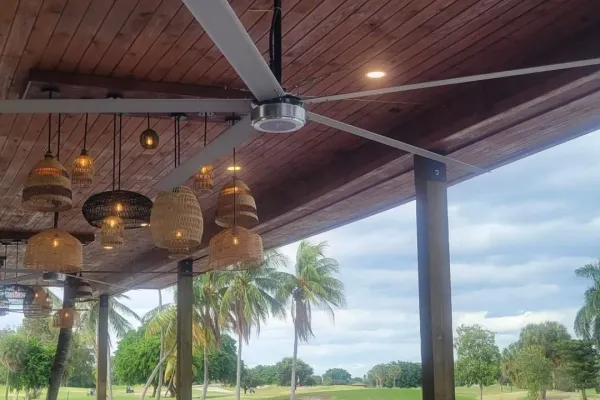
Absolutely. Many commercial and industrial operations have large, covered outdoor or semi-outdoor areas that also require effective air circulation. Think of restaurant patios, open-air pavilions at sports centers, or loading docks at a warehouse. For these applications, a standard industrial ceiling fan won’t suffice. You need an outdoor ceiling fan specifically rated for damp or wet conditions.
These specially designed fans are built with materials that resist moisture, rust, and corrosion. The motor housing is sealed to protect the internal components from humidity, and the blades are often made from non-porous materials like aluminum or specialized composites that won’t warp or degrade when exposed to the elements. These outdoor ceiling fans provide the same powerful airflow and energy efficiency benefits as their indoor counterparts.
As a manufacturer, we understand that durability is paramount. Our collection of fans includes models specifically engineered for these challenging environments. Whether you need to keep patrons comfortable on a restaurant terrace or improve conditions for workers on a covered loading bay, we have a robust and reliable solution. Choosing the right fan ensures you get long-lasting performance and safety, no matter the location.
ventiladores hvls comerciales en gran espacio abierto
Do Industrial Ceiling Fans Come with Lights or Remote Controls?
Modern industrial and commercial ceiling fans are designed with both performance and convenience in mind. While their primary function is to move massive amounts of air, many models offer features like integrated lighting and remote controls to enhance their usability.
A ceiling fan with light is an excellent two-in-one solution for large spaces, especially those with high ceilings where installing separate lighting fixtures can be complex and costly. Many of our fan options can be equipped with high-efficiency LED light kits. These kits are powerful enough to illuminate large areas like a gym, warehouse floor, or factory, providing bright, even light while saving on energy consumption compared to traditional lighting. This consolidation of fixtures simplifies installation and wiring, creating a cleaner look on the ceiling.
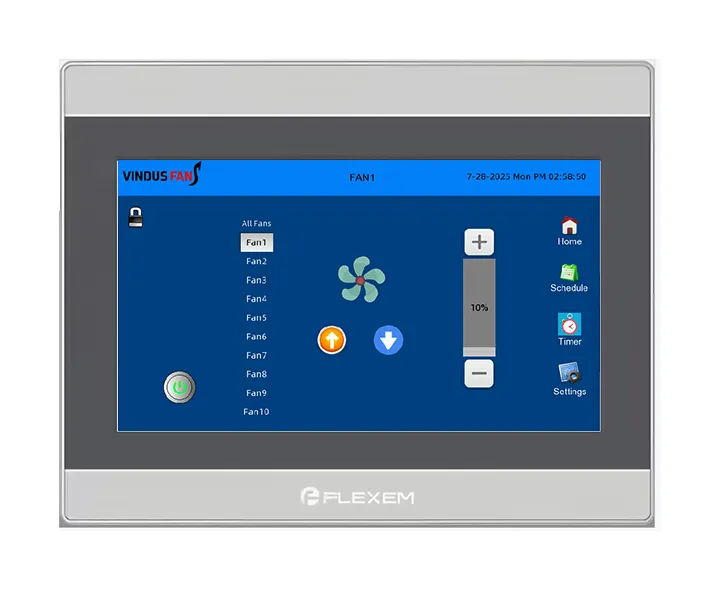
A ceiling fan with remote control is practically a standard for industrial applications. Given that these fans are mounted on a high ceiling, manual operation is not feasible. A remote control system allows for easy adjustments to fan speed and direction (for summer cooling or winter destratification) and can control the integrated lights. For facilities with multiple fans, advanced control systems can manage all units from a central panel, allowing you to create zones and optimize airflow across the entire building with the touch of a button.
Why is Proper Air Circulation Crucial for a Barn or Warehouse?
In specialized environments like a barn or a warehouse, air circulation isn’t just about comfort—it’s essential for health, safety, and product integrity. A warehouse is often a vast, open space where temperature and air quality can vary dramatically from one end to the other. Without proper air movement, a warehouse can suffer from stagnant air, which leads to a host of problems.
Proper air circulation, driven by a powerful industrial ceiling fan, helps regulate humidity and prevent condensation. This is critical for protecting inventory from moisture damage, mold, and rust. In a factory or warehouse that deals with chemicals or produces fumes, constant air movement helps disperse potentially harmful airborne particles, creating a safer environment for employees. Furthermore, keeping equipment cool can prevent overheating and extend its operational life.
For agricultural settings like a barn, the benefits are even more pronounced. In a dairy barn, for example, heat stress can severely impact milk production and animal health. Our high volume low speed ceiling fan for agriculture provides a gentle, consistent breeze that keeps livestock cool and comfortable. This improved air quality also helps to control insects and reduce the buildup of ammonia and other harmful gases, leading to healthier animals and a more productive operation.
What are the Best Industrial Ceiling Fan Options for High Ceilings?
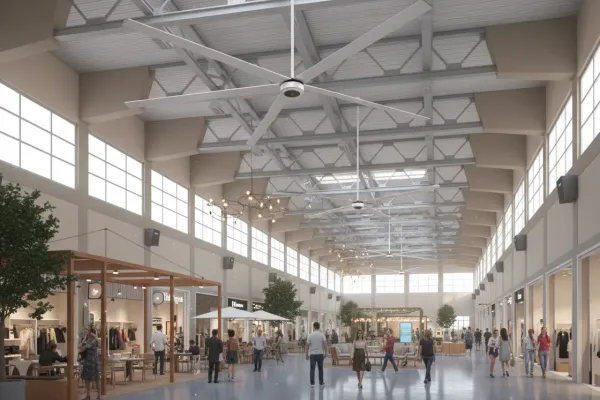
Spaces with high or vaulted ceilings, such as a modern gym, a large commercial building, or a manufacturing plant, present a unique challenge for climate control. Warm air naturally rises and gets trapped far above the floor, making heating systems inefficient, while cool air settles at the bottom, creating uncomfortable drafts. This is precisely where the best industrial ceiling fan options, particularly HVLS fans, excel.
For these environments, the fan’s ability to destratify the air is its most valuable feature. A large ceiling fan with a diameter of 20 to 24 feet can effectively circulate the entire volume of air in a space with a ceiling of 40 feet or more. By running the fan at a low speed, it gently pushes the pocket of warm air down from the high ceiling and mixes it with the cooler air below. This equalizes the temperature from floor to ceiling, creating a consistently comfortable environment and dramatically improving the efficiency of your HVAC system.
When mounting a fan on a very high ceiling, extension downrods are used to lower the fan to an optimal height above the floor. This ensures that the airflow reaches the occupied space effectively. Our team of experts can help determine the perfect combination of fan size and mounting height for any application, from a vast depósito to an architecturally complex sports center, ensuring you get the performance and long-lasting durability you need.
How Can a Commercial Ceiling Fan Reduce HVAC Costs?
The relationship between a commercial ceiling fan and an HVAC system is a powerful partnership for energy savings. A commercial ceiling fan doesn’t replace your HVAC, but it makes it significantly more efficient, reducing its runtime and overall energy consumption. This synergy is the key to unlocking substantial reductions in your utility bills.
During the summer, an HVLS fan creates a cooling effect that can make the ambient temperature feel up to 10 degrees cooler. This means you can raise the setpoint on your air conditioner by several degrees without any noticeable difference in comfort for your employees or customers. Every degree you raise the thermostat can translate to significant savings on cooling costs. The fan circulates the conditioned air more effectively, distributing it evenly throughout the space and preventing the HVAC system from overworking to cool down hot spots.
In the winter, the savings come from destratification. In a large, high-ceilinged building, your heaters work hard to produce warm air, but much of that expensive heat rises and collects uselessly at the ceiling. A commercial ceiling fan, running in reverse at a low speed, gently pushes that trapped heat back down to the floor level. Your thermostat is satisfied more quickly, your furnace runs less often, and your heating costs can be cut by up to 30%.
Commercial Ceiling Fan
Frequently Asked Questions About Industrial HVLS Fans
What is the main advantage of an industrial HVLS fan?
The primary benefit of an industrial HVLS fan is its ability to move a very large volume of air at a low, quiet speed. This provides efficient and effective air circulation for large open areas, leading to significant energy savings, improved comfort, and better air quality.
How much energy does an industrial ceiling fan use?
Despite their massive size, modern industrial ceiling fans, especially our HVLS models, are incredibly energy-efficient. They are designed with advanced motors and aerodynamic blades that allow them to operate on a fraction of the power required by a traditional HVAC system or multiple smaller high-speed fans. Their low energy consumption is a key factor in their quick return on investment.
How do you determine the number of fans needed for a space?
The number of fans required depends on the size of your space, ceiling height, layout, and any obstructions. A single large HVLS fan can cover an area of up to 22,000 square feet. For optimal coverage in very large or irregularly shaped facilities, multiple fans may be strategically placed to ensure there are no dead spots in airflow. Our expert customer service team can provide a detailed layout and recommendation based on your facility’s specific needs.
Can these fans be used in a commercial-building with a modern aesthetic?
Yes. While they are industrial-grade in performance, many modern commercial ceiling fans feature sleek, minimalist designs that can complement a variety of architectural styles. Options like a brushed nickel finish or custom colors allow our fans to blend seamlessly into spaces like atriums, large offices, or modern edificios comerciales. Fans without lights offer a particularly clean and unobtrusive look.
What kind of maintenance do industrial ceiling fans require?
Industrial ceiling fans are built to last and are designed for minimal maintenance. The direct-drive motors used in many high-quality HVLS fans have fewer moving parts than older gearbox-driven models, which reduces the risk of mechanical failure. Routine checks of the fan parts and occasional cleaning of the blades are typically all that is needed to ensure years of reliable performance.
Are industrial fans noisy?
Despite their size and power, high-quality HVLS fans operate very quietly, especially at low speeds. The slow rotation of the large blades generates a gentle breeze with minimal noise, making them ideal for environments where noise levels are a concern, such as schools, sports centers, or even quiet manufacturing facilities.
Puntos clave para recordar
- Efficiency is Key: Large industrial and commercial ceiling fans are designed to move massive amounts of air with minimal energy consumption, drastically reducing HVAC costs.
- Year-Round Benefits: They provide a cooling effect in the summer and redistribute heat in the winter, making them a valuable investment throughout the year.
- Size Matters: Choosing the right fan diameter for your ceiling height and square footage is crucial for optimal performance.
- More Than Comfort: Proper air circulation improves air quality, protects inventory from moisture, and is essential for a safe and productive work environment.
- Built for Your Space: Whether you need a fan for a massive warehouse, an outdoor patio, a quiet gym, or a bustling factory, there is a model specifically designed to meet your needs. We are here to help you find the perfect solution for your space.